Hear from Our Customers
Most of Whitpain’s housing stock was built between the 1940s and the early 1980s — right in the window when asbestos was used in everything from floor tiles and pipe insulation to popcorn ceilings and joint compound. That’s not a scare tactic. It’s just the reality of owning a home in this part of Montgomery County. The good news is that asbestos that’s intact and undisturbed usually isn’t an immediate danger. The problem starts when you renovate, demo, or disturb those materials without knowing what you’re dealing with.
If you’re planning a kitchen remodel in Blue Bell, finishing a basement in Centre Square, or replacing an aging HVAC system, you need to know what’s behind those walls before the first hammer swings. Discovering asbestos mid-project doesn’t just pause your renovation — it can shut it down entirely while you scramble to find a licensed contractor, pull the right permits, and meet Pennsylvania DEP notification requirements. Getting ahead of it saves you time, money, and a lot of stress.
There’s also the real estate angle. With median home values in the Blue Bell area exceeding $572,000, asbestos showing up during a buyer’s inspection can derail a closing fast. A proper abatement with written clearance documentation keeps your transaction on track and gives buyers exactly what they need to move forward with confidence.
We’ve been doing this work across Montgomery County for two decades, including the neighborhoods throughout Whitpain Township. That’s not a tagline — it means we’ve worked in the same kind of homes you’re living in, along the same Route 202 corridor, in the same older neighborhoods that make up this area. We know the housing stock. We know what materials show up in mid-century construction around here. And we know what it takes to handle it correctly under Pennsylvania’s licensing and notification requirements.
We’re fully licensed by the PA Department of Labor and Industry, EPA and HUD compliant, and we carry a Certified Lead Inspector and Risk Assessor on staff — not just certified workers, but a credentialed professional who can assess what’s actually there and tell you what it means. Fully bonded and insured, with 24/7 phone availability and free estimates.
When Montgomery County’s own guidance tells homeowners to verify licensing before hiring anyone, our credentials hold up to that scrutiny.
It starts with a call — and because we have 24/7 phone availability, that call can happen the moment you find something suspicious, not the next business day. From there, a certified inspector comes to your property to assess what’s present, where it is, and what condition it’s in. Samples are collected and sent to an accredited lab. You get real results, not guesswork.
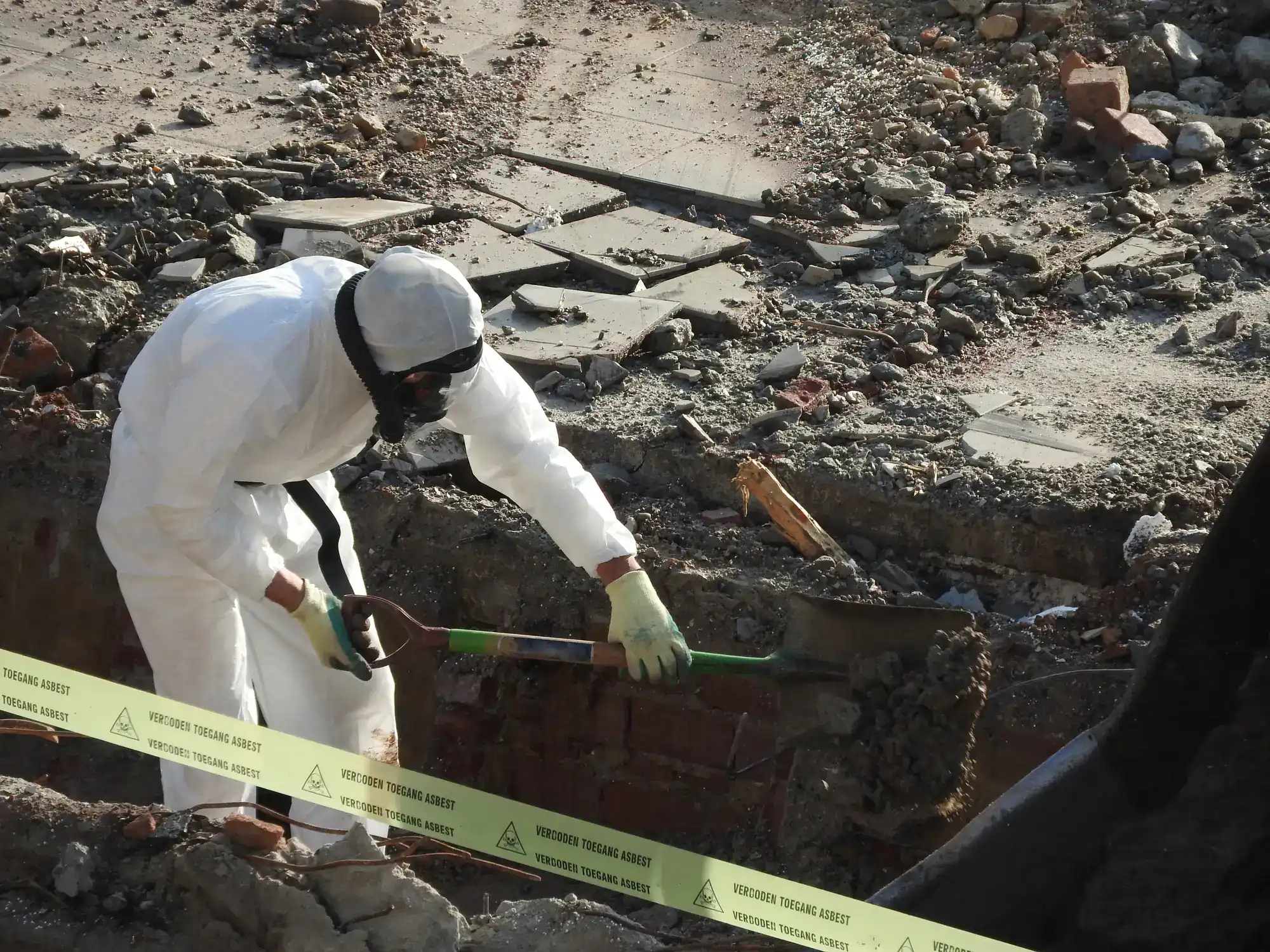
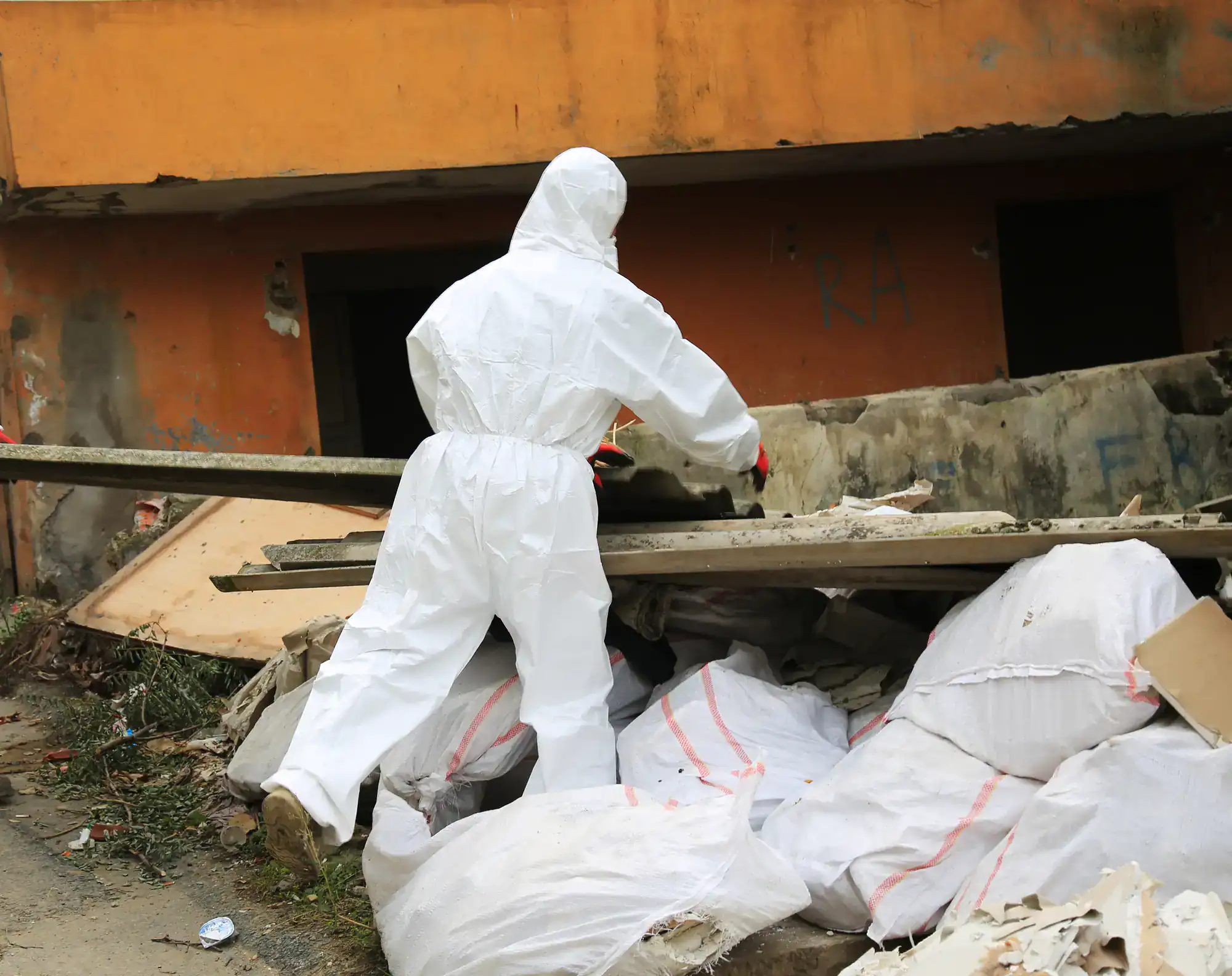
If abatement is needed, we handle the required Pennsylvania DEP advance notification — a minimum five-day notice before friable asbestos removal can begin. You don’t have to figure out the paperwork. We set up proper containment with negative air pressure and HEPA filtration before any material is touched, which keeps fibers from migrating into the rest of your home. For older Whitpain properties where the living areas are directly connected to the work zone, that containment step isn’t optional — it’s what separates a clean job from a whole-house problem.
Once the material is removed, it goes to a certified disposal facility — because Montgomery County does not accept asbestos at its Household Hazardous Waste events, and self-disposal isn’t a legal option. After removal, air clearance testing confirms the space is safe. You get written documentation you can hand to a contractor, a buyer, or a real estate attorney without hesitation.
Ready to get started?
Most asbestos removal firms handle the abatement and leave everything else to you. We work differently. Our one-stop service model covers inspection, testing, abatement, demolition, waterproofing, and cleanup — all under one roof. For a Whitpain homeowner in the middle of a renovation, that means one point of contact, one schedule to manage, and no gap between our crew leaving and the next contractor arriving.
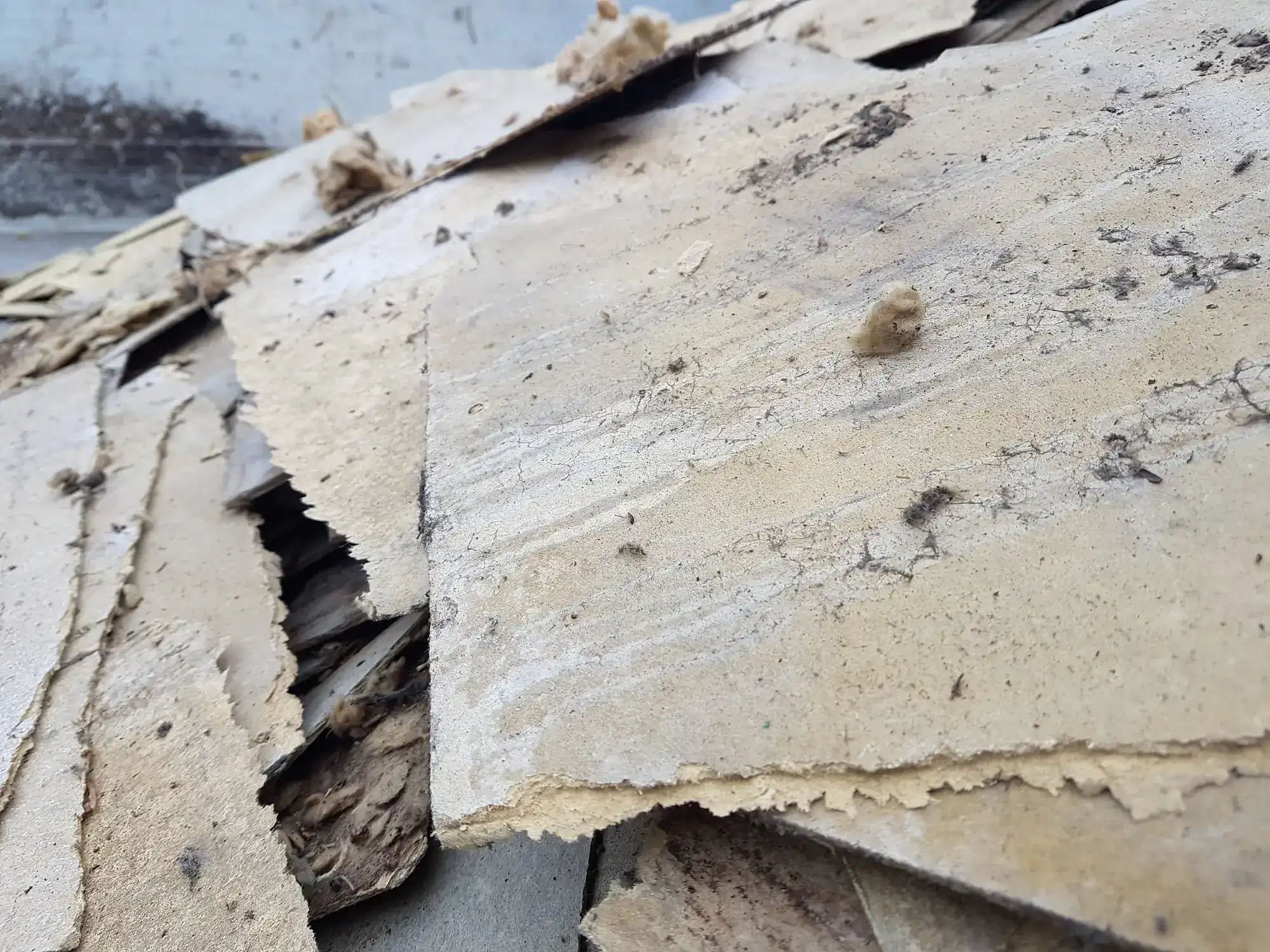
The materials we commonly address in Whitpain’s pre-1980 housing stock include floor tiles, pipe and duct insulation, attic insulation, popcorn ceilings, plaster and joint compound, roofing shingles, and exterior siding. The township also has genuinely historic structures — some dating back to the 18th and 19th centuries — where older building materials can present a broader range of hazards. Our Certified Lead Inspector and Risk Assessor can evaluate both asbestos and lead in the same visit, which matters in a housing stock where the two often co-exist.
For commercial properties along the Route 202 corridor — office buildings, the Unisys campus, or facilities near Montgomery County Community College — federal NESHAP regulations require a ten-working-day advance notification before regulated asbestos-containing material is removed. We handle that process for commercial clients the same way we do for residential: completely, correctly, and without putting the burden on you.

There’s a strong chance, yes. Homes built in Whitpain between roughly 1940 and 1980 were constructed during the peak era of asbestos use in American residential building. That includes a significant portion of the housing stock in Blue Bell and Centre Square. Asbestos was used in floor tiles, ceiling tiles, pipe insulation, duct wrap, attic insulation, plaster, joint compound, roofing shingles, and exterior siding — often in multiple locations within the same home.
The important thing to understand is that the presence of asbestos doesn’t automatically mean danger. Asbestos-containing materials that are intact and undisturbed generally don’t release fibers. The risk comes when those materials are damaged, deteriorating, or about to be disturbed by renovation work. If you’re planning any project that involves opening walls, removing flooring, replacing HVAC components, or demolishing any part of your Whitpain home, an inspection before work begins is the right move — not an optional one.
Cost depends on what’s there, how much of it there is, and what condition it’s in. Nationally, asbestos removal averages around $2,000 to $3,000 for a typical residential job, though smaller targeted removals — a section of pipe insulation or a few floor tiles — can come in lower, and larger whole-home projects involving multiple material types will run higher. We provide free estimates, so you know your actual number before committing to anything.
What’s worth keeping in mind for Whitpain specifically is the context of your home’s value. With median home values in the Blue Bell area above $572,000, the cost of proper abatement is a small fraction of what’s at stake — especially if you’re selling. Asbestos flagged during a buyer’s inspection can trigger renegotiation, delay closing, or kill a deal entirely. Handling it proactively, with written clearance documentation in hand, is almost always the more cost-effective path than reacting to it mid-transaction.
It depends on the scope of the work and where in your home it’s happening. For smaller, contained removals — a section of pipe insulation in a utility room, for example — it may be possible to remain in unaffected parts of the house. For larger abatement projects involving living areas, HVAC systems, or materials in multiple locations, temporarily vacating during the active removal phase is the safer and more practical choice.
We’ll give you a clear answer on this before work begins, based on what the inspection finds and where the work will take place. The containment setup — negative air pressure, HEPA filtration, sealed work zones — is specifically designed to prevent fiber migration into the rest of your home. But for families with young children or anyone with respiratory sensitivities, erring on the side of caution during active abatement is always reasonable. You’ll know the timeline upfront so you can plan accordingly.
Pennsylvania requires advance notification to the Department of Environmental Protection before friable asbestos-containing material is removed. For smaller residential jobs exceeding three square feet or three linear feet, a minimum five-day notice is required. For larger projects that cross federal NESHAP thresholds — 160 square feet, 260 linear feet, or 35 cubic feet of regulated material — a ten-working-day advance notification is required before work can begin.
Beyond the DEP notification, Whitpain Township requires building permits for renovation work, and the township’s code enforcement office processes residential permits within a maximum of 15 business days. We handle the DEP notification process as part of the job — you don’t have to navigate that paperwork on your own. For commercial properties along the Route 202 corridor or near the MCCC campus, the federal NESHAP timeline applies, and getting that notification filed correctly from the start keeps your project on schedule.
Yes, and in some cases winter is actually when the need becomes most urgent. Montgomery County’s freeze-thaw cycles can damage building materials — including asbestos-containing pipe insulation, roofing, and exterior siding — causing previously intact materials to crack or become friable. A pipe burst or winter flooding event that disturbs asbestos-containing materials in a basement or utility room doesn’t wait for spring. Our emergency response service exists specifically for situations like that.
Interior abatement work — which covers the majority of residential asbestos jobs in Whitpain’s housing stock — isn’t weather-dependent the way exterior work can be. Pipe insulation removal, floor tile abatement, ceiling work, and HVAC-related projects can all be handled year-round. If you’re planning a spring renovation and want to get the inspection and abatement done before contractors arrive, winter is actually a smart time to schedule it, before the spring backlog hits.
Pennsylvania law requires asbestos abatement work to be performed by contractors licensed by the Department of Labor and Industry. This isn’t a technicality — it’s a legal requirement with real consequences for homeowners who try to bypass it. Beyond the legal side, improper asbestos removal can actually make the situation worse. Research has documented cases where DIY or unlicensed removal left higher airborne fiber concentrations than existed before the work started, because the containment, filtration, and disposal steps weren’t done correctly.
Montgomery County does not accept asbestos-containing materials at its Household Hazardous Waste events, which means there’s no legal self-disposal pathway for homeowners anyway. The material has to go to a certified disposal facility, and only a licensed contractor has access to that process. For Whitpain homeowners specifically — where home values are high, the housing stock is old, and real estate transactions often hinge on clean environmental documentation — hiring a licensed, credentialed contractor isn’t just the safe choice. It’s the one that protects your investment.
Other Services we provide in Whitpain