Hear from Our Customers
You stop guessing. That’s the first thing. When you’re mid-renovation on a 1960s kitchen off Bristol Road or pulling up floor tiles in a Warrington Hunt split-level and something doesn’t look right, the worst place to be is in limbo — not knowing if it’s dangerous, not knowing if you can keep working, not knowing who to call. A licensed inspection gives you a real answer, not a maybe.
Once abatement is complete, your renovation moves forward. Your contractor can get back on site. If you’re selling, your deal doesn’t fall apart over an inspection flag. And if you’re staying put, you’re not living with a question mark in your walls, your attic, or your basement ceiling.
Warrington’s housing stock sits squarely in the highest-risk construction era — the same post-war building wave that put asbestos-containing floor tiles, pipe wrap, duct insulation, and acoustic ceiling material into tens of thousands of Bucks County homes. The homes in this township are now 40 to 70 years old, and a lot of them are being renovated right now. Getting this handled correctly — by someone licensed, equipped, and experienced — means the work you’re doing today doesn’t become a health problem two decades from now.
We’ve been doing this work for twenty years across Bucks, Montgomery, Chester, Delaware, and New Castle counties. Warrington sits right on the Bucks-Montgomery county line — County Line Road is the literal boundary — and we work on both sides of it regularly. We know Warrington’s housing stock, we know the local permit process, and we’re not learning on the job in your home.
We’re fully licensed by the Pennsylvania Department of Labor and Industry, EPA and HUD compliant, and we carry a Certified Lead Inspector and Risk Assessor on staff — a specific credential that matters when a pre-1978 Warrington home turns out to have both asbestos and lead paint, which happens more often than people expect. We’re also fully bonded and insured, which isn’t a formality when someone is working inside a home worth close to $600,000.
What you won’t get from us is a runaround. Free estimates, 24/7 availability, and one team that handles everything from the first sample to the final clearance test.
It starts with an inspection and sampling. We come to your property, identify any materials that could contain asbestos, and send samples to a certified lab. You get a clear answer — yes or no — and a written report that tells you exactly what’s there and where.
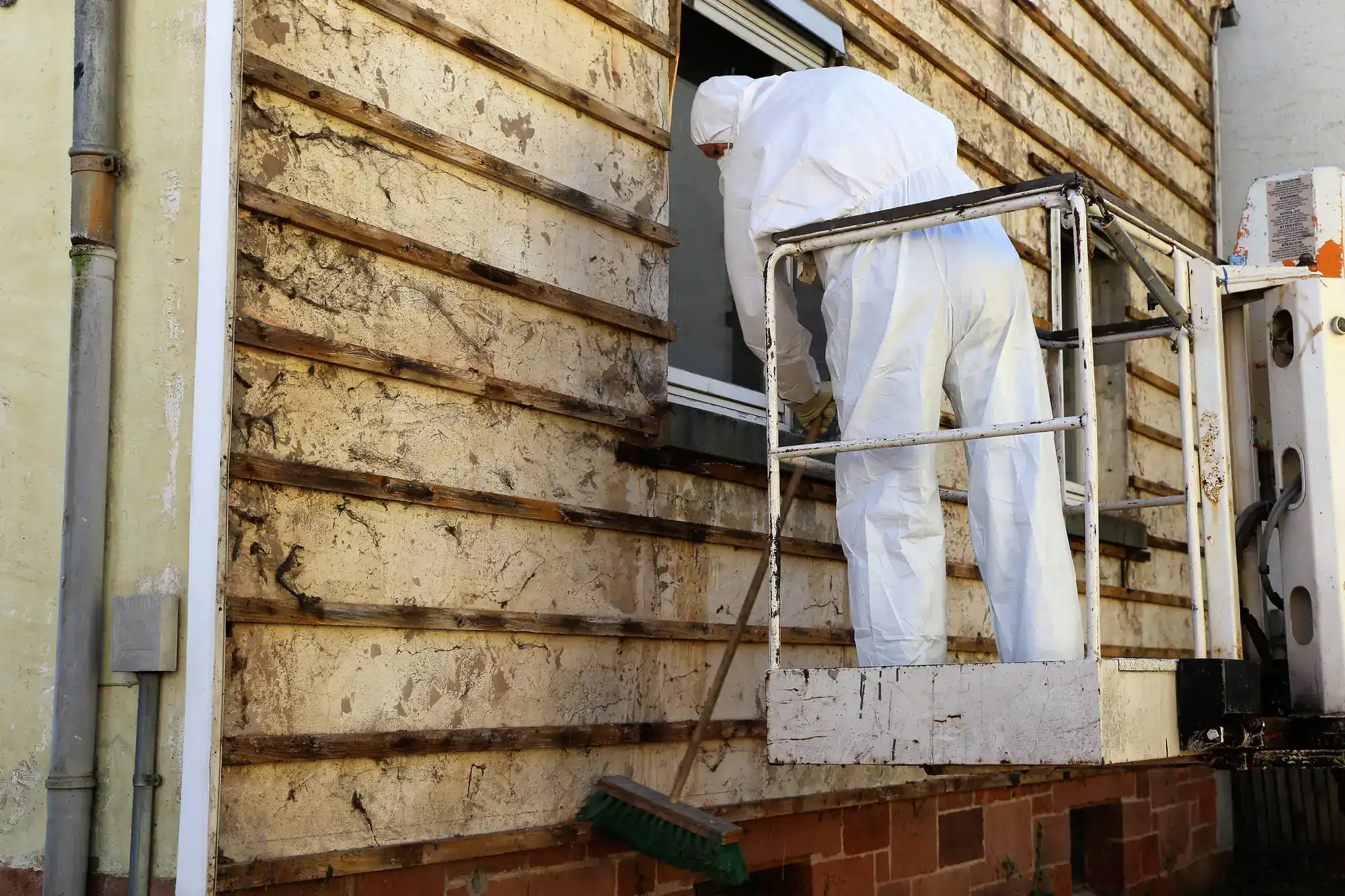
If abatement is needed, we file the required advance notification with the Pennsylvania DEP before any friable material is removed. That’s a state requirement, and it’s part of what separates us from people who just show up with a truck. From there, we set up full containment — negative air pressure, HEPA filtration, sealed work zones — so the removal process itself doesn’t spread fibers through the rest of your home. Removal is done using wet methods to keep fibers from becoming airborne, and all waste is sealed and transported to a certified disposal facility.
After the work is done, we run post-abatement clearance air testing to confirm the space is clean. Then you get full documentation — the kind that satisfies a Warrington Township building permit, closes a real estate deal, or simply gives you peace of mind before the rest of your renovation crew comes back. Spring and fall tend to be our busiest seasons here because that’s when renovations and real estate transactions peak in the Philadelphia suburbs, so if you’re working against a timeline, calling early matters.
Ready to get started?
Asbestos shows up in more places than most homeowners expect. In Warrington’s mid-century homes, the most common locations are vinyl floor tiles and the adhesive beneath them, pipe and duct wrap insulation around older HVAC systems and boilers, popcorn acoustic ceilings, attic insulation — including vermiculite, which has been found in Bucks County homes from this era — joint compound, plaster, and roofing materials. If your home was built before 1980 and you’re opening walls, replacing a furnace, or finishing a basement, there’s a real reason to test before you proceed.
We handle the full scope: inspection, lab testing, abatement planning, permit filing, containment setup, wet-method removal, waste transport, clearance air testing, and final documentation. If the job also involves lead paint — common in pre-1978 Warrington homes — our Certified Lead Inspector and Risk Assessor can assess both hazards in the same visit. And if your project involves demolition, mold remediation, or waterproofing alongside the asbestos work, we handle that too. One company, one point of contact, no gaps.
We also offer cash discounts and free estimates — no financial barrier to getting a real number before you commit to anything. If something unexpected turns up mid-project, our emergency response service means you’re not waiting until Monday for a callback.
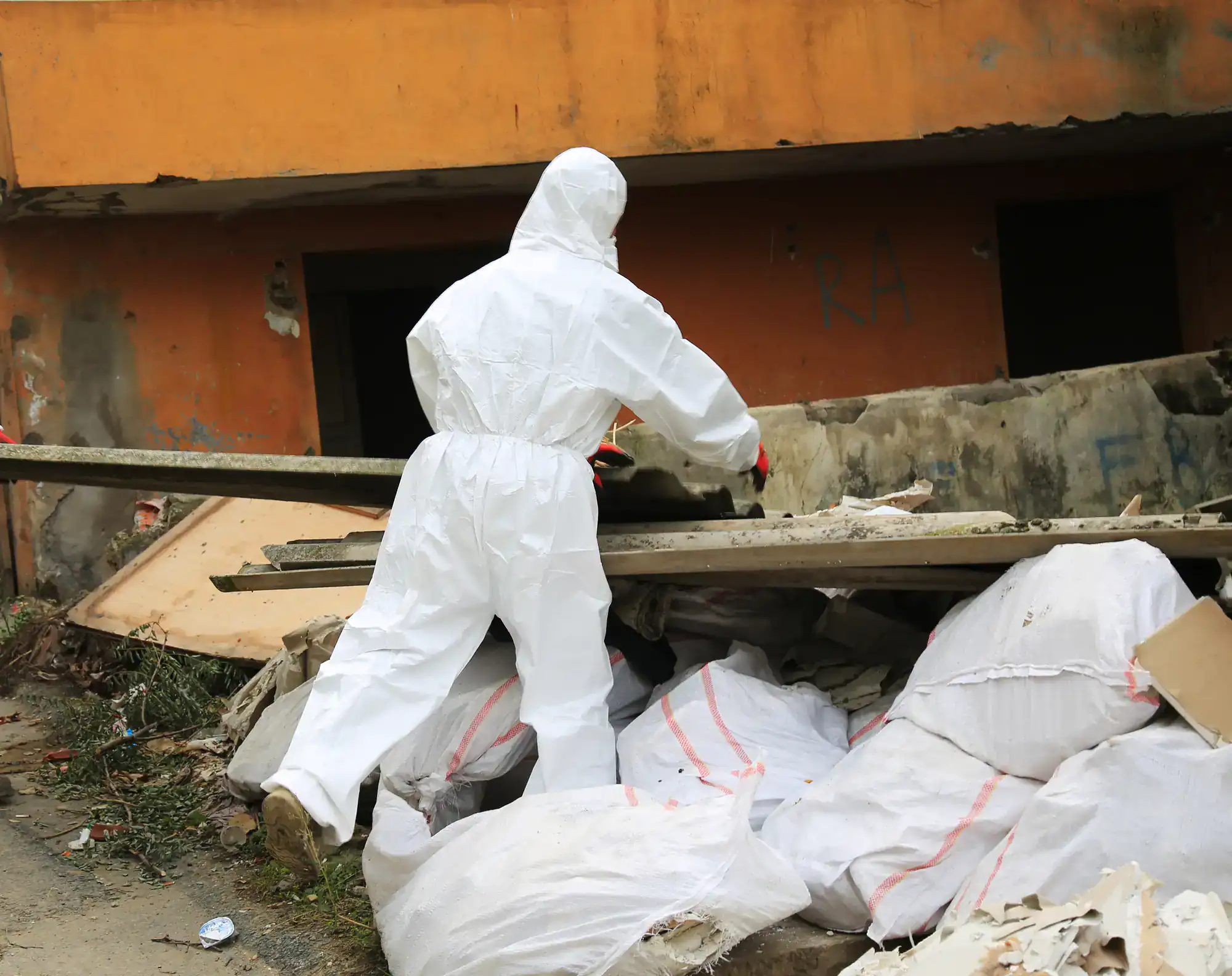

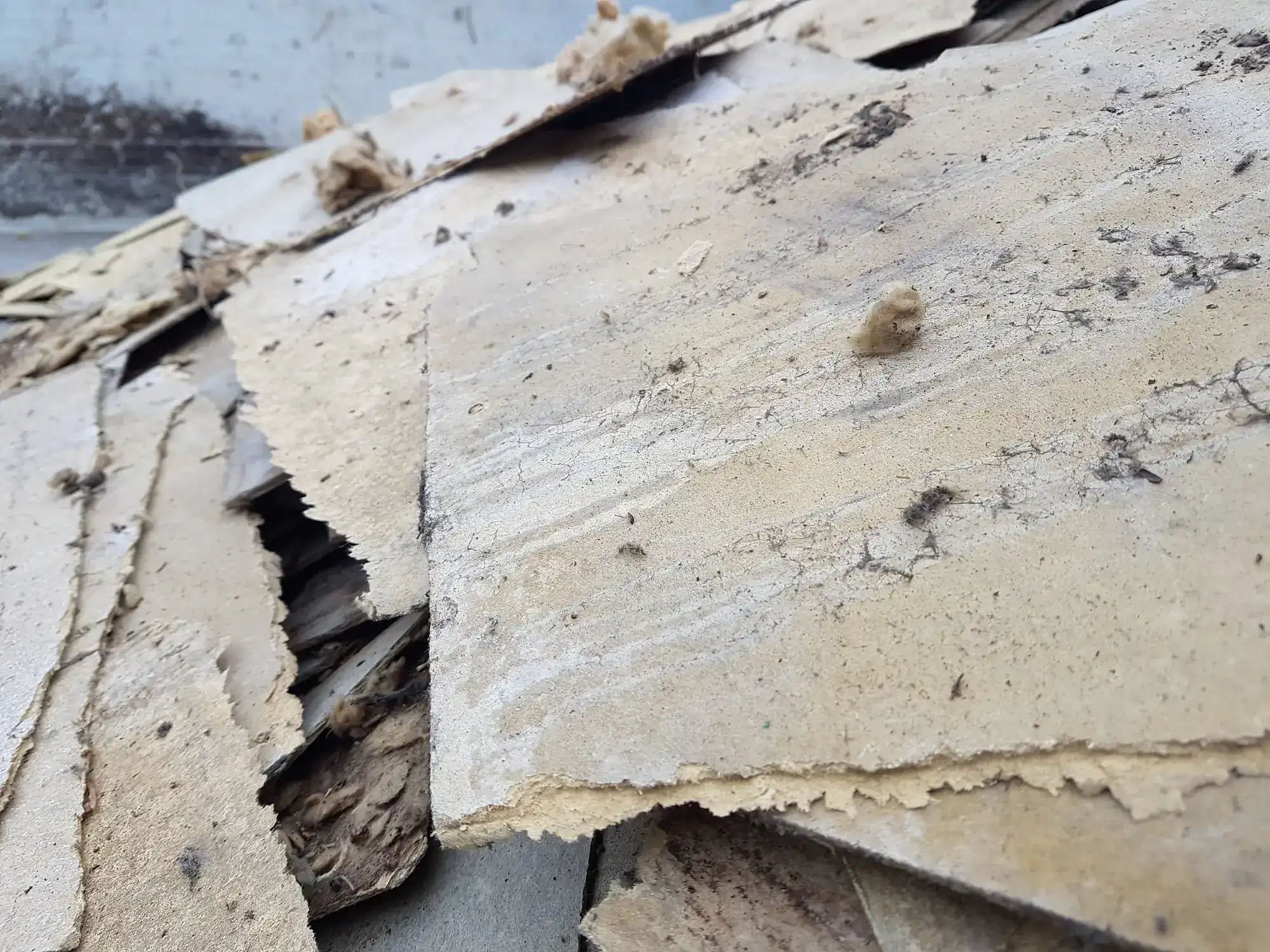
It’s a real risk, not a theoretical one. Homes built in Warrington during the 1950s through the 1970s were constructed during the peak years of asbestos use in American residential building. Floor tiles, pipe insulation, duct wrap, acoustic ceiling spray, joint compound, roofing shingles, and attic insulation all commonly contained asbestos-containing materials during that era. The only way to know for certain is to have a licensed inspector take samples and send them to a certified lab — visual identification alone isn’t reliable.
The good news is that not all asbestos is an immediate emergency. Asbestos that is intact and undisturbed is generally considered lower risk than material that is damaged, deteriorating, or about to be disturbed by renovation work. If you’re planning a kitchen remodel, replacing an old boiler, or finishing a basement in a pre-1980 Warrington home, testing before you start is the right call. It’s a straightforward process, and it gives you a clear answer before a contractor accidentally creates a bigger problem.
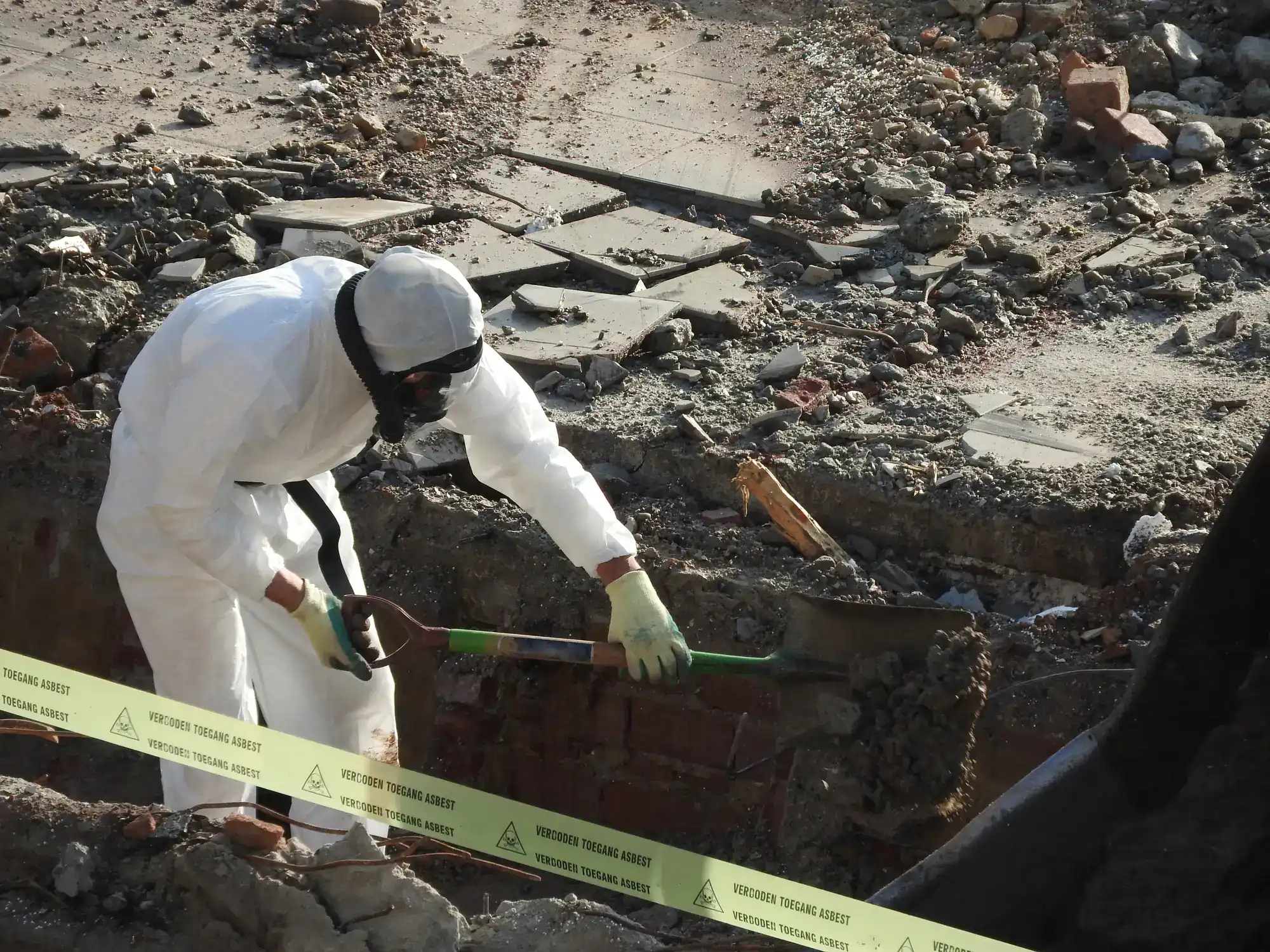
Stop work in that area and don’t disturb the material further. This is genuinely the right move, not just a legal formality. Once asbestos fibers become airborne — which happens when materials are cut, sanded, drilled, or broken apart — they can spread through the entire space and settle on surfaces far beyond the original work zone. The more you disturb it, the larger the abatement scope becomes.
Call a licensed asbestos abatement contractor immediately. Our emergency response service exists exactly for this scenario — a mid-renovation discovery on a Saturday afternoon in a Warrington Hunt split-level with a contractor scheduled to return Monday morning. We can assess the situation quickly, give you a clear picture of what’s there, and develop a plan that gets your renovation back on track as fast as possible. The process involves proper containment, licensed removal, clearance testing, and documentation — and your contractor can return to the site once clearance is confirmed.
Pennsylvania state law requires that a licensed asbestos contractor file advance notification with the Pennsylvania Department of Environmental Protection before removing friable asbestos material above a certain threshold — generally three square feet or three linear feet for residential work. That notification must be submitted at least five days before work begins. This is a state requirement that applies regardless of what Warrington Township’s local building department requires separately.
For renovation and demolition projects on pre-1980 structures, Warrington Township’s building permit process will typically require documentation confirming that asbestos has been inspected and, if present, properly abated before structural work proceeds. We handle the DEP notification filing as part of the job — it’s not something you need to figure out on your own. If your project is larger in scope, such as a commercial demolition or a significant structural renovation, federal NESHAP regulations may also apply, requiring a 10-working-day advance notice. We’ll tell you upfront which requirements apply to your specific project.
It depends on the scope of the job. A single-room floor tile removal in a Warrington home might be completed in one to two days. A more involved project — pipe wrap throughout a basement mechanical room, or a full attic vermiculite removal — can take several days to a week. We’ll give you a realistic timeline during the estimate, not a number we pull back from later.
Whether you need to vacate depends on where the work is happening and how the containment is set up. For work in a contained, isolated area of the home — a basement, an attic, a single room with proper negative air pressure containment — it’s sometimes possible to remain in other parts of the house. For larger or more complex jobs, temporary relocation is often the safer and more practical choice. We’ll walk you through what makes sense for your specific situation. The goal is always to minimize disruption while making sure the containment actually works — because a containment failure is worse than the inconvenience of staying somewhere else for a few days.
Pennsylvania requires sellers to disclose known material defects, and asbestos in a deteriorated or hazardous condition generally falls into that category. If you know asbestos is present and in poor condition, you’re expected to disclose it. The specific requirements depend on the condition of the material and how it’s characterized in a professional inspection report, so having a licensed assessment on record is important — both for legal protection and for keeping the transaction moving.
In Warrington’s active real estate market, asbestos flags on a buyer’s inspection report are one of the more common reasons deals slow down or fall apart. The most practical approach is to get an inspection done before listing, so you know what you’re dealing with and can either remediate it proactively or price and disclose accordingly. If abatement is needed before closing, we can work within a real estate timeline — we understand that closing dates are real and that delays cost money. Getting a free estimate early in the process gives you options before you’re under pressure.
No catch. Asbestos abatement in Bucks County involves licensed labor, certified lab testing, specialized equipment, proper waste disposal, and regulatory filing — the costs are real and they add up. When a homeowner pays in cash, it reduces the administrative overhead on our end — no processing fees, no delayed settlements, simpler bookkeeping. We pass that savings directly back to the customer.
For Warrington homeowners managing renovation budgets across multiple trades — and in a township where the average home is worth close to $600,000, those budgets are often significant — every dollar of savings on one line item creates more room on another. We’re not offering a discount because the work is any different. The same licensed crew, the same HEPA filtration, the same clearance testing, the same documentation. The cash discount is simply an honest reflection of lower transaction costs, and it felt right to share it rather than pocket it. If you want to know whether it applies to your specific job, just ask when you call for your free estimate.
Other Services we provide in Warrington