Hear from Our Customers
You get your renovation back. That kitchen remodel, basement finish, or bathroom update that came to a dead stop the moment someone flagged suspicious material — it moves forward again, on your timeline, with documentation that satisfies your contractor, your lender, and your attorney.
Spring House has one of the highest concentrations of long-term homeowners in Montgomery County, and a significant share of its housing stock was built between the 1940s and the mid-1970s — the exact window when asbestos was used most heavily in floor tiles, pipe insulation, duct wrap, acoustic ceilings, and joint compound. If you’ve lived in your Spring House home for decades without ever having it tested, you’re not unusual here. Most of your neighbors haven’t either. What changes after abatement is that you actually know what’s in your home — and so does every contractor, buyer, or inspector who comes through the door after you.
For the roughly 23% of Spring House residents who work from home, there’s another outcome worth naming: peace of mind during your workday. When abatement is done right — with proper negative air pressure containment and HEPA filtration — you’re not breathing in what’s being removed. That matters when your office is thirty feet from where the work is happening.
We’ve been working in Montgomery County for twenty years. That means we know the Lower Gwynedd Township permit process, we’ve worked in homes like yours on streets off Bethlehem Pike, and we understand what mid-century construction in Spring House actually looks like from the inside.
We’re fully licensed by the Pennsylvania Department of Labor and Industry, EPA and HUD compliant, and we carry a Certified Lead Inspector and Risk Assessor on staff. That credential matters more than it might sound — a lot of pre-1978 Spring House homes have both asbestos and lead paint, and having one contractor who can assess and handle both saves you significant time and coordination.
What sets us apart from the commercial-focused contractors in the area is that we work directly with homeowners. You get a real person on the phone — at any hour — a free estimate before anything starts, and a team that handles testing, removal, demolition, and cleanup without handing you off to someone else mid-project.
It starts with an inspection. Before anything is removed, we assess the materials in question and collect samples for laboratory testing. You’ll know what you’re dealing with — confirmed, documented, and clearly explained — before any abatement work begins. In Spring House, where renovation projects in older homes regularly turn up multiple suspect materials at once, this step matters. You want the full picture, not a partial answer.
Once testing confirms the presence of asbestos, we file the required advance notification with the Pennsylvania Department of Labor and Industry — a mandatory step before any friable asbestos removal can legally begin in the state. Lower Gwynedd Township requires a building permit for virtually any interior renovation or demolition work, so if your project is permit-driven, we coordinate that process as well. Nothing gets skipped because skipping it creates liability for you.
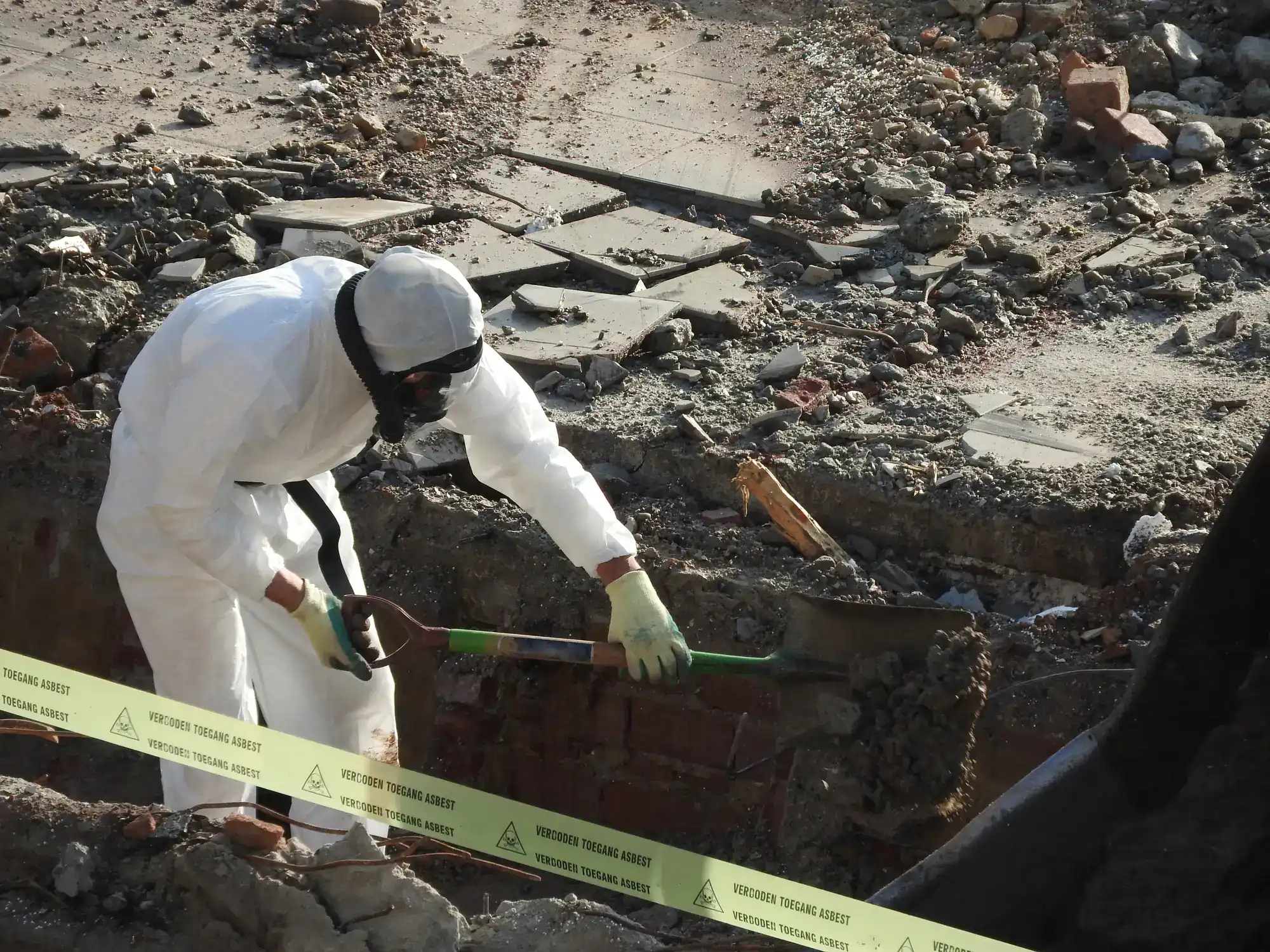
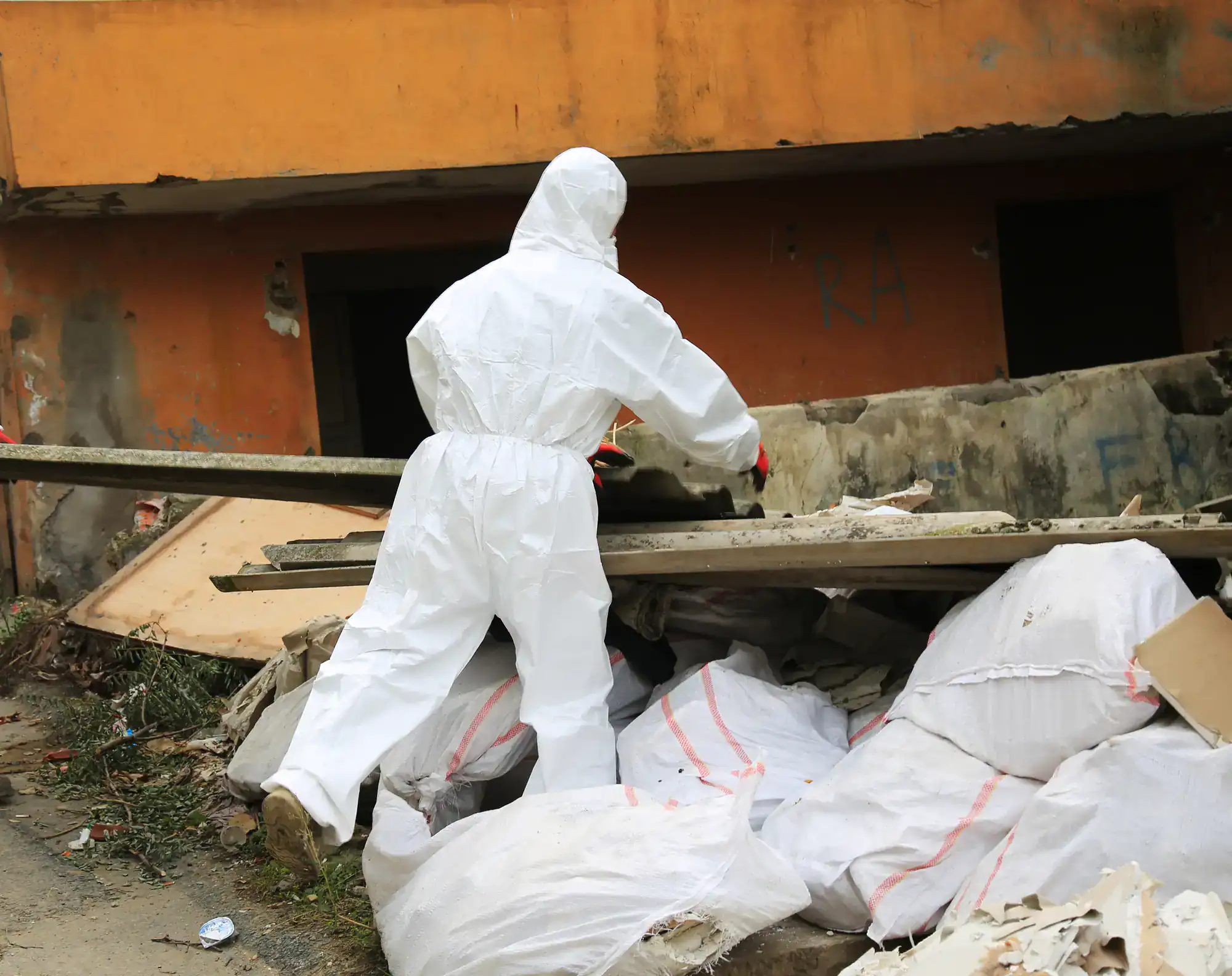
The removal itself is done under proper containment: negative air pressure, sealed work zones, and HEPA filtration running throughout. When the material is out, it’s disposed of through licensed channels — not dropped at a Montgomery County household waste event, which explicitly does not accept asbestos. After clearance testing confirms the area is clean, we can continue directly into demolition, gutting, or whatever phase of your renovation comes next. One contractor, start to finish.
Ready to get started?
Asbestos abatement from us covers the full scope: inspection, sample collection, lab testing, containment setup, licensed removal, proper disposal, post-abatement clearance testing, and cleanup. If your project requires demolition or structural work after the asbestos is removed, we handle that too. This matters specifically in Spring House, where homeowners are frequently mid-renovation when the discovery happens — and where stopping work to find a second contractor, coordinate schedules, and wait for availability can cost weeks.
The materials most commonly found in Spring House homes from the 1950s through the 1970s include floor tiles and their adhesive backing, pipe and duct insulation, textured ceiling coatings, plaster, and joint compound. Pre-war homes near the historic core of Lower Gwynedd Township can also carry asbestos in original roofing materials and exterior siding. We know what to look for based on the era of construction, not just a visual scan.
Every job uses state-of-the-art HEPA filtration and containment equipment. We’re fully bonded and insured, and all work is performed by licensed technicians under PA DL&I requirements. Free estimates are available for every job, and cash discounts apply — a straightforward acknowledgment that Spring House homeowners managing high-value renovation budgets deserve transparent, fair pricing with no surprises buried in the final invoice.

Yes — and Montgomery County makes this explicit. The county’s official guidance states that asbestos-containing materials should be removed only by a contractor who is licensed to do so, and the county does not accept asbestos at its household hazardous waste collection events. This applies whether you’re dealing with floor tiles, pipe insulation, ceiling material, or anything else.
At the state level, the Pennsylvania Department of Labor and Industry enforces the Asbestos Occupations Accreditation and Certification Act, which requires all asbestos contractors to be licensed and requires advance notification to DL&I before friable asbestos removal begins on any project above the minimum threshold. Attempting to remove asbestos yourself — or hiring an unlicensed contractor — creates real legal and health exposure. In Spring House, where homes regularly sell for well above the county median, the documentation from a licensed abatement creates a paper trail that protects your property value and your transaction, not just your health.
For a typical residential job, the national average lands somewhere between $1,200 and $3,200, with most homeowners paying around $2,200 depending on the scope. What drives the cost up or down is the type of material being removed, how much of it there is, where it’s located in the home, and how accessible the work area is. A small section of floor tile in a finished basement costs less than pipe insulation running through an unfinished mechanical room.
In Spring House, where median home values sit above $670,000 and renovation projects tend to be substantial, the cost of professional abatement is rarely the deciding factor. What matters more to most homeowners here is knowing the price upfront — no surprises, no scope creep, no invoice that looks nothing like the estimate. We provide free estimates before any work begins, so you have a clear number to work with before you commit. Cash discounts are also available, which is worth asking about when you call.
It depends on the scope of the work and where in the home it’s happening. For smaller, well-contained jobs — a section of floor tile in one room, for example — proper containment with negative air pressure and HEPA filtration can allow you to remain in unaffected areas of the house. For larger projects involving duct systems, mechanical rooms, or materials that span multiple areas, temporary relocation may be the safer and more practical choice.
This question comes up more often in Spring House than in most communities, and for an obvious reason: nearly one in four residents works from home. If your office is in your house, the question of whether you can keep working during abatement isn’t abstract — it directly affects your day. When you call us, we’ll walk through the specific scope of your job and give you an honest answer about what the containment setup will look like, what areas will be affected, and what your realistic options are. That conversation happens before anything is scheduled, not after the crew shows up.
Any home built before 1980 is worth taking seriously, but the highest-risk window in Spring House is roughly 1945 to 1975. Homes from this era — and there are a lot of them in Lower Gwynedd Township — were commonly built with asbestos in floor tiles and the adhesive beneath them, pipe and duct insulation, acoustic ceiling tiles, textured spray coatings, plaster, and joint compound used around drywall seams. The material was cheap, fire-resistant, and widely used before its health risks were understood.
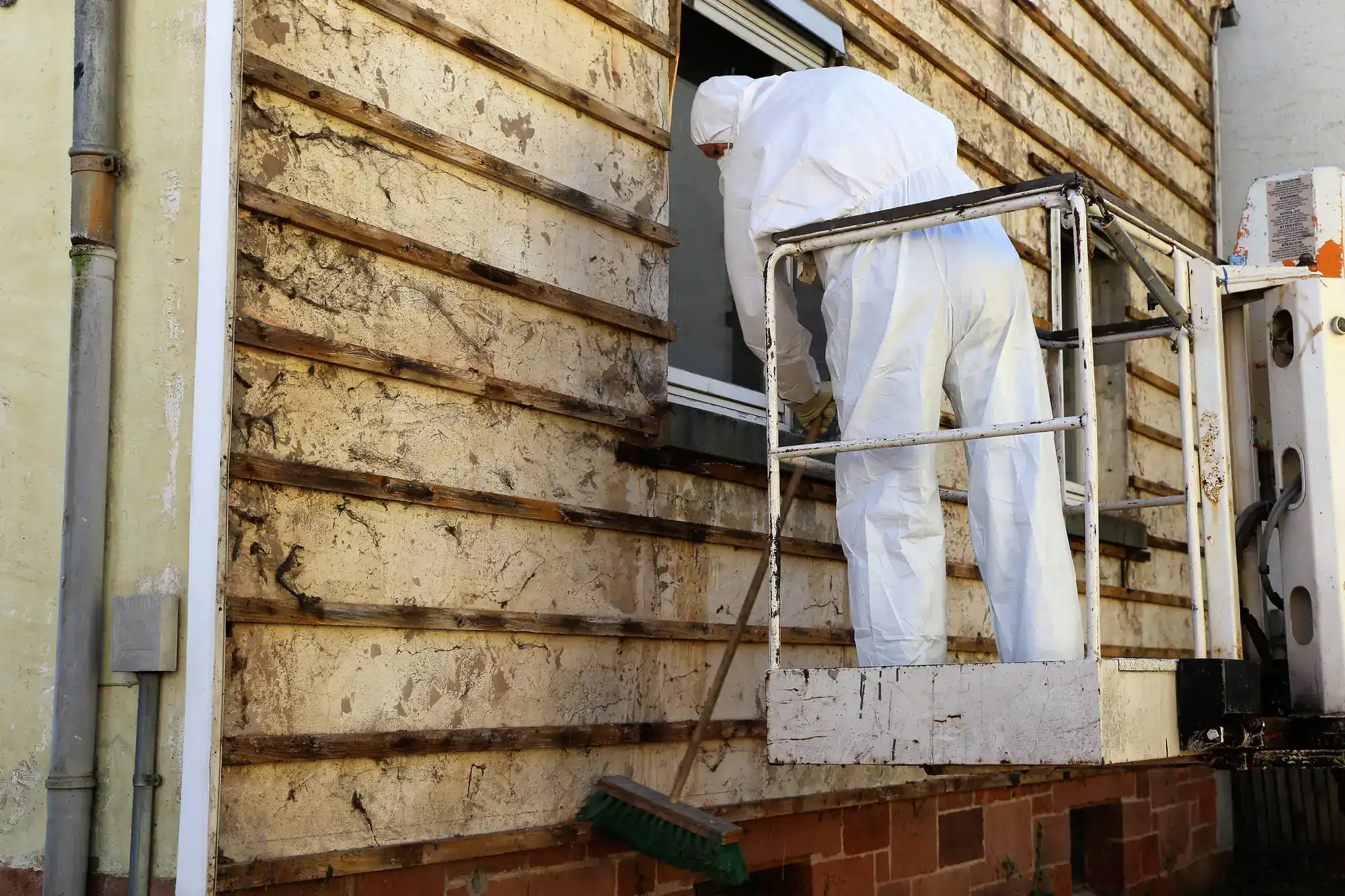
Homes built before 1940 carry a different risk profile — asbestos shows up more often in original roofing shingles, exterior siding panels, and older pipe wrap. Spring House has a meaningful share of pre-war homes, particularly near the historic areas of Lower Gwynedd Township, and these properties often haven’t been tested simply because they’ve been in the same family for generations. If you’re preparing to sell, renovate, or simply want to know what’s in a home you’ve lived in for decades, an inspection is the right starting point — not an assumption either way.
Lower Gwynedd Township requires a building permit for additions, alterations, demolitions, and most interior renovation work — operating under the 2018 International Building Code as adopted through Pennsylvania’s Uniform Construction Code. While the permit application itself doesn’t always ask specifically about asbestos, the practical reality is that any licensed general contractor worth hiring will not begin demolition or gutting work in a pre-1980 home without asbestos clearance. If they do, and asbestos is disturbed, the liability falls on everyone involved.
The smarter sequence is to schedule your asbestos inspection before you pull the permit, not after. If testing comes back clean, you proceed with confidence. If it doesn’t, you have a documented abatement plan in place before the renovation timeline starts — which is far less disruptive than stopping mid-project. In Spring House’s active real estate and renovation market, where projects are often on tight timelines, getting the environmental piece handled first is what keeps the rest of the schedule intact.
Pennsylvania doesn’t mandate asbestos testing as a legal condition of sale, but in Spring House’s market — where homes regularly list between $600,000 and well over $1 million — buyers and their attorneys routinely request it. Buyers’ agents working in the Montgomery County market are familiar with the age of the housing stock here, and pre-purchase environmental inspections have become a standard part of due diligence on any pre-1980 property.
What this means practically is that if you’re listing a home in Spring House that was built before 1980 and you haven’t had it tested, there’s a reasonable chance the issue surfaces during the buyer’s inspection contingency period — at the worst possible moment in the transaction. Having a clean asbestos clearance report in hand before you list removes that variable entirely. If testing does find something, handling it before listing gives you control over the timeline and the cost, rather than negotiating under pressure with a buyer who now has leverage. We can move quickly on both inspections and abatement, which matters when a closing date is already on the calendar.
Other Services we provide in Spring House