Hear from Our Customers
You stop guessing. That’s the biggest thing. When you’re renovating a 1960s Colonial off Meetinghouse Road or finally tackling that basement in a mid-century ranch that’s been on your list for two years, you don’t want to be the person who finds out halfway through demolition that the floor tiles or pipe wrap needed a licensed abatement crew — not a general contractor with a crowbar.
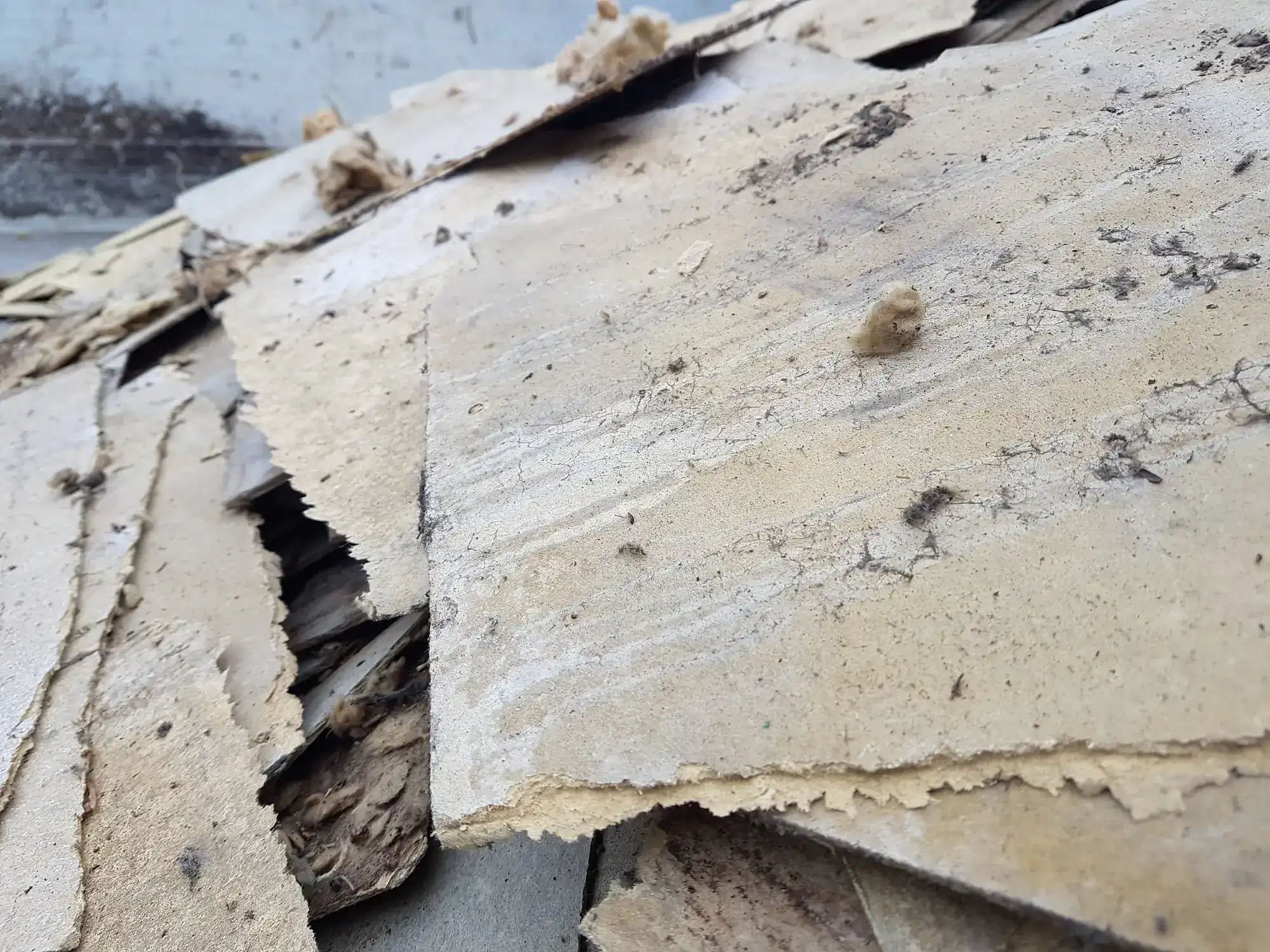
Skippack’s housing stock spans centuries. There are homes in this township that predate the American Revolution. The bulk of the residential inventory, though, sits in that 1940s-through-1970s window, which is exactly when asbestos was standard in pipe insulation, attic insulation, floor tiles, joint compound, and plaster. When those materials get disturbed — by a renovation, by age, by the kind of moisture intrusion that comes with living near the Perkiomen Creek — they become a health risk that doesn’t announce itself.
After proper abatement, your renovation moves forward on schedule. Your home sale doesn’t get derailed by a buyer’s inspector. Your contractor can open walls without stopping work. You have documentation that the job was done right, by a licensed crew, under EPA and Pennsylvania DEP standards. That’s what you’re actually buying here — not just removal, but certainty.
We’ve been doing this work across Montgomery County for two decades, with deep roots in Skippack and the surrounding communities. That means we’ve worked in the full range of what this area’s housing stock looks like, from historic farmhouses near Evansburg State Park to split-levels tucked into Skippack’s quieter back roads. We know what pre-1980 construction in this part of Pennsylvania tends to hide, and we know how to handle it.
We’re fully licensed by the Pennsylvania Department of Labor and Industry, EPA and HUD compliant, and fully bonded and insured. We also have a Certified Lead Inspector and Risk Assessor on staff — which matters in a community where asbestos and lead often show up in the same renovation project. When you call, you get a real person. When we schedule, we show up.
What actually sets us apart is the one-stop model. Most contractors in this space handle one thing. We handle asbestos, lead, mold, demolition, waterproofing, duct cleaning, and more — under one contract, one timeline, one team. For a Skippack homeowner juggling a renovation and a real estate deadline, that’s not a small thing.
It starts with an inspection and testing. Before anything gets removed, we identify what you’re actually dealing with — where the material is, what condition it’s in, and whether it needs to be removed or can be safely encapsulated. Not every material that looks suspicious is a problem. Not every problem looks suspicious. That’s why testing comes first.
If abatement is needed, we build a plan specific to your property. In Pennsylvania, projects above certain thresholds require advance notification to the PA Department of Environmental Protection — a minimum of ten working days for larger jobs. We handle that paperwork. You don’t have to figure out the regulatory side of this on your own. We’ve done it hundreds of times across Montgomery County, and we know what the DEP expects.
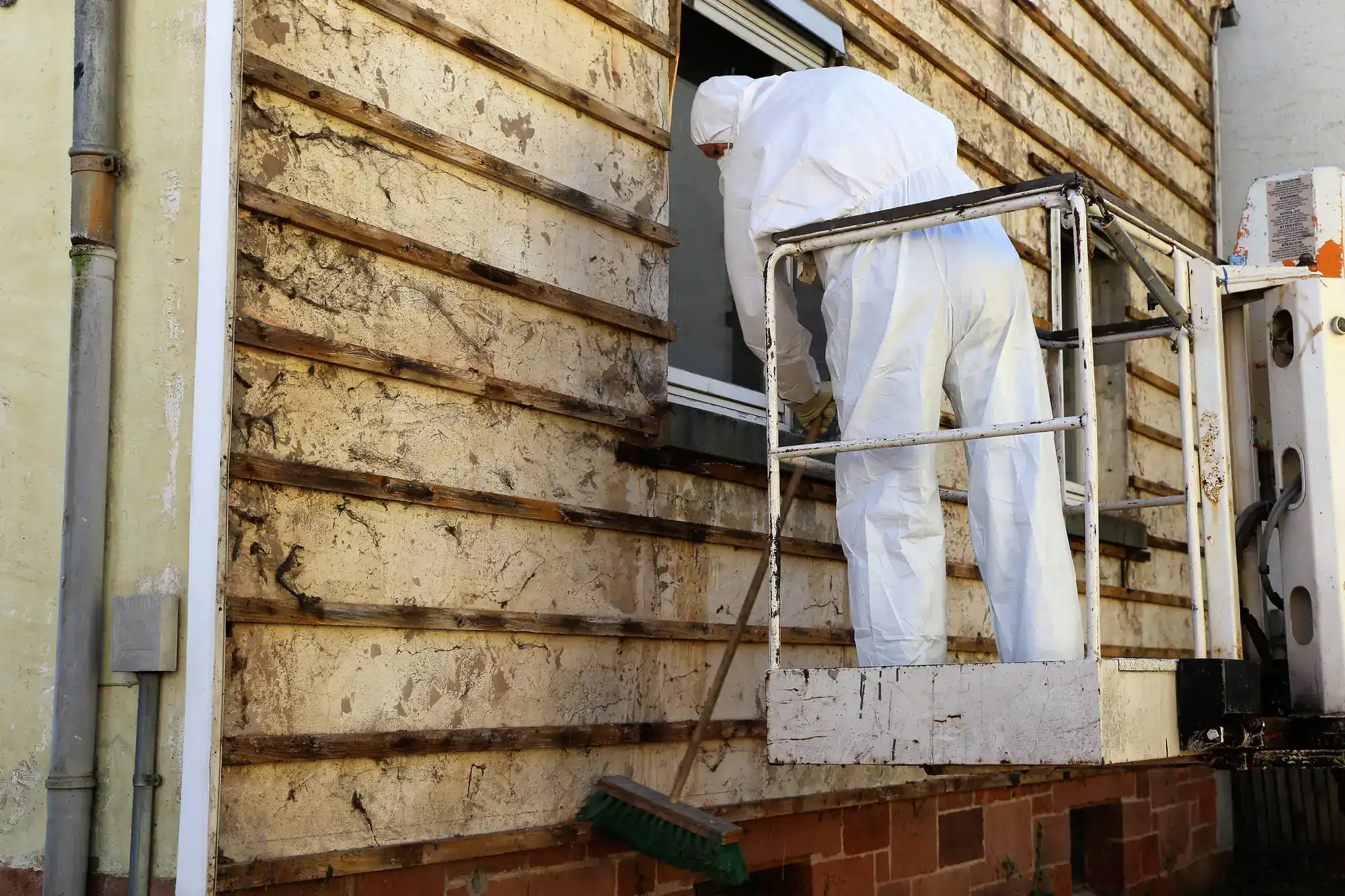
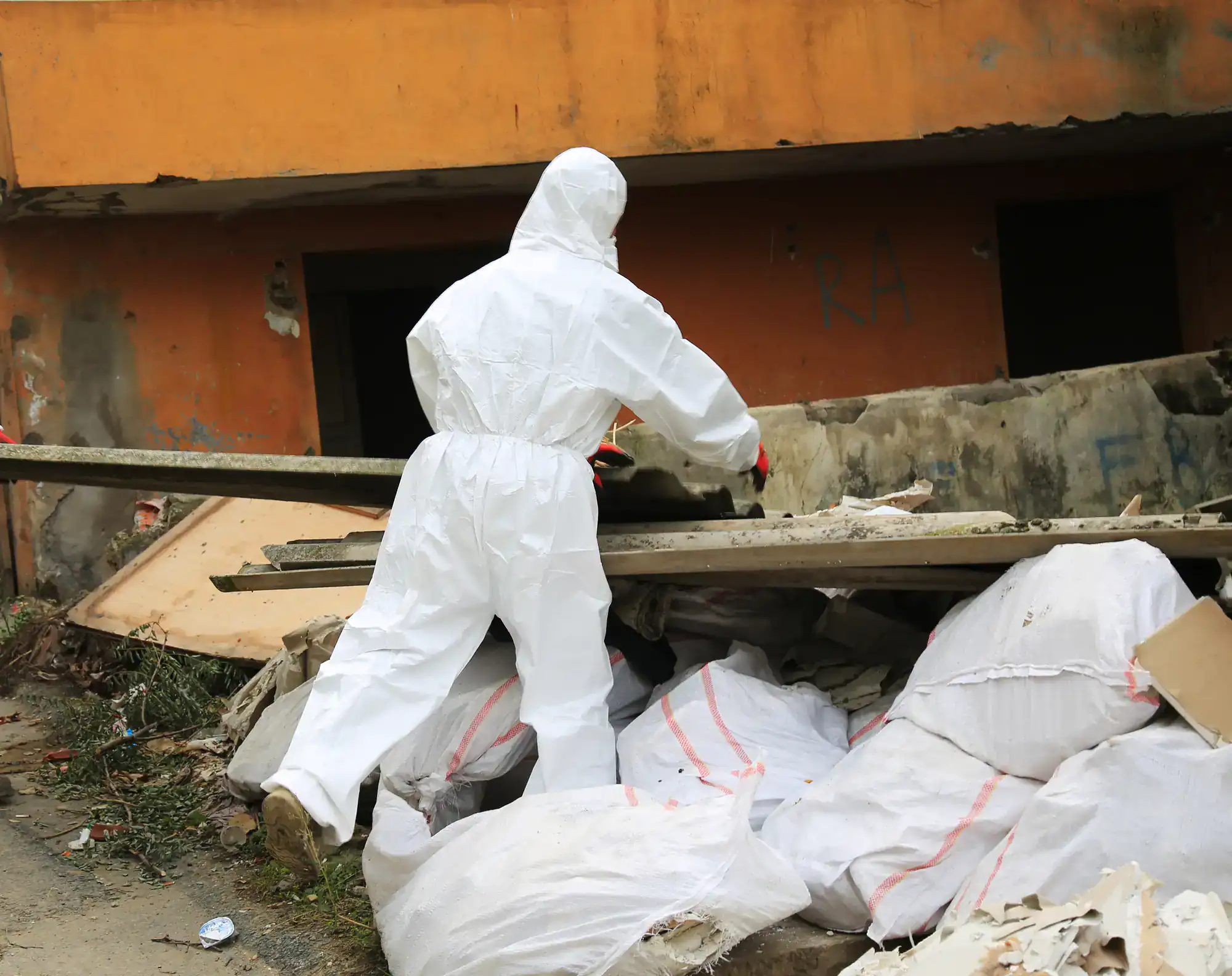
On the day of the job, we seal and contain the work area using negative air pressure and HEPA filtration — which means fibers stay in the containment zone, not in your HVAC system or the rest of your home. The material is removed, packaged, and disposed of according to state and federal requirements. After the work is done, clearance testing confirms the area is clean before containment comes down. You get documentation of the whole process — which matters whether you’re pulling permits, closing a sale, or just want proof the job was done correctly.
Ready to get started?
Every job starts with a site-specific assessment — not a generic checklist. In Skippack, that means accounting for the actual age and construction style of your home, the materials most likely to be present based on when it was built, and any conditions that affect risk. Homes near the Perkiomen Creek corridor, for example, tend to have more moisture-related deterioration in older insulation and flooring materials. That changes how we approach the inspection and what we prioritize.
From there, the scope covers everything the job actually requires: full containment setup, licensed removal of asbestos-containing materials, proper disposal under Pennsylvania DEP and EPA standards, and post-removal clearance testing. Montgomery County does not accept asbestos at its household hazardous waste events — licensed disposal through a certified contractor is the only legal route, and that’s exactly what we provide.
Because we’re a one-stop environmental services contractor, we can also address anything else that turns up during the process. Lead paint, mold, old boilers and furnaces, oil tanks, duct cleaning — if your renovation or inspection uncovers more than one issue, you don’t need to start the contractor search over from scratch. We handle it. Free estimates are available, and we offer cash discounts. Call us at (484) 378-2453 any time — including nights and weekends.
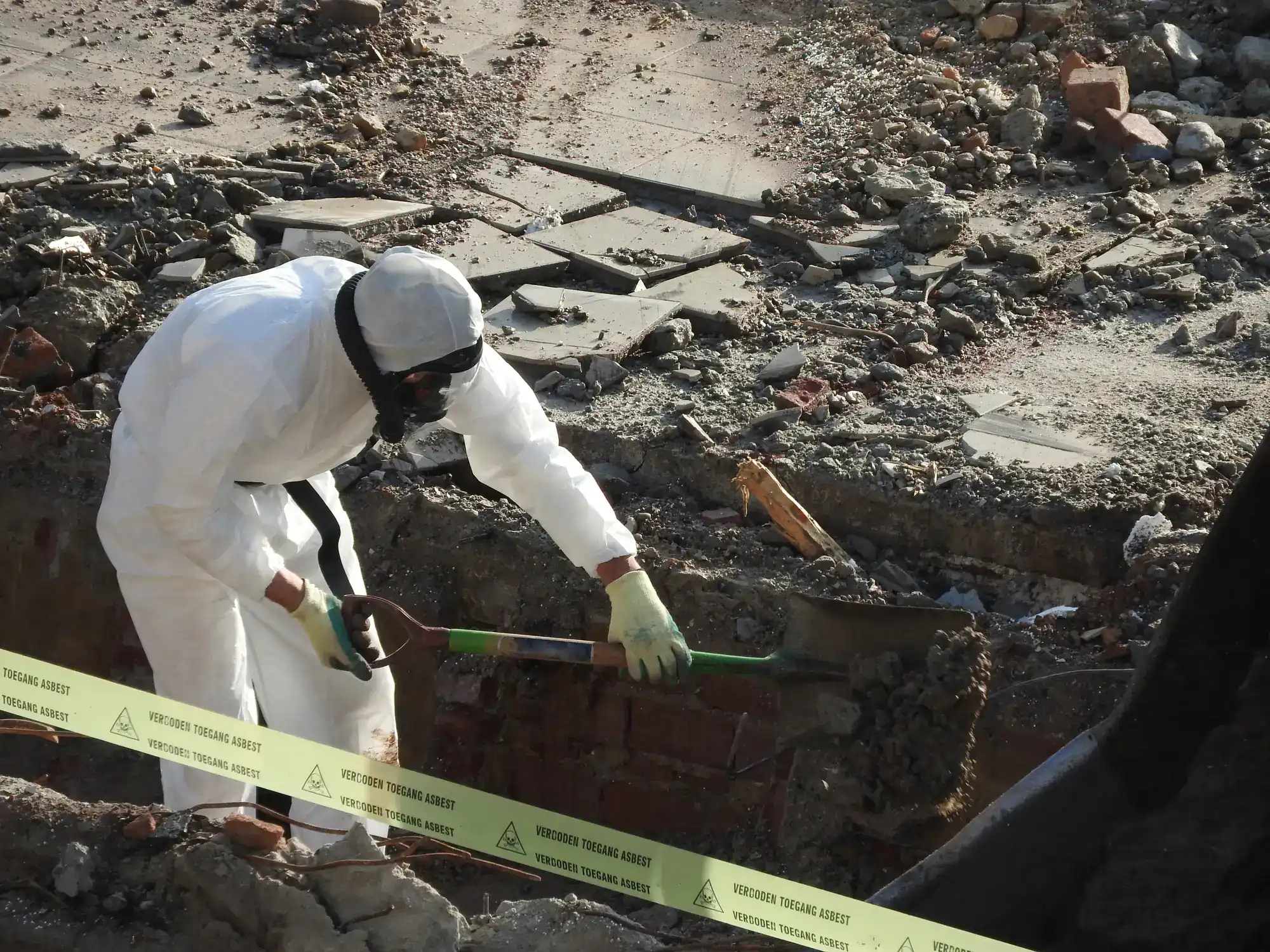
If your home was built before 1990, testing before any significant renovation is strongly recommended — and in many cases, it’s required before a licensed contractor can legally proceed with demolition. Pennsylvania DEP regulations under the federal NESHAP standard apply when renovation work will disturb materials above certain thresholds, and the only way to know whether you’re dealing with asbestos-containing materials is to test them.
In Skippack specifically, a large portion of the residential housing stock falls squarely in the 1940s-through-1970s range — the decades when asbestos was most heavily used in pipe insulation, floor tiles, ceiling texture, joint compound, and attic insulation. A home on the surface can look completely updated and still have original materials behind the walls or under newer flooring. Testing takes the guesswork out of it and protects you, your contractor, and anyone else in the home during the work.
For most residential asbestos abatement jobs, costs typically fall somewhere between $1,200 and $3,500 depending on the scope — what materials are affected, how much square footage is involved, and how accessible the work area is. Larger jobs involving full attic insulation removal or extensive pipe wrap can run higher. The only way to get an accurate number for your specific property is an on-site estimate, which we provide at no charge.
What’s worth keeping in mind in Skippack’s market is that the cost of proper abatement is almost always less than the cost of getting it wrong. A buyer’s inspector who finds undisclosed asbestos-containing materials in a home listed at $600,000 or more can derail a closing, trigger a price renegotiation, or kill the deal entirely. Doing it right upfront — with documentation — protects both your timeline and your investment.
The most common locations in pre-1980 homes are pipe and duct insulation, vinyl floor tiles and the adhesive underneath them, textured ceiling coatings like popcorn ceilings, joint compound used on drywall seams, attic and wall insulation (particularly vermiculite and older blown-in types), and roofing shingles. In homes from the 1940s and 1950s, you’ll also sometimes find asbestos in plaster walls and around boilers and furnaces.
Skippack’s housing stock is particularly varied — the township has everything from 18th-century farmhouses to mid-century ranches to 1970s split-levels, and each era of construction has its own typical materials profile. The homes that tend to carry the most risk are those built between roughly 1945 and 1980 that haven’t been fully gut-renovated, because the original materials are still in place and may have degraded over time. If your home falls in that range and you haven’t had it tested, it’s worth a conversation.
It depends on the scope and location of the work. For contained jobs — a section of flooring, a specific room, or a portion of the basement — it’s often possible to remain in other parts of the home while work is in progress, provided the containment is properly set up. For larger jobs involving attic insulation, multiple rooms, or HVAC-adjacent materials, temporary relocation during the active removal phase is typically the safer and more practical choice.
We use negative air pressure containment and HEPA filtration on every job, which keeps the work area isolated from the rest of your living space. We’ll walk you through what to expect during your estimate so there are no surprises on the day of the job. How long you need to be out — if at all — depends on what we find and how the work is scoped. Most residential jobs in Skippack are completed within one to three days.
Yes, and this is something Skippack homeowners near the creek corridor should take seriously. When floodwater or significant moisture intrusion damages the walls, floors, or ceilings of a pre-1980 home, it can disturb asbestos-containing materials that were previously stable and non-friable. Once those materials are wet, damaged, or broken apart — even by water, not just physical demolition — they can release fibers.
The issue is that homeowners and general contractors often move quickly into cleanup and repair mode after flood damage without stopping to assess whether hazardous materials have been disturbed. If your home along the Perkiomen Creek corridor took water damage and it was built before 1980, an asbestos assessment before any reconstruction work begins is the right call. We offer emergency response service for exactly this kind of situation — you can reach us at (484) 378-2453 any time, day or night.
It’s straightforward — cash payments reduce our processing overhead, and we pass that savings directly to the customer. There’s no markup to cover transaction fees, no administrative back-and-forth. For homeowners in Skippack who are already managing renovation budgets, contractor schedules, and in some cases a real estate timeline, every dollar of savings on a required line item matters.
It’s also part of how we operate generally. Free estimates, transparent pricing, no hidden fees — the cash discount is consistent with that approach. You know what the job costs before we start, and if paying cash saves you money on top of that, we’d rather give you that option than keep it. If you want to talk through what a job at your property would cost, call us or request a free estimate. There’s no obligation and no pressure.
Other Services we provide in Skippack