Hear from Our Customers
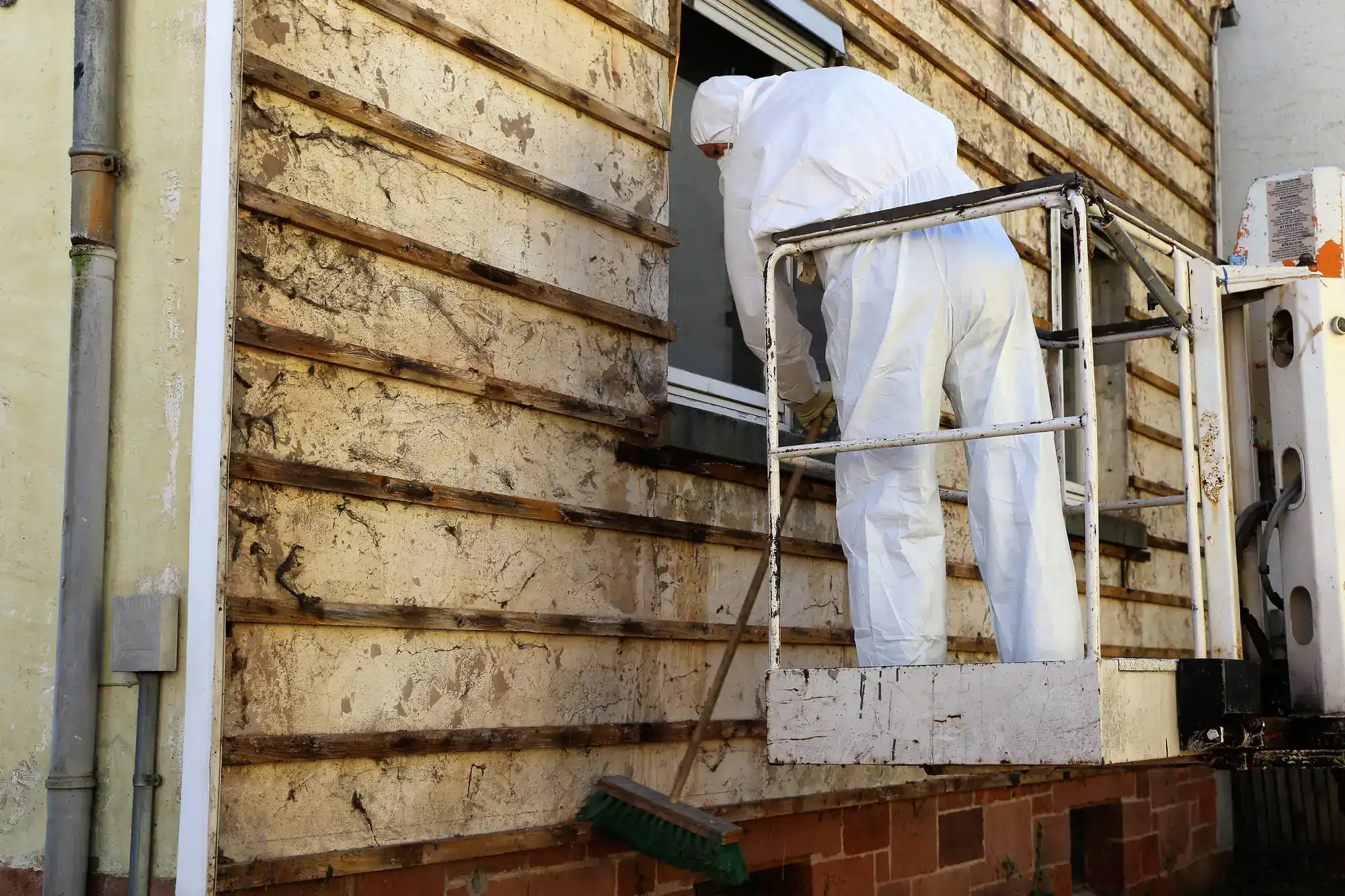
You stop guessing. That’s the first thing. Whether you cracked open a wall on Mattison Avenue and found suspicious pipe wrap, or your inspector flagged something during a pre-sale walkthrough, the uncertainty is the worst part — and it ends the moment you have a real answer from someone qualified to give you one.
Ambler’s housing stock is not like most of Montgomery County. The homes on Orange Avenue, Church Street, Rosemary Avenue, and the surrounding blocks were built by Italian stonemasons in the late 1800s and early 1900s — during the height of asbestos manufacturing right here in this borough. That means the insulation, the floor tiles, the pipe wrap, and the plaster in many of these homes were put in place when asbestos was the material of choice. They’ve been there ever since. A renovation that disturbs those materials without proper abatement doesn’t just create a legal problem — it creates an airborne hazard in your living space.
Once the abatement is done correctly — contained, removed, disposed of, and cleared — you get your project back. Your contractor can proceed. Your sale can close. Your family can breathe easier, literally. And you have documentation proving the job was done right, which matters in a community where the history of asbestos mishandling is not ancient history. It’s part of why people here are more informed, more cautious, and more likely to demand proof than buyers in most other towns.
We’ve been doing this work in Montgomery County for two decades. That’s long enough to have worked in the same stone Victorians and early-20th-century colonials that define Ambler’s neighborhoods — long enough to know what’s typically inside them and how to handle it properly.
Our credentials are real and verifiable: fully licensed by the Pennsylvania Department of Labor and Industry under the Pennsylvania Asbestos Accreditation and Certification Act, EPA and HUD compliant, fully bonded and insured, and a Certified Lead Inspector and Risk Assessor on staff. In a borough with two EPA Superfund sites and a documented mesothelioma rate three times Pennsylvania’s average, those aren’t just bullet points. They’re the baseline for doing this work responsibly.
We handle asbestos alongside lead inspection, mold remediation, demolition, waterproofing, and environmental clean-outs — all under one roof. For a homeowner managing a renovation on a pre-1900 Ambler property, that means one call covers everything. No juggling contractors. No scheduling gaps. Just a clear process from start to finish, with someone available to answer the phone at any hour.
It starts with an inspection. We come out, assess the materials in question, and collect samples for lab analysis. You get a clear answer on what you’re dealing with before any removal begins — no pressure, no assumptions, just results.
If asbestos is confirmed, we file the required advance notification with the Pennsylvania DEP — a minimum five-day notice is required before any friable asbestos removal in the state, and larger commercial or multi-family projects trigger additional NESHAP notification requirements. In Ambler specifically, any work near the BoRit or Ambler Asbestos Piles monitoring zones may involve additional coordination with state and federal environmental agencies. We know the regulatory landscape here and handle the paperwork.
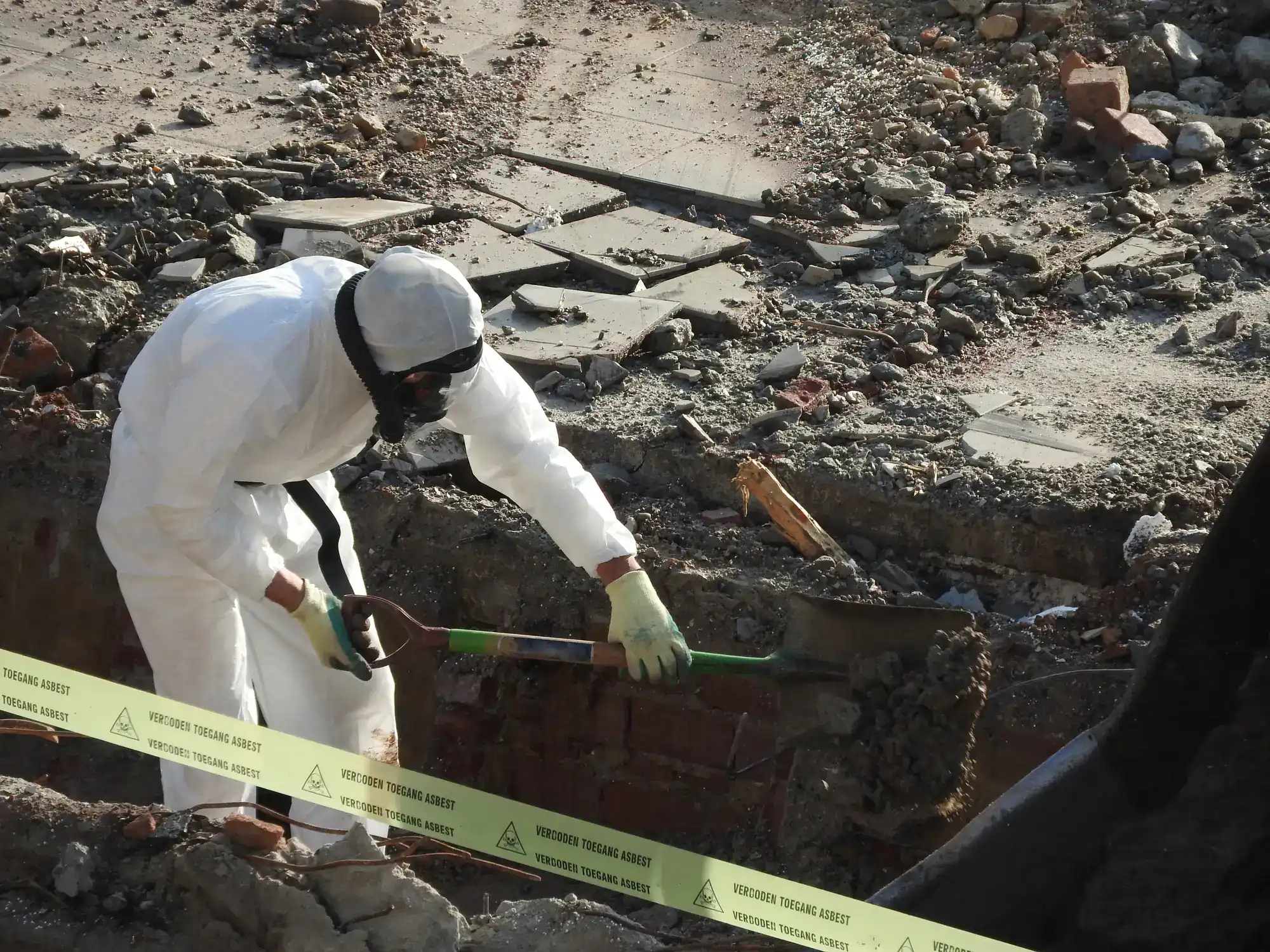
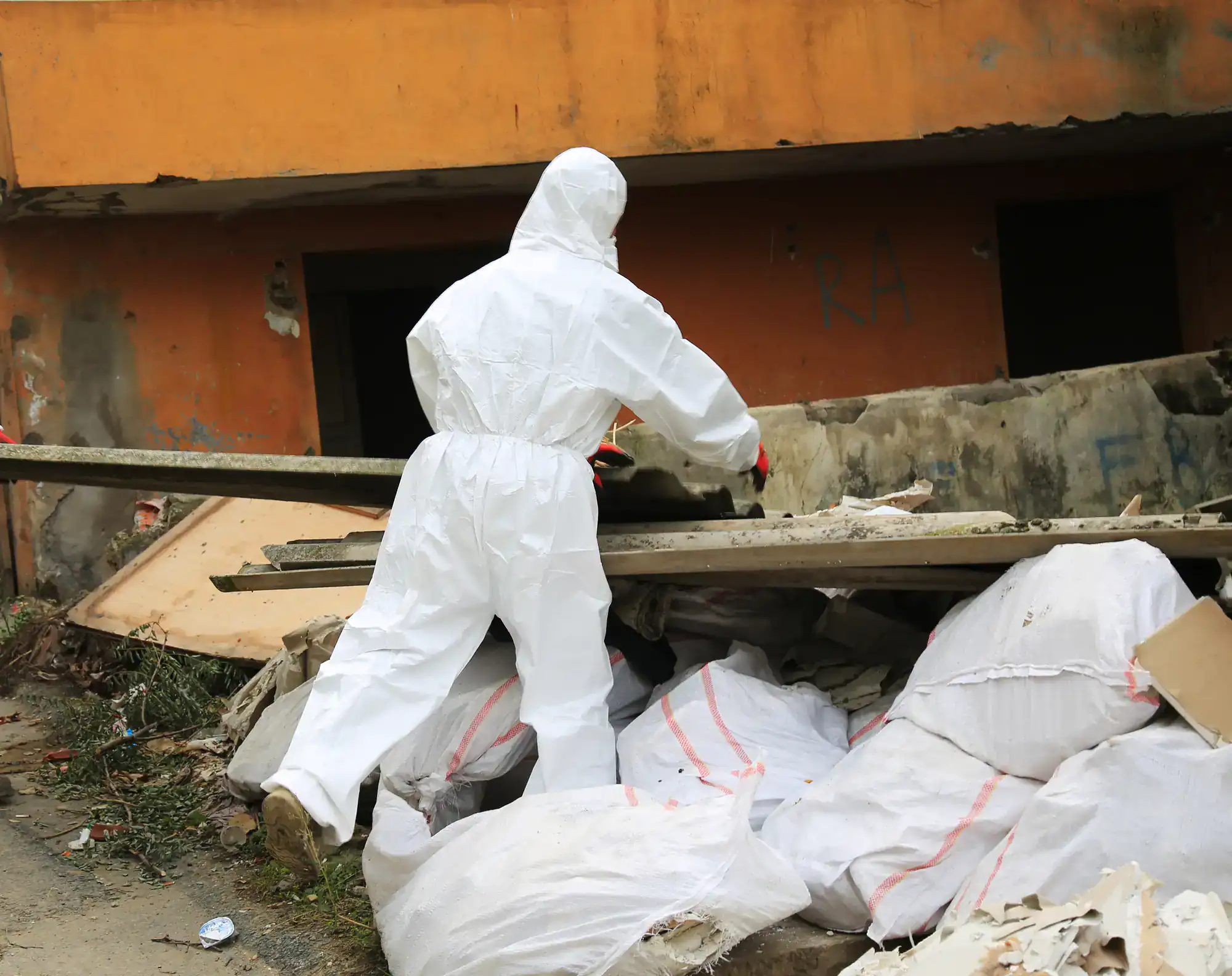
Removal is done under full containment — negative air pressure, HEPA filtration, wet methods to suppress fiber release, and sealed waste transport to a certified disposal facility. When the work is done, we conduct post-abatement air quality clearance testing and provide written documentation. That clearance report is your proof: proof for your contractor, your buyer, your lender, or anyone else who needs to know the job was done to code. The process is thorough because in Ambler, cutting corners on asbestos has a documented cost — and we’re not interested in adding to that history.
Ready to get started?
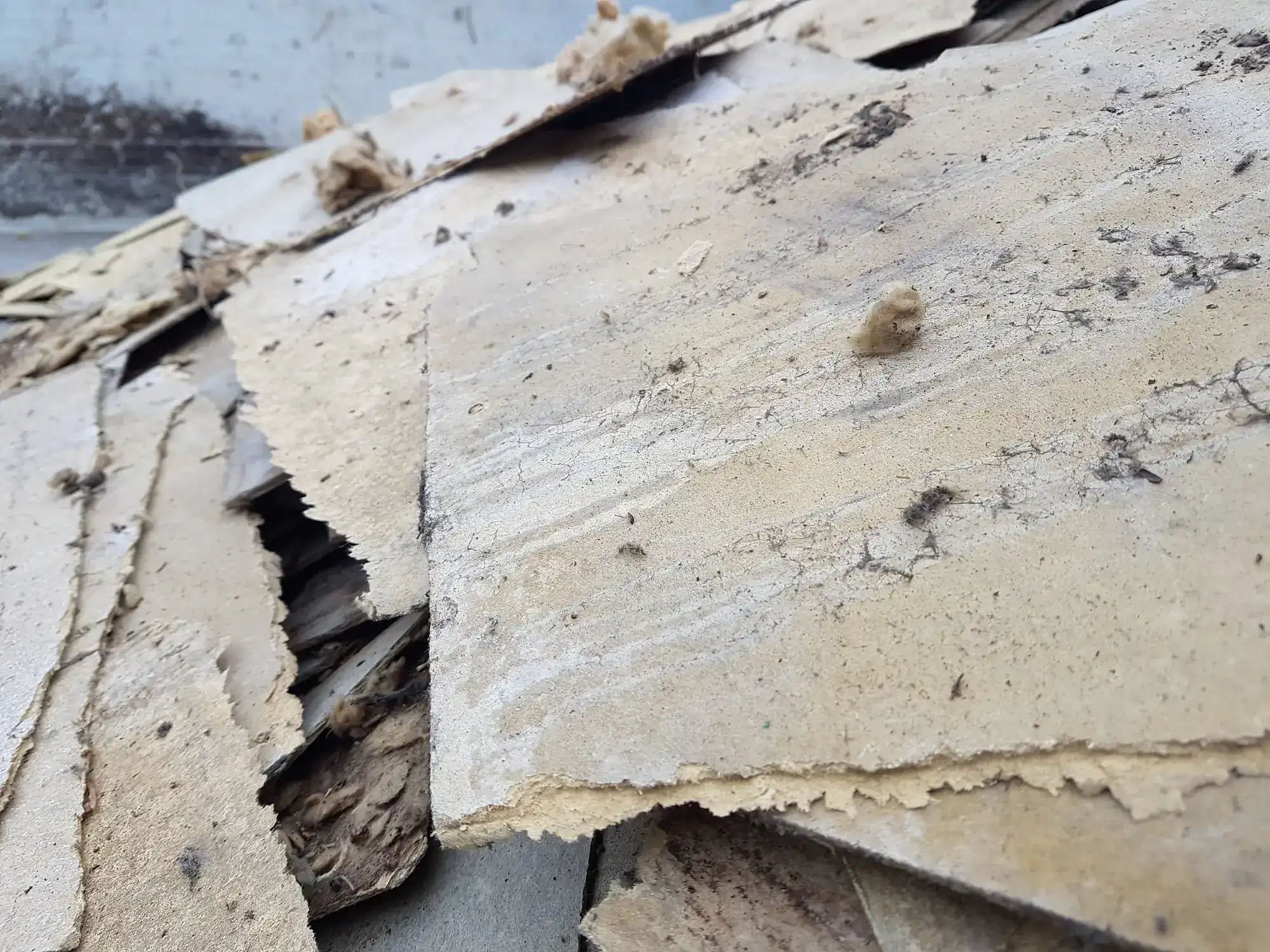
Asbestos shows up in a lot of places in Ambler’s older homes — floor tiles, ceiling texture, pipe insulation, duct wrap, plaster, roofing materials, and joint compound are among the most common. Many of these materials are non-friable and stable when left alone, but the moment a renovation disturbs them, the risk changes. We test for all of it, not just the obvious stuff.
The full scope of what we handle in Ambler includes initial inspection and bulk sampling, lab analysis, written abatement planning, PA DEP notification filing, full containment setup, removal using wet suppression methods, sealed waste transport and disposal at a licensed facility, and post-abatement air clearance testing with written documentation provided to you at close of job. Every step is covered — nothing is handed off to a third party mid-project.
For homeowners in the Wissahickon School District catchment area dealing with pre-sale timelines, or contractors working on renovation permits in Ambler Borough, we also offer emergency response scheduling and 24/7 phone availability. Free estimates are standard. Cash discounts are available — and unlike most environmental contractors in this market, we’ll tell you that upfront rather than after you’ve already committed. The goal is a straightforward job with no surprises on either end.

Proximity to the BoRit site doesn’t automatically mean asbestos is inside your home — but it does mean you’re living in an area with a documented asbestos exposure history, and that context matters when you’re making decisions about renovation or testing. The BoRit site itself — a former park and playground in Whitpain and Upper Dublin Townships bordering Ambler Borough — was closed in the mid-1980s due to asbestos contamination and has been under EPA oversight ever since. The cleanup was completed in 2018, with ongoing quarterly monitoring still in place.
What the site’s history tells you is that asbestos-containing materials were present in and around Ambler for decades, often in ways residents weren’t aware of. The more direct concern for your home is its age. If your house was built before 1980 — which describes the vast majority of Ambler’s housing stock — there’s a real possibility that asbestos-containing materials were used in its original construction. Testing is the only way to know for certain, and we can walk you through that process with no obligation.
Cost depends on the scope of the job — how much material needs to be removed, where it’s located, and how accessible it is. A small, localized removal (a section of pipe insulation or a few floor tiles in a single room) is going to run significantly less than a whole-home abatement or a pre-demolition survey on a large pre-war property. That range is wide, and anyone quoting you a flat number without seeing the job first is guessing.
What we offer is a free estimate, which means you get a real number based on your actual situation before you commit to anything. Cash discounts are also available, which can meaningfully reduce the final cost — something most abatement contractors in Montgomery County don’t advertise. Given that Ambler’s median home value has climbed past $399,000 and many renovation projects here involve historically significant properties with multiple layers of original materials, getting an accurate scope upfront is worth the time. Call and schedule the estimate — it costs you nothing and gives you a real answer.
It depends on the size and location of the removal area. For smaller, contained jobs — a section of pipe wrap in the basement or a few floor tiles in one room — occupants may be able to remain in unaffected parts of the home during the work, provided proper containment barriers are in place and negative air pressure is maintained in the work zone. For larger removals, or work that affects central HVAC systems or living areas, temporary relocation is typically the safer and more practical choice.
We’ll give you a straight answer on this during the estimate phase — not a blanket policy that applies regardless of your situation. In Ambler’s older housing stock, where many homes have open floor plans, shared ductwork, or older HVAC systems that weren’t designed with modern containment in mind, the specific layout of your home matters. The goal is always to protect occupants while keeping the project moving efficiently, and we’ll tell you exactly what that looks like for your property before any work begins.
Under federal NESHAP regulations and Pennsylvania DEP guidelines, asbestos testing is required before any renovation or demolition that will disturb building materials in structures built before 1980 — and that covers the overwhelming majority of homes in Ambler. The requirement applies whether you’re a homeowner doing a kitchen remodel or a contractor pulling permits for a larger project. Disturbing asbestos-containing materials without a prior inspection and proper abatement plan is a regulatory violation, not just a health risk.
In practice, many Ambler homeowners discover this requirement mid-project — a contractor opens a wall, finds suspicious insulation, and stops work until the material is tested. That’s actually the right call, and we’re set up to respond quickly in exactly that situation. With 24/7 phone availability and emergency scheduling, you’re not waiting a week for someone to come out while your renovation sits frozen. Pennsylvania DEP requires a minimum five-day advance notice before friable asbestos removal begins, so the faster you get a contractor on-site for the inspection, the faster the project can legally move forward.
Given that most of Ambler’s residential housing was built between the 1880s and the mid-20th century — much of it during the height of local asbestos manufacturing by Keasbey and Mattison — the materials most commonly found include pipe and boiler insulation, floor tiles (particularly 9×9 vinyl tiles common in mid-century renovations), ceiling texture and plaster, duct wrap, roofing shingles, and joint compound. The K&M-era worker homes on streets like Mattison Avenue, Orange Avenue, and Church Street were built during a period when asbestos was used in virtually every category of insulation and fireproofing.
Not all of these materials are immediately dangerous. Asbestos that is intact and undisturbed is generally considered non-friable and lower risk. The concern arises when materials are damaged, deteriorating, or about to be disturbed by renovation work — at which point fibers can become airborne. We inspect for all of these material types, not just the ones that are visually obvious, and provide lab-confirmed results so you know exactly what you’re dealing with before any decisions are made.
Yes — we offer cash discounts on abatement work, which is genuinely uncommon among environmental contractors in Montgomery County. Most abatement companies in this market have a single price and no flexibility. We built the cash discount into our model because we work directly with homeowners, many of whom are managing renovation budgets that didn’t originally account for asbestos abatement. It’s a practical acknowledgment that these jobs come up unexpectedly and the cost matters.
In Ambler specifically, where a significant portion of the housing stock is made up of historic pre-war properties that owners are actively renovating or preparing for sale, unexpected abatement costs are a real and recurring situation. The free estimate means you know the number before you commit. The cash discount means the final number can be lower than what other contractors in the area would charge for the same scope of work. If you’re weighing your options, those two things together are worth a conversation — call us, get the estimate, and ask about the discount directly.
Other Services we provide in Ambler