Hear from Our Customers
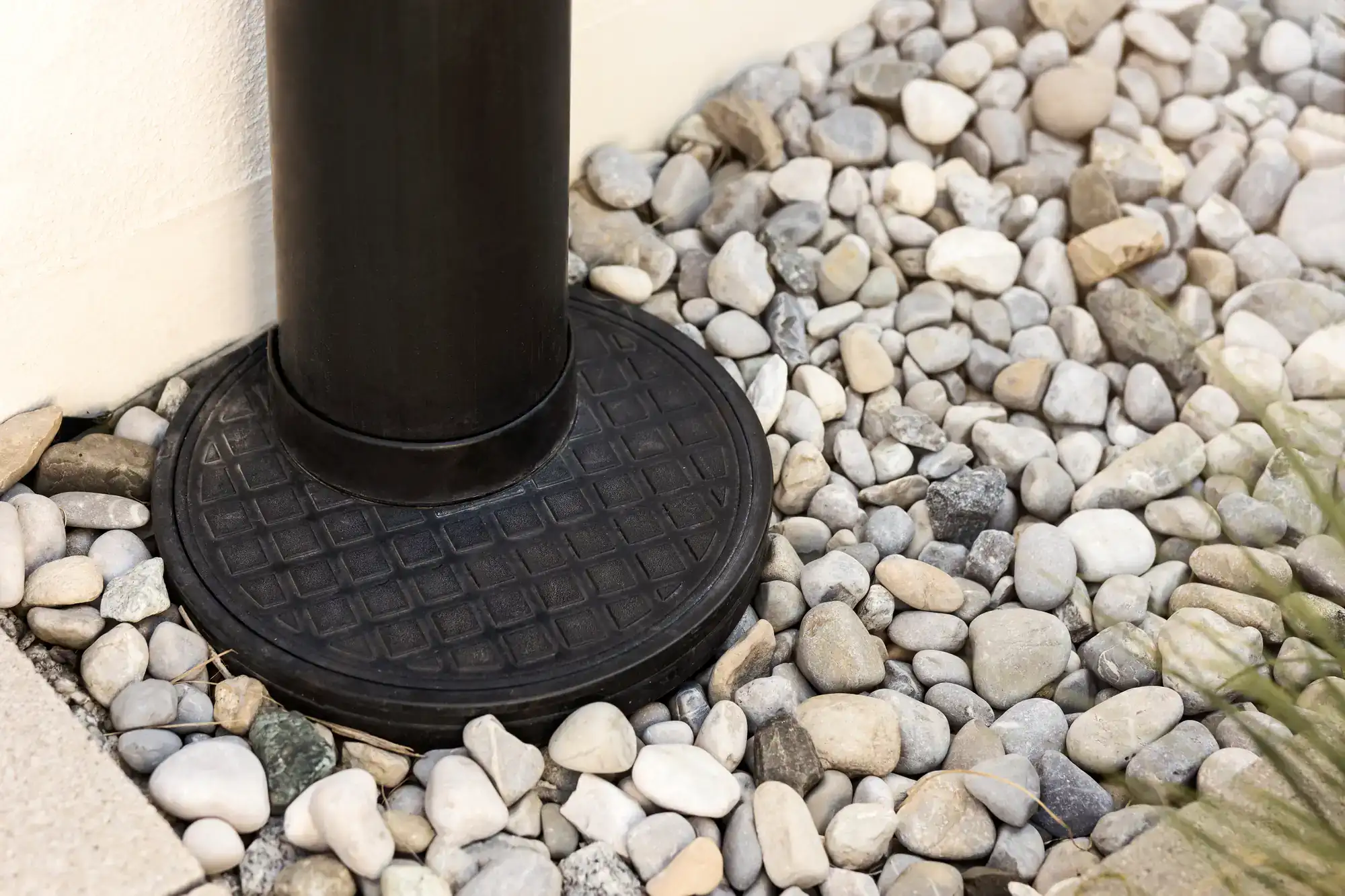
Water doesn’t care how much you paid for your home. In Spring House, where wooded lots and rolling terrain funnel runoff straight toward foundations after every storm, the wrong drainage setup isn’t just inconvenient — it’s expensive. A properly installed French drain system intercepts that water before it reaches your basement, redirects it away from your foundation, and keeps it there for decades.
Spring House sits inside the Wissahickon Creek watershed, which means this area has a documented history of flash flooding — something residents learned firsthand during Hurricane Ida. That kind of rainfall doesn’t just wet a basement. It saturates soil, builds hydrostatic pressure against foundation walls, and creates the exact conditions that lead to cracks, mold, and long-term structural damage. A French drain system addresses that pressure directly, not just the surface symptoms.
Many of the homes along Norristown Road and through the Gwynedd Estates area were built before 1978. That matters because foundation excavation near older homes can disturb lead paint or contaminated soil — something a standard drainage contractor isn’t equipped to handle. We hold a Certified Lead Inspector and Risk Assessor credential, which means the job gets assessed correctly before anyone picks up a shovel. That’s not common in this market. It should be.
We’ve been working in Montgomery County for about 20 years. That’s long enough to know that Lower Gwynedd Township has its own stormwater management obligations, that the Wissahickon watershed drainage challenges are real, and that no two properties in Spring House drain the same way. The housing stock here is custom-built across multiple eras — what works on one lot doesn’t automatically work on the next.
What sets us apart isn’t just experience. It’s the combination of environmental credentials and drainage expertise that no regional waterproofing competitor holds. EPA/HUD compliant, Pennsylvania DEP accredited, fully licensed, bonded, and insured — not because it looks good on a website, but because the work requires it. When you’re excavating near a foundation in a community with older homes like Spring House, that credential stack is the difference between a safe job and a liability.
You get a free estimate, honest answers, and a contractor who’s been doing this work in your county long enough to know exactly what you’re dealing with.
It starts with a free on-site assessment. Before any digging happens, the drainage pattern on your property gets evaluated — where water is entering, where it’s pooling, and what the soil and slope conditions look like. For homes built before 1978, that assessment also includes checking for lead paint or environmental hazards near the excavation zone. In Spring House, where a meaningful portion of the housing stock predates that threshold, this step isn’t optional — it’s how responsible drainage work gets done.
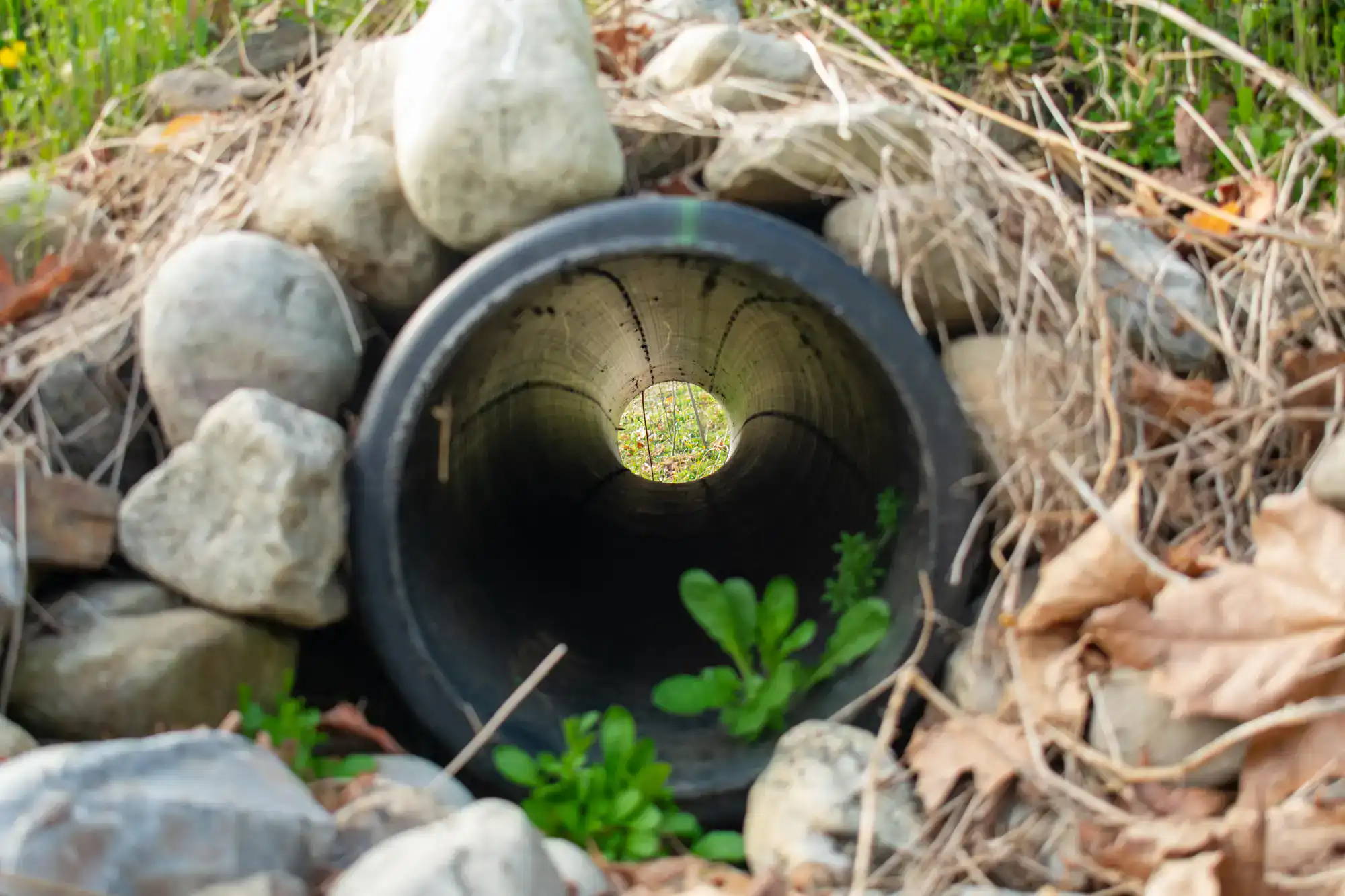
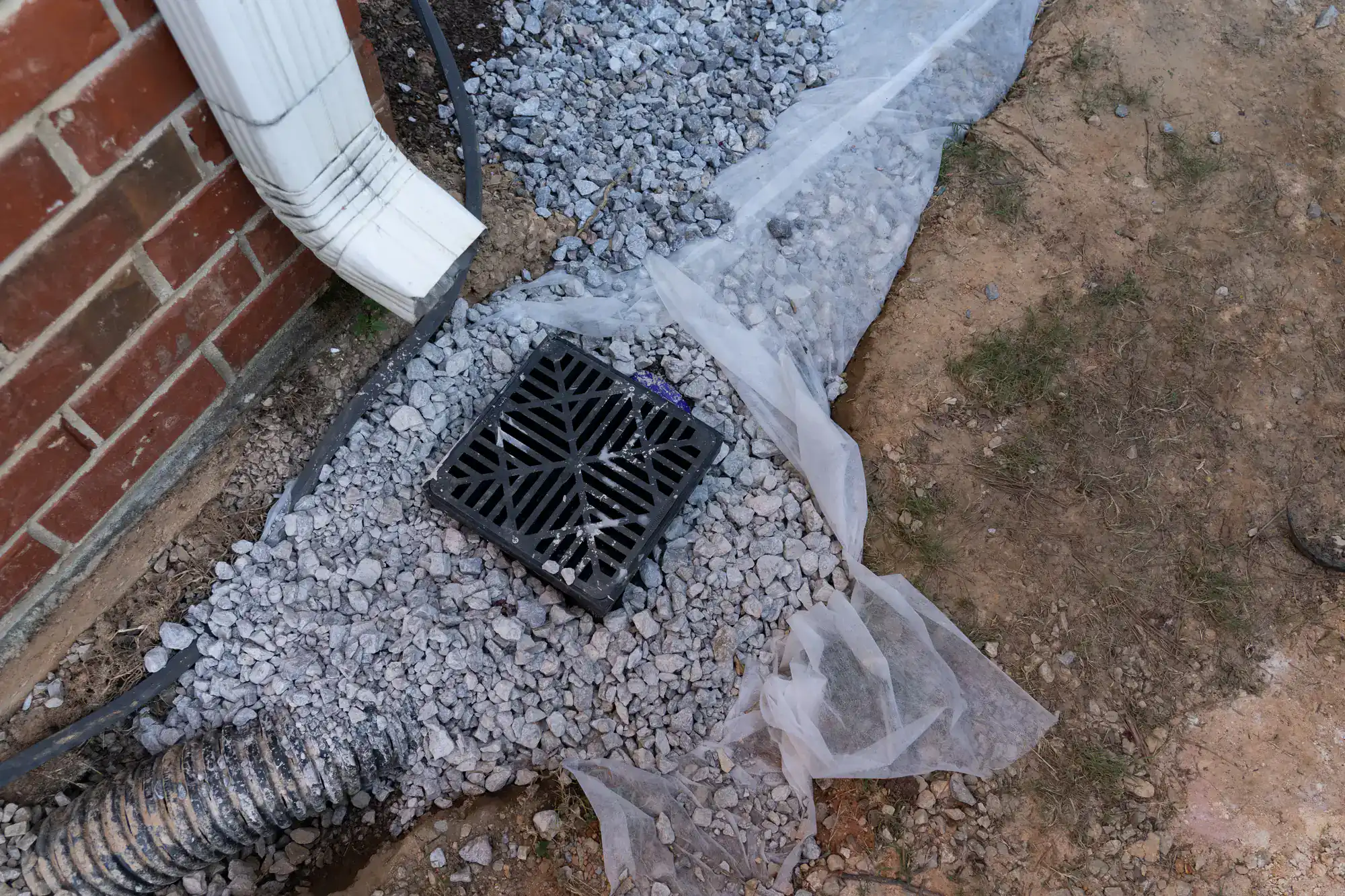
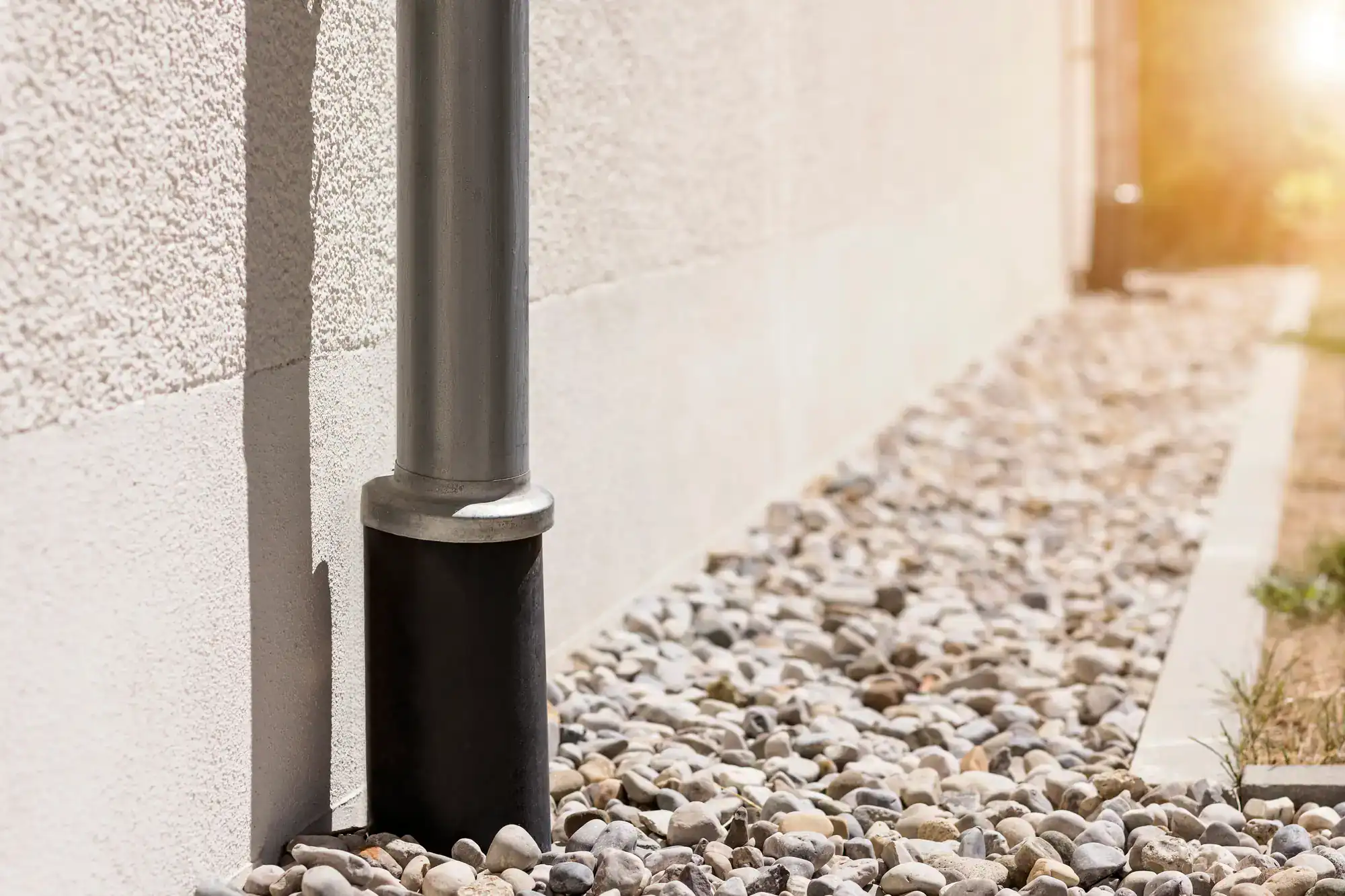
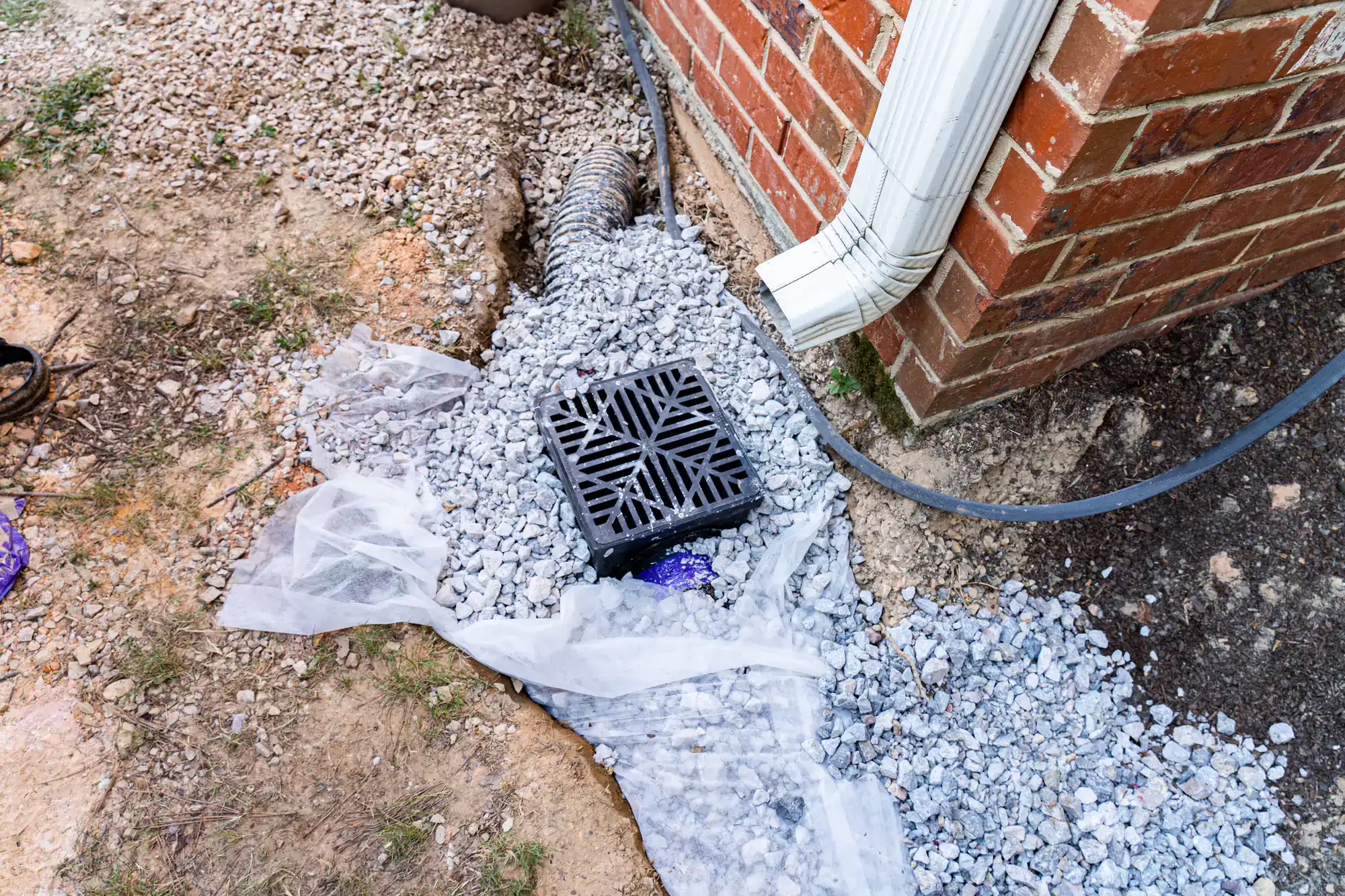
Once the plan is set, the trench gets excavated along the path that will most effectively intercept and redirect water. Rigid perforated PVC pipe goes in at a calculated slope, surrounded by clean crushed stone and wrapped in geotextile filter fabric to keep sediment out over time. The system gets routed to a proper outlet — away from the foundation, away from neighboring properties, and in compliance with Lower Gwynedd Township’s stormwater code requirements. Permits are pulled when required. Nothing gets skipped.
After installation, the trench is backfilled and the site is restored as cleanly as possible. Spring House homeowners have invested heavily in their landscaping, and that gets respected. The system is built to last 30 to 40 years with basic maintenance — and if you ever need French drain cleaning or an inspection down the road, we’re still a phone call away.
Ready to get started?
French drain installation isn’t one-size-fits-all, especially in a community like Spring House where properties vary this much. Some homes need an exterior French drain along the foundation perimeter to intercept water before it reaches the wall. Others need an interior French drain system installed beneath the basement floor to manage water that’s already getting in. Yard drainage situations — low spots, saturated lawn areas, pooling near driveways — often call for a separate trench system routed to a daylight outlet or dry well. The right solution depends on where the water is coming from and where it needs to go.
Every installation from us includes rigid perforated PVC pipe, properly graded to drain, clean crushed stone backfill, and geotextile filter fabric to extend the life of the system. For properties near the Wissahickon Creek corridor or in areas with documented runoff issues, outlet placement is designed with township stormwater compliance in mind — Lower Gwynedd Township operates under NPDES MS4 permitting, and any system that ties into municipal drainage infrastructure needs to meet those standards.
Because we’re also a certified environmental services firm, the scope of work can extend beyond drainage when needed. If excavation reveals mold behind a basement wall, lead paint on a foundation, or asbestos on older pipe insulation, that doesn’t become your problem to farm out to another contractor. It gets handled here, under the same roof, with the proper credentials to do it safely. That one-stop capability is something no waterproofing-only competitor in this area can offer.
In most cases, yes — depending on the scope of work. Lower Gwynedd Township operates under the Pennsylvania Uniform Construction Code, and drainage work that affects your foundation system, involves significant excavation, or alters stormwater flow patterns on your property typically requires a building permit. The township also holds an NPDES Phase II MS4 stormwater permit from the Pennsylvania DEP, which means any drainage outlet that connects to the municipal storm sewer system needs to comply with those discharge standards as well.
The short version: don’t assume a permit isn’t needed just because it’s a drainage job. We handle permit coordination as part of the installation process and are familiar with Lower Gwynedd Township’s requirements. Getting this right upfront means your system passes inspection, meets code, and doesn’t create a compliance issue if you sell the home down the road. It’s one less thing you have to manage.
French drain cost varies based on the length of the trench, whether the system is interior or exterior, the complexity of the outlet routing, and whether any environmental testing or remediation is needed beforehand. For a straightforward exterior French drain on a residential property in Spring House, most homeowners are looking at somewhere in the range of $3,000 to $8,000. Interior systems or more complex yard drainage installations can run higher depending on the scope.
What’s worth keeping in mind is the return on that investment. FEMA data shows that a single inch of water in a home can cause up to $25,000 in damage. In a community where homes are custom-built, individually designed, and carrying significant market value, a properly installed French drain system that lasts 30 to 40 years isn’t a large expense relative to what it protects. We provide free, detailed estimates so you know exactly what’s included and why — no mystery quotes, no surprise line items after the fact.
It’s something that needs to be accounted for, yes. The EPA’s threshold year for lead-based paint is 1978, which means any home built before that — including a significant portion of Spring House’s housing stock — may have lead paint on foundation walls, exterior siding, or structural components near the excavation zone. There’s also the possibility of lead-contaminated soil from years of paint weathering, or asbestos insulation on older pipe systems that could be disturbed during drainage work.
A standard waterproofing contractor isn’t equipped to identify or manage those hazards. We are. As a Certified Lead Inspector and Risk Assessor operating under EPA and HUD compliance standards, we test before excavation begins, identify what’s present, and manage it within the same project. For a homeowner in the Gwynedd Estates area or anywhere else in Spring House with a pre-1978 build, this isn’t a niche concern — it’s a straightforward reason to hire a contractor who can handle the full picture, not just the drainage pipe.
They solve related but different problems. A French drain is a passive system — it uses gravity to intercept and redirect groundwater or surface runoff before it reaches your foundation or pools in your yard. There’s no electricity involved, no mechanical parts, and nothing to fail during a power outage. A sump pump is an active system that collects water that has already entered the basement and pumps it out. Both have their place, and in some situations — particularly in basements with significant water intrusion — the two are used together.
For Spring House properties with sloped, wooded lots and the kind of surface runoff that builds up after heavy rain events in the Wissahickon watershed, a French drain system is often the first line of defense. It addresses the water at the source rather than waiting for it to get inside. If you’re dealing with a combination of surface drainage issues and an already-wet basement, we’ll assess both during the free estimate and recommend what actually makes sense for your specific property — not just the more expensive option.
A properly installed French drain system — rigid PVC pipe, correct slope, geotextile filter fabric, clean crushed stone — typically lasts 30 to 40 years. The filter fabric is what makes the difference over time. It prevents soil and sediment from migrating into the gravel layer and clogging the pipe, which is the most common reason French drains fail prematurely. Systems installed without proper fabric, or with the wrong gravel media, tend to degrade much faster.
Maintenance is minimal but not zero. Periodic French drain cleaning — typically a flush or inspection every several years — helps confirm the system is flowing correctly and catches any root intrusion from the mature trees that are common on Spring House lots before it becomes a blockage. The wooded character of properties throughout Lower Gwynedd Township is part of what makes them desirable, but tree roots and drainage systems don’t always coexist without some attention over time. We can handle routine maintenance and inspections well after the original installation is complete.
Yes — we offer cash discounts on qualifying projects. For a drainage installation that’s already a straightforward investment, reducing the out-of-pocket cost without sacrificing any part of the work is a practical benefit. The discount passes along real savings rather than building margin into the quoted price to offset payment processing costs. It’s a simple arrangement that works well for homeowners who prefer to handle larger home improvement projects that way.
For Spring House residents who are used to evaluating value carefully — many of whom work in research and professional fields where scrutinizing what you’re actually getting for the price is second nature — the more relevant point is that the estimate itself is free and fully itemized. You’ll see exactly what pipe, what gravel, what fabric, what outlet configuration, and what labor goes into the job before you commit to anything. That transparency matters more than any discount, because it means you’re comparing apples to apples when you evaluate your options. Call or reach out anytime — we answer 24/7.
Other Services we provide in Spring House