Hear from Our Customers
Most homeowners don’t realize how fragmented the demolition process actually is until they’re knee-deep in it — one contractor for asbestos testing, another for removal, a third for gutting, and somehow you’re the project manager holding it all together. That’s not how it should work, especially when you’re managing a renovation on a home worth $700,000 or more.
Spring House sits inside the Wissahickon Creek watershed, and if you’ve lived here long enough, you know what that means in a wet spring. Water gets into basements. Once it does, mold starts forming within 12 to 24 hours. When that happens, the problem isn’t just water — it’s everything behind the walls that needs to come out fast and clean. Having a single contractor who can gut the space, test for hazardous materials, and handle the remediation without stopping to hand off the job makes a real difference in how quickly your home gets back to normal.
And if your home was built before 1978 — which describes a significant portion of the housing stock in Lower Gwynedd Township and throughout Spring House — federal law requires certified abatement of lead paint before any demolition or renovation work begins. This isn’t optional. It’s not a recommendation. An uncertified contractor doing this work puts you, the homeowner, in a legally exposed position. We hold EPA Certified Lead Inspector and Risk Assessor credentials, which means we can inspect, test, document, and abate — not just remove — before a single wall comes down.
We’re based in Glenside, PA — about 10 miles down Route 309 from Spring House. We’ve been working on homes throughout Montgomery County for over two decades, and we know the housing stock along the Bethlehem Pike corridor and throughout Spring House the way most contractors know their own driveway.
We’re EPA Certified Lead Inspectors and Risk Assessors, fully EPA/HUD compliant, licensed, bonded, and insured. That combination isn’t common in this market. It means we can legally perform work that most local demo companies simply cannot — including certified abatement on pre-1978 homes and federally-assisted properties. We use HEPA filtration systems on every job, we pull permits through Lower Gwynedd Township’s Building and Zoning Department so you don’t have to, and we answer the phone at 2 AM when something goes sideways.
Owner-operated. Free estimates. Cash discounts available. No runaround.
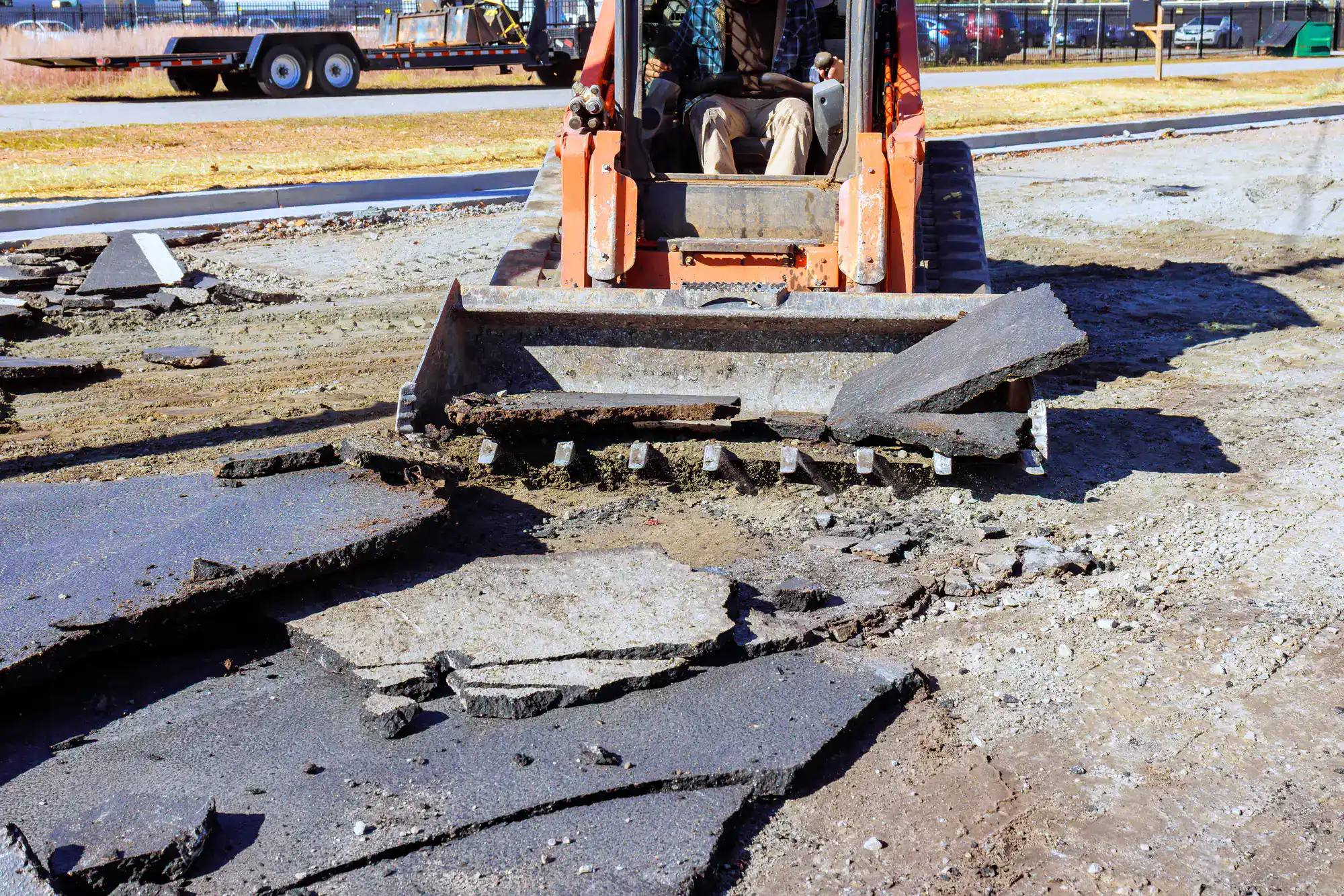
It starts with a free estimate. We come out, assess the scope of work, and give you a clear picture of what’s involved — including whether your home requires hazmat testing before any demolition begins. For homes in Spring House built before 1978, that’s a real and common requirement. We test for asbestos and lead on-site, document the findings, and handle the certified abatement ourselves. You don’t need to find a separate environmental contractor. That’s part of what we do.
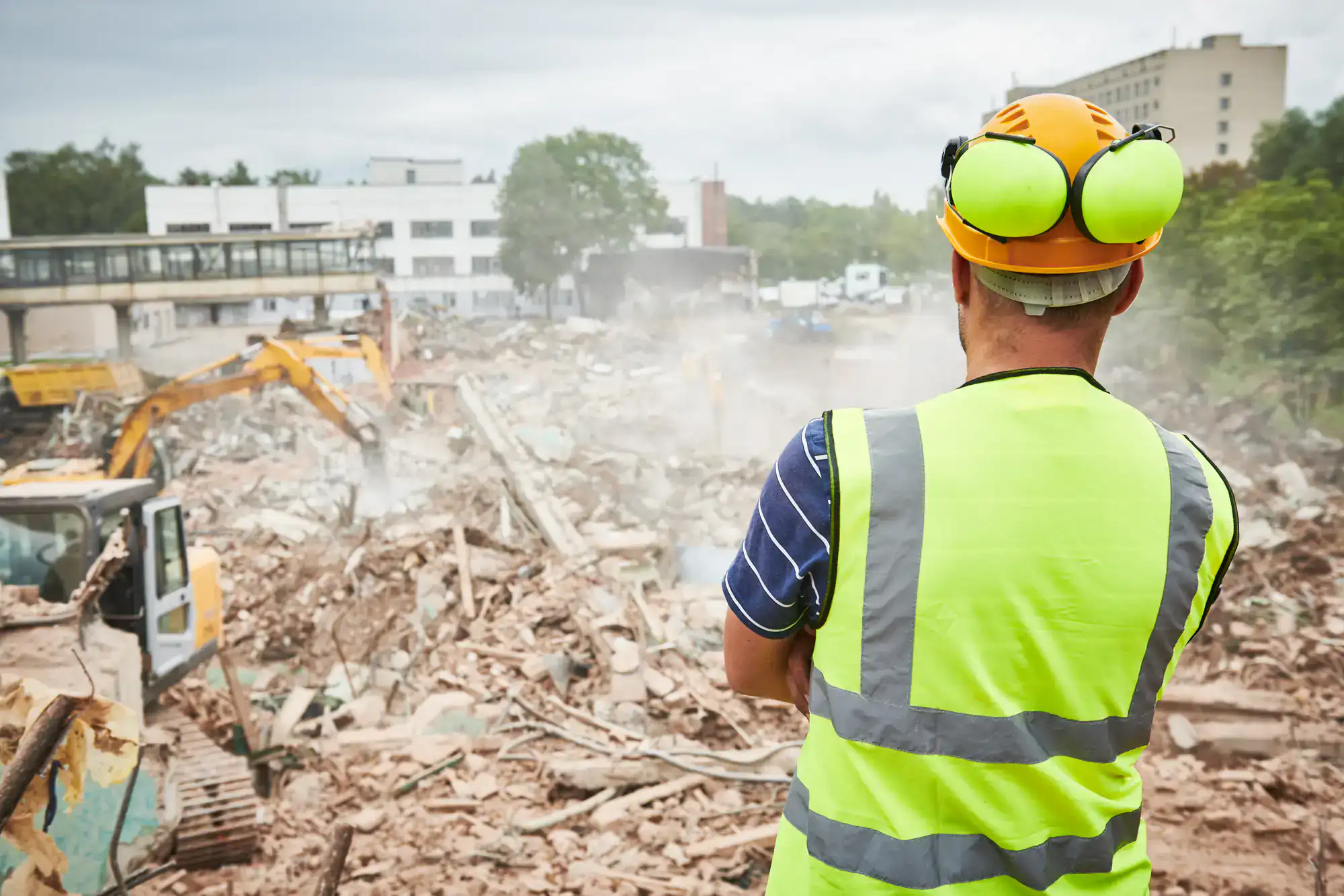
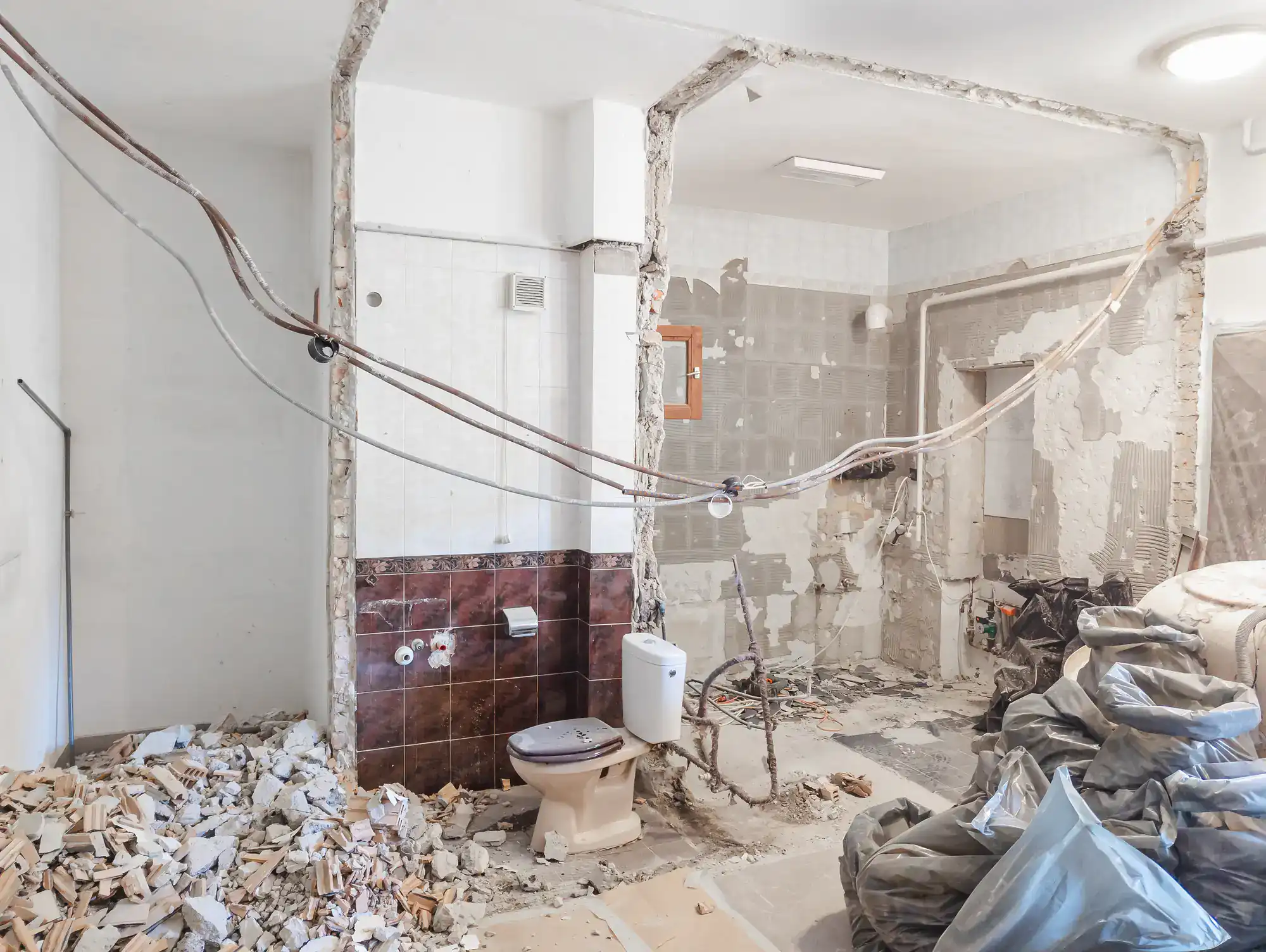
Once the space is cleared and certified clean, the demolition or gutting work begins. We use contained work areas and HEPA filtration throughout — which matters more in Spring House than most places, given that nearly one in four residents here works from home. If you’re on a call in the next room while a crew is tearing out a wall, the air quality in your home is not something we take lightly. Negative air pressure containment keeps dust, fibers, and particulates out of your living space.
After the work is done, we handle construction debris removal and site cleanup. If waterproofing is part of the scope — common after water damage events in the Wissahickon watershed area — that’s included too. Lower Gwynedd Township requires building permits for wall removal, structural alterations, and accessory structure demolition. We pull those permits on your behalf and keep the project compliant with the township’s current code requirements, including the transition to the 2021 International Building Code taking effect January 1, 2026.
Ready to get started?
The homes in Spring House aren’t cookie-cutter builds. Many are mid-century single-family properties that have been updated in layers over the decades — which means what’s behind the walls isn’t always predictable. Older pipe insulation, floor tile adhesives, textured ceiling coatings, and original drywall compounds can all contain asbestos. Pre-1978 paint almost certainly contains lead. Before any gutting or demolition work starts, you need to know what you’re dealing with. We test, we certify, and we remove it properly — under one roof, without subcontracting the parts that matter most.
Our services cover the full project lifecycle: hazardous material testing and inspection, asbestos and lead abatement, interior demolition and gutting, full structure demolition, basement waterproofing, and construction debris removal. Whether you’re gutting a kitchen in Pennbrooke Manor, clearing out a flood-damaged basement near the Wissahickon corridor, or prepping a property for sale along Norristown Road, the scope doesn’t change how we approach the work. Every job gets the same certified process, the same HEPA filtration setup, and the same licensed crew.
We also serve commercial properties in the area — including the kind of older office and institutional buildings found along the Route 309 corridor. If you’re dealing with a larger-scale project, we have the equipment, certifications, and experience to handle it. Emergency response is available 24/7, because water damage and structural failures don’t wait for business hours.

Yes — and this is one of the most common things homeowners get wrong. Lower Gwynedd Township requires a building permit for any work that involves moving or removing walls, creating new rooms, or altering the structural layout of your home. That includes interior demolition and gutting, not just full teardowns. The permit requirement also covers accessory structures like sheds and garages.
What makes this especially important in Spring House is that unpermitted work on a high-value property creates real problems at resale. When a buyer’s inspector or attorney flags work done without a permit on a $700,000-plus home, you’re the one who has to resolve it before closing. We pull permits through Lower Gwynedd Township’s Building and Zoning Department on your behalf — so the project is compliant from start to finish, and you’re not left holding that liability later. The township is also transitioning to the 2021 International Building Code as of January 1, 2026, so permit requirements and inspection processes are actively changing. Having a contractor who knows those changes matters.
Almost certainly yes, and it’s worth taking seriously. Homes built in the 1950s, 60s, and early 70s — which make up a significant portion of the residential housing stock in Spring House and Lower Gwynedd Township — commonly contain asbestos in floor tile adhesives, pipe insulation, textured ceiling coatings, roofing materials, and older drywall joint compounds. You can’t identify asbestos by looking at it. The only way to know is to test.
Federal EPA regulations require that asbestos-containing materials be properly identified and abated before any demolition or renovation work disturbs them. This isn’t a suggestion — it’s a legal requirement, and the liability for non-compliance can fall on the homeowner who hired the contractor. We test for asbestos on-site, document the results, and handle the certified abatement in-house. You don’t need to bring in a separate environmental firm. If asbestos is present, we remove it under proper containment protocols using HEPA filtration before any demo work begins — keeping your home safe and your project legally compliant.
Faster than most people expect. Mold spores begin colonizing within 12 to 24 hours of water exposure. In a finished basement — drywall, insulation, wood framing — that timeline is compressed further because porous materials absorb moisture quickly and hold it. What starts as a water intrusion event can become a full gut-out situation within a few days if it isn’t addressed.
Spring House sits within the Wissahickon Creek watershed, which has a documented history of flash flooding — including major events in 1999, 2011, and 2020. Lower Gwynedd Township has conducted dedicated stormwater studies because flooding in this area is a recurring reality, not a one-time event. If your basement takes on water after a heavy storm, the question isn’t just “how do we dry it out” — it’s “what needs to come out of the walls before mold sets in.” We respond to water damage emergencies 24 hours a day, seven days a week. We assess, gut what needs to go, and handle waterproofing as part of the same project — so you’re not managing a chain of contractors after an already stressful event.
In most cases, they’re two separate companies — and that’s where homeowners run into problems. A standard demolition contractor tears things down. An environmental abatement contractor handles hazardous materials like asbestos and lead paint. In a pre-1978 home, you legally need the abatement work done before the demolition begins, which means you’re coordinating two separate contractors, two separate schedules, and two separate invoices.
We do both. We are EPA Certified Lead Inspectors and Risk Assessors — a federal credential that goes beyond the basic RRP contractor certification that most renovation contractors hold. We can inspect, test, certify, and abate lead and asbestos conditions in your home, then move directly into the demolition or gutting work without stopping to hand off the project. For homeowners in Spring House dealing with mid-century housing stock, this integrated approach isn’t just convenient — it’s the legally correct way to handle the work, and it eliminates the scheduling gaps and accountability gaps that come with using two separate companies.
Interior demolition costs vary based on scope, square footage, and whether hazardous materials are present — but for a typical gut-renovation in a mid-century Spring House home, you’re generally looking at a range that accounts for several distinct phases: testing, abatement if needed, the actual demolition work, and debris removal. Trying to get a single flat number without knowing what’s in the walls isn’t realistic, and any contractor who quotes you a firm price without a site visit is guessing.
What affects cost most in this market is the presence of asbestos or lead paint, which adds certified abatement to the scope. Given that a significant portion of Spring House’s housing stock predates 1978, this is a common addition — not an exception. The good news is that we provide free estimates, so you get a clear, itemized breakdown before any work begins. Cash discounts are also available, which is uncommon in this category. We’d rather give you an accurate number upfront than a low quote that balloons once the walls are open.
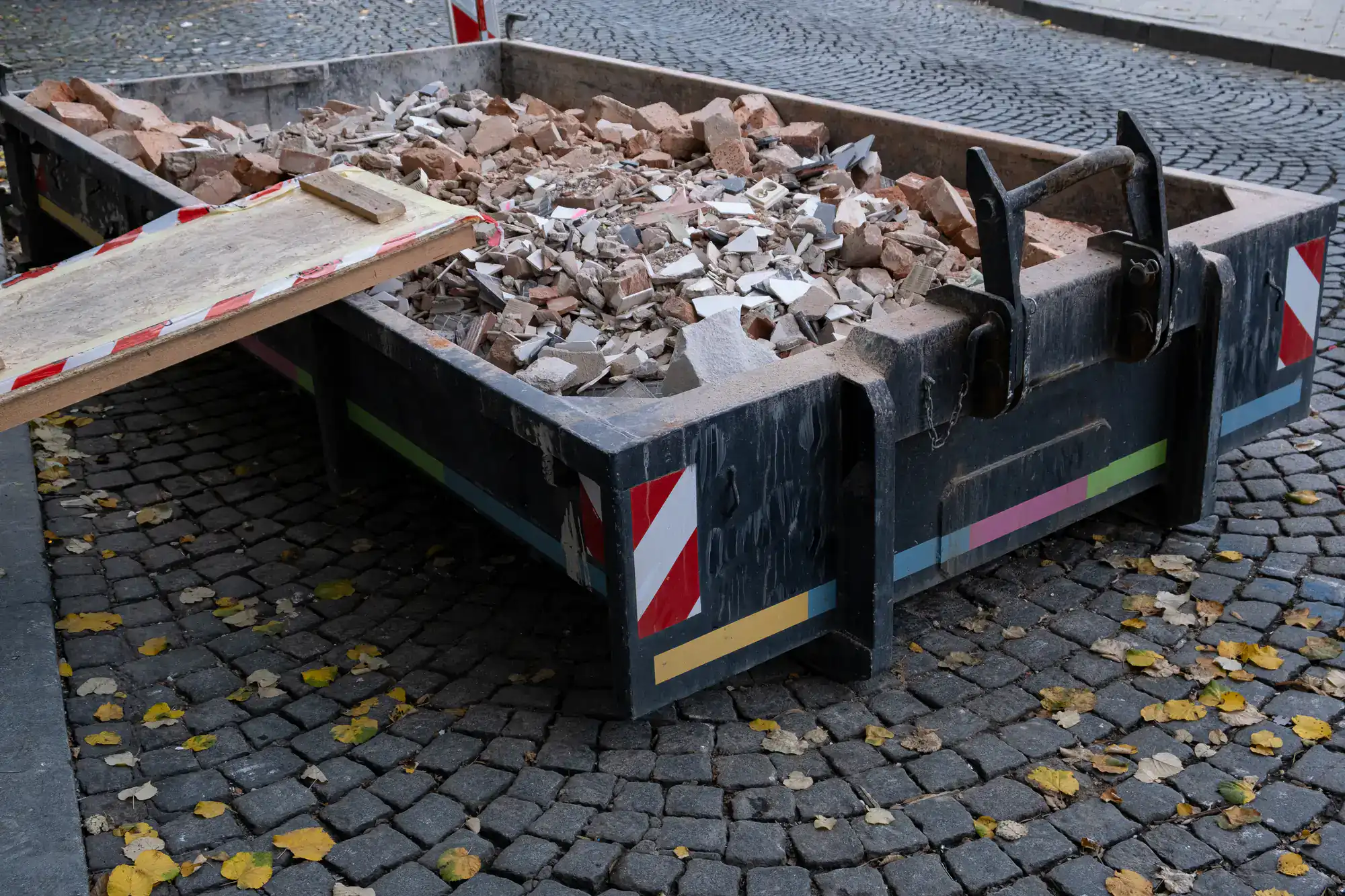
Yes — debris removal is part of the job, not an add-on you have to arrange separately. After demolition or gutting work is complete, we clear the site, handle disposal of construction materials, and leave the space ready for the next phase of your project. For jobs that involve hazardous materials, disposal follows EPA-regulated protocols — meaning asbestos-containing debris and lead-contaminated materials are handled and transported according to federal requirements, not just tossed in a general dumpster.
This matters in Spring House specifically because of the volume and type of material that comes out of older homes during a full gut. Mid-century construction often used materials that require separate disposal streams — and a contractor who isn’t certified to handle those materials legally may not be disposing of them correctly. With us, the entire chain is covered: testing, abatement, demolition, and cleanup. You get one company accountable for the whole scope, from the first assessment to the last load leaving your property.
Other Services we provide in Spring House