

Hear from Our Customers
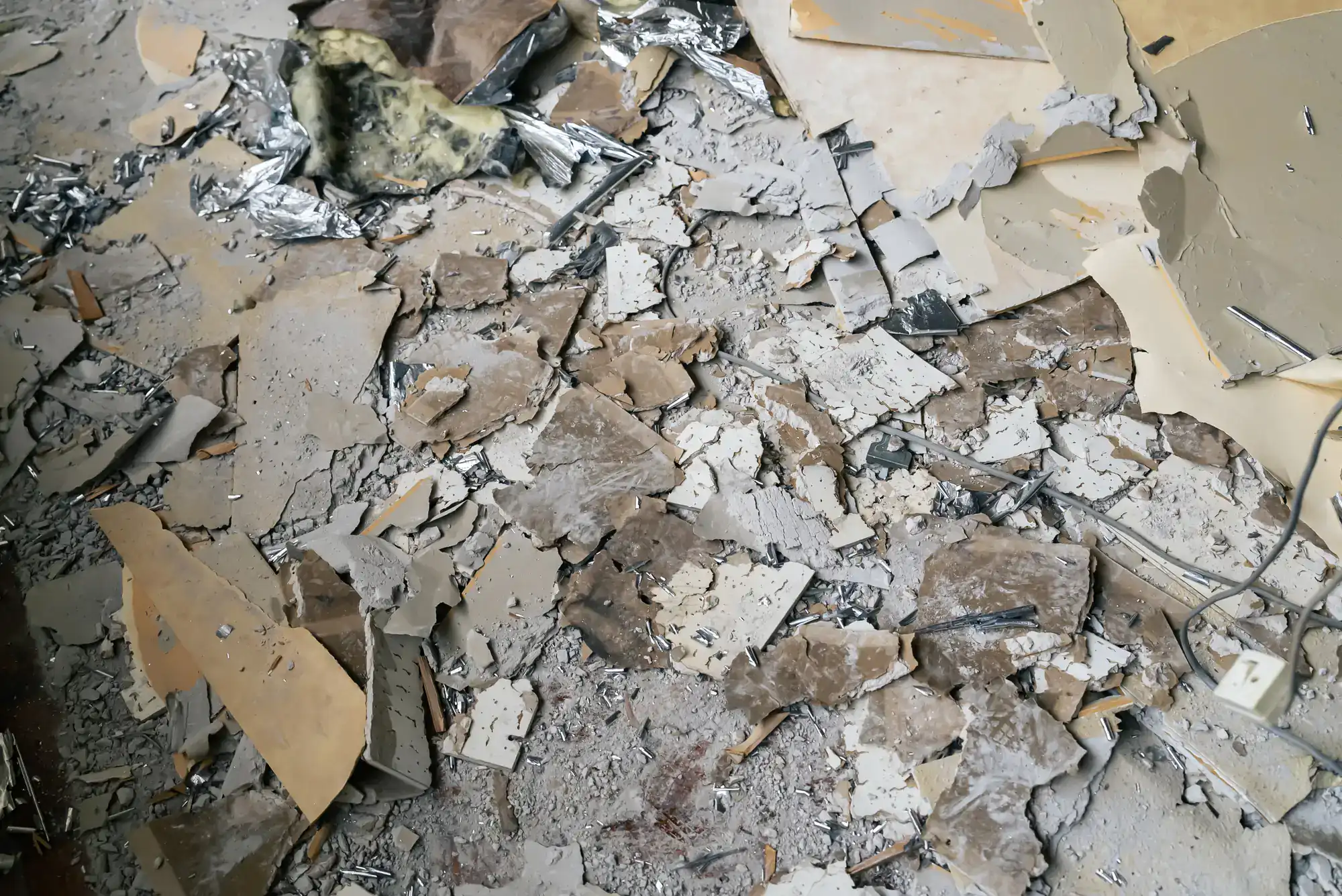
When you’re gutting a 1950s Cape Cod in the Oreland Subdivision or opening up walls in a Custis Woods colonial, you’re not just dealing with drywall and plaster. You’re dealing with decades of materials that were installed before anyone knew asbestos and lead paint were dangerous. The outcome you actually want isn’t just a cleared space — it’s a cleared space you can legally, safely build in. That’s a different thing entirely, and most demolition crews can’t deliver it.
With EJS, the job doesn’t start until we know what we’re working with. We test before any material is disturbed, handle abatement with a certified crew, and complete demolition with the same team — no handoffs, no scheduling gaps, no waiting on a second contractor to clear the site so your renovation crew can finally get started. Your timeline stays intact. Your home stays safe. And you’re not left managing three separate vendors through a process that should have been one phone call.
Oreland’s flooding history adds another layer to this. The Burton Road area has documented water intrusion issues significant enough that Springfield Township funded a stormwater detention basin at Sandy Run Country Club to address it. If your basement or lower level has taken on water, mold doesn’t wait for business hours. The materials need to come out fast, and they need to come out right — especially in a pre-1978 home where wet drywall almost certainly means disturbed lead paint.
We’re based in Glenside — which puts us directly next door to Oreland. We know Springfield Township’s permit office. We know the difference between a Custis Woods Victorian and a postwar ranch off Limekiln Pike, and we know what’s likely hiding inside each one. This isn’t a regional company dispatching crews from across the county. We’re your neighbors, and we’ve been working on homes like yours for over two decades.
What sets EJS apart isn’t just proximity — it’s the credentials. We hold an EPA Certified Lead Inspector and Risk Assessor designation, which goes well beyond the basic contractor certification most demo companies carry. That means we can legally inspect, test, and certify lead conditions in your home, not just remove them. Combined with full licensing, bonding, and insurance, and EPA/HUD compliant services, we bring a level of accountability to this work that the typical demo crew simply isn’t equipped to offer.

It starts with a free estimate. You call, we listen, and we come out to assess the scope — whether that’s a full gut renovation, a water-damaged basement, or a targeted interior demo before a kitchen remodel. We don’t quote blind. We look at what you have before we tell you what it costs.
From there, we test. In Oreland, where the majority of the housing stock predates 1978, this step isn’t optional — it’s required by federal law under the EPA’s Renovation, Repair, and Painting Rule. If asbestos or lead materials are present, we handle abatement first using HEPA filtration systems and proper containment, so nothing spreads to the rest of the house while we work. Springfield Township also requires a building permit for demolition of existing structures, and we handle that paperwork too — pulling the permit on your behalf so you’re not navigating the township office mid-renovation.
Once the space is clear and certified clean, demolition proceeds on schedule. Debris removal is part of the job. We don’t leave you with a pile of materials on the curb and a bill for someone else to haul it. When we’re done, the space is ready for whatever comes next — and you have the documentation to prove it was done correctly.
Ready to get started?
The reason most demolition projects in Oreland get complicated isn’t the demolition itself — it’s the hazmat layer underneath it. A general demo crew can’t legally touch asbestos-containing materials. An abatement company won’t do the teardown. So you end up coordinating two or three contractors, two or three schedules, and two or three invoices for a project that should have been one conversation. We close that gap entirely.
Under one roof, we handle hazmat inspection and testing, asbestos and lead abatement, interior demolition and gutting, mold assessment and remediation, waterproofing, and construction debris removal. Every step is managed by the same licensed, certified crew — which means nothing falls through the cracks between vendors. For homeowners in Oreland’s active renovation market, where gut renovations on mid-century homes are a standard path to value, that continuity isn’t just convenient. It’s the difference between a project that finishes on time and one that stalls for weeks waiting on clearance.
Montgomery County’s own guidance is clear: asbestos-containing materials must be removed only by a licensed contractor. If your Oreland home has original floor tiles, pipe insulation, ceiling tiles, or joint compound — and most homes built before 1975 do — those materials need to be handled before a single wall comes down. We’re licensed, certified, and equipped to do exactly that. And if you’re dealing with an emergency, we’re available around the clock.
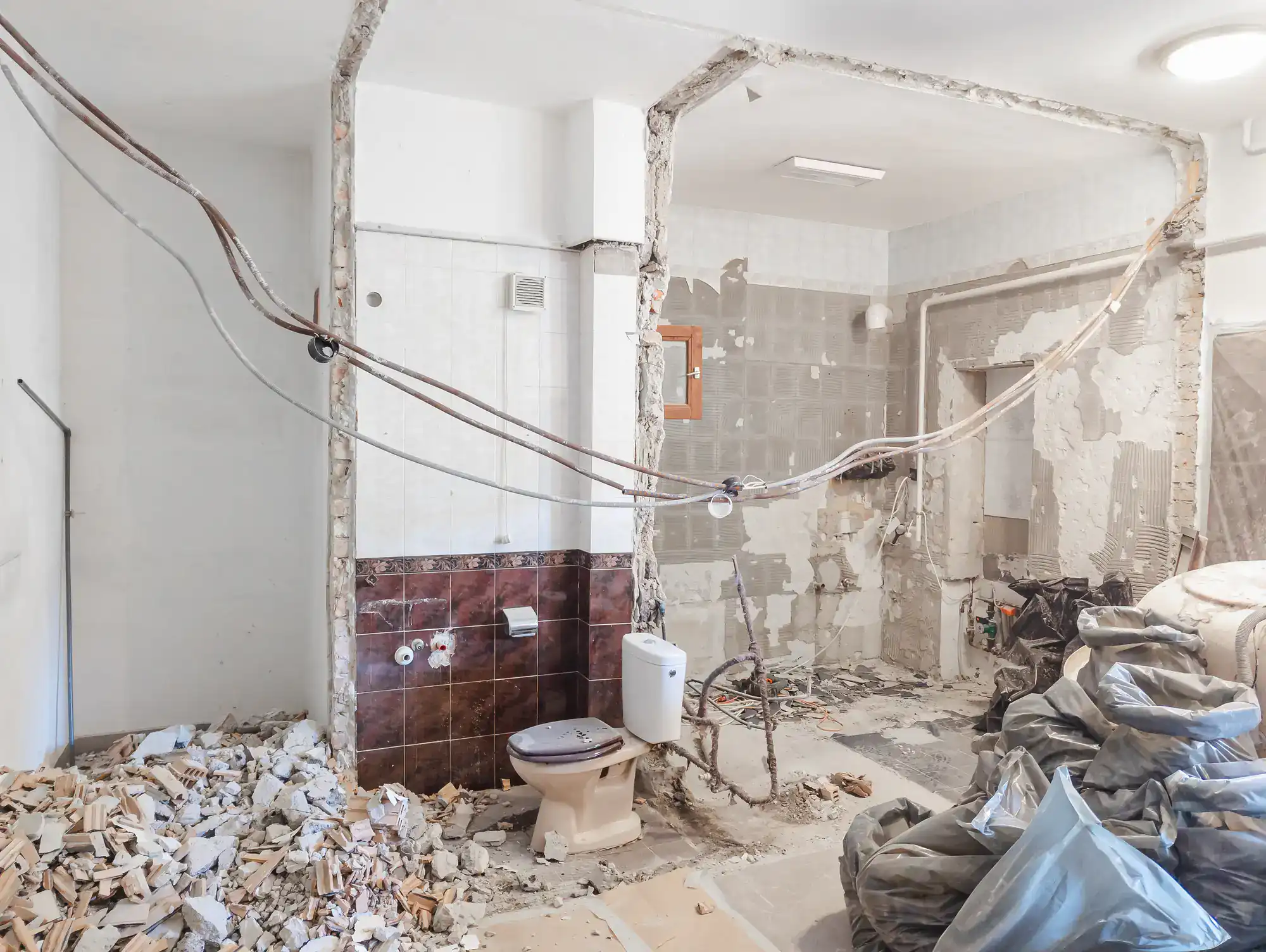

Almost certainly, yes — and that’s not meant to alarm you, it’s just the reality of the era. Homes built between the 1930s and mid-1970s routinely used asbestos in floor tiles, ceiling tiles, pipe and duct insulation, roofing materials, exterior siding, and joint compound. Lead paint was standard on interior and exterior surfaces until the federal ban in 1978. If your Oreland home was built around 1950 — which is the median construction year for the community — there’s a high probability that both materials are present somewhere in the structure.
The important thing to understand is that the presence of these materials doesn’t automatically mean danger. Asbestos that’s intact and undisturbed isn’t an immediate health risk. The risk comes when those materials are disturbed — during renovation, gutting, or demolition — and particles become airborne. That’s why testing before any demo work begins isn’t just a good idea. Under the EPA’s Renovation, Repair, and Painting Rule, it’s a legal requirement for pre-1978 homes. We test first, identify what’s there, and handle abatement before a single wall comes down.
Yes, in most cases. Springfield Township — which covers the majority of Oreland — requires a building permit for the demolition of existing structures, and that requirement extends to significant interior demolition and structural alterations under the Pennsylvania Uniform Construction Code. The township has adopted local amendments that go beyond the state minimum, so the permit process here isn’t something to guess at or skip.
What a lot of homeowners don’t realize is that if unpermitted work is discovered — during a sale inspection, a refinance appraisal, or a follow-up visit from the township — the liability falls on the homeowner, not the contractor. We pull permits on your behalf as part of the project. We know the Springfield Township process, we know what’s required, and we handle the paperwork so your project moves forward without that exposure. If your property falls within the Upper Dublin Township portion of Oreland, the permitting authority is different, and we navigate that process as well.
Water damage changes the urgency and the scope of the job. Once moisture gets into drywall, insulation, or wood framing, mold can begin forming within 24 to 48 hours. In a pre-1978 home — which describes most of Oreland’s housing stock — wet drywall almost certainly means disturbed lead-containing paint, which triggers federal abatement requirements on top of the water damage remediation.
The flooding risk in Oreland is real and documented. Springfield Township has an active stormwater infrastructure project specifically addressing water intrusion in the Burton Road area, involving a detention basin on the Sandy Run Country Club grounds. Whether the source is a burst pipe in a harsh Montgomery County winter, spring storm runoff, or basement seepage from the Wissahickon watershed, the response process is the same: get the water out, test the materials, abate what needs to be abated, and gut what can’t be saved. We handle all of it. We’re available around the clock for emergency response, because water damage doesn’t wait for Monday morning.
This distinction matters more than most homeowners realize. An EPA Renovation, Repair, and Painting (RRP) certified contractor is trained to follow lead-safe work practices during renovation — things like containment, cleanup procedures, and basic testing using swabs. It’s the baseline credential that any contractor working on a pre-1978 home is required to hold. It does not authorize them to formally inspect, assess, or certify lead conditions in your home.
An EPA Certified Lead Inspector and Risk Assessor — the designation we hold — is a higher-level federal credential that authorizes the holder to conduct full lead inspections, collect and analyze samples, assess risk levels throughout the property, and produce legally recognized documentation of the findings. That documentation matters significantly if you’re selling your home, dealing with a lender who requires lead clearance, or working on a property subject to HUD guidelines. In Oreland’s competitive real estate market, where homes are frequently bought and renovated for resale, having that certified documentation can be the difference between a clean transaction and a delayed closing.
Timeline depends on the scope of the project and what’s found during the initial assessment. A straightforward interior gut of a single room in a home with no hazardous materials can move quickly — sometimes within a day or two. But in Oreland, where the housing stock is predominantly pre-1978, it’s realistic to plan for an additional phase before demolition begins if asbestos or lead materials are identified.
Abatement timelines vary based on the quantity and type of material involved. Minor lead paint abatement on a contained surface is a different scope than removing asbestos floor tiles throughout an entire lower level. We walk you through the realistic timeline during the free estimate, before any work begins, so you can plan your renovation schedule accordingly. If you’re working against a contractor start date or a real estate closing deadline, tell us upfront — we factor that into the plan. Emergency response situations are handled on an expedited basis, with 24/7 availability for urgent calls.
Yes, cash discounts are available for qualifying projects in Oreland. The reason is straightforward: payment processing fees are a real cost in any service business, and when a project is paid in cash, those savings can be passed directly to the customer rather than absorbed into overhead. It’s not a gimmick — it’s just an honest way to price work for homeowners who have that flexibility.
For Oreland homeowners managing renovation budgets on homes valued at $400,000 or more, every line item matters. A gut renovation on a mid-century home in the Oreland Subdivision or a Custis Woods colonial involves real costs — testing, abatement, demolition, debris removal, permits — and the cash discount is one concrete way to reduce the total. When you call for your free estimate, ask about cash pricing for your specific scope of work. We’ll give you a straight answer on what applies and what it saves you.
Other Services we provide in Oreland