Hear from Our Customers
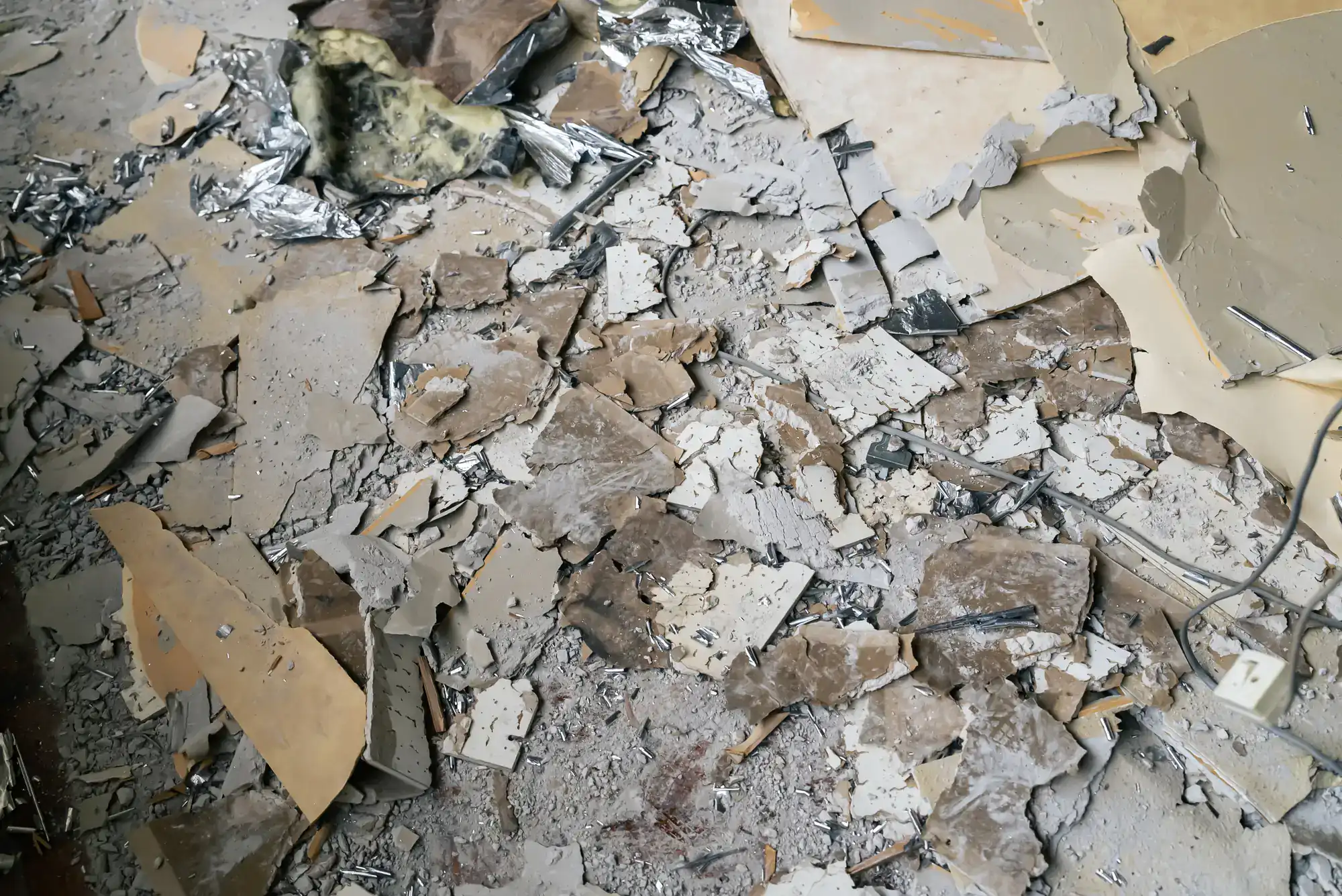
When you’re gutting a kitchen or finishing a basement in a Chesterbrook townhouse, the work itself isn’t the hard part. What trips people up is what they find inside the walls — and what happens next. Homes built between 1980 and 1987 in Chesterbrook commonly contain asbestos in acoustic ceilings, vinyl floor tiles, pipe insulation, and joint compound. If that gets disturbed without proper testing and abatement, you’re not just looking at a health risk. You’re looking at a PA DEP violation, a halted project, and a bill that just got a lot bigger.
That’s the reality of renovating in Chesterbrook. Your village HOA expects documentation. Tredyffrin Township requires permits. And your neighbors — who share a wall with you — expect you to handle this responsibly. When the contractor you hire can test, abate, demo, and clean up under one roof, that whole chain of coordination disappears. You get a clear scope, a clean site, and paperwork that satisfies everyone who’s going to ask for it.
Water damage in an attached Chesterbrook townhouse moves fast. Mold starts forming within 24 to 48 hours of water intrusion, and in a connected structure, it doesn’t stay in your unit. Getting a contractor on-site quickly — one who can gut the affected area safely and handle any hazmat that comes up during the process — is the difference between a contained problem and a much larger one.
We’ve been doing hazmat abatement and demolition work in Chester County for over 20 years. That’s not a marketing number — it means we’ve worked through every combination of surprise conditions, regulatory curveballs, and mid-demo discoveries that Chesterbrook’s and the broader region’s aging housing stock can produce. We know what 1982 construction looks like from the inside, and we know what to do when it doesn’t match the original plans.
We’re based in Glenside, PA, and we serve Chesterbrook and the broader Tredyffrin Township area as part of our five-county service area. Chesterbrook is not new territory for us. We understand the permit process, the PA DEP notification requirements, and what Chesterbrook’s individual village HOAs are going to ask for before they let work begin.
What you get with us is a fully licensed, bonded, and insured contractor — with EPA Certified Lead Inspector and Risk Assessor credentials — who can handle the entire project from the first test to the final inspection. No subcontracting the hazmat piece out. No hand-offs. One company, accountable for all of it.
The first step is always assessment. Before any demolition work begins in a Chesterbrook home, we need to know what we’re dealing with. That means testing for asbestos-containing materials and, where applicable, lead paint — especially in the earliest Chesterbrook units, some of which may fall within the pre-1978 window. We do this testing in-house with EPA certification behind it, so the results are legally documented and usable for permit and HOA submissions.
Once testing is complete, we handle the PA DEP asbestos notification — a required filing for any demolition or renovation project in Chester County that could disturb asbestos-containing materials. Starting January 2026, that filing carries a $400 fee for Chester County projects. We manage that process so you don’t have to track it. From there, we pull the necessary Tredyffrin Township building permits and coordinate with your village HOA on contractor documentation requirements. The permit and approval layer is real in Chesterbrook, and skipping it creates problems that show up later — not during the project, but after it.
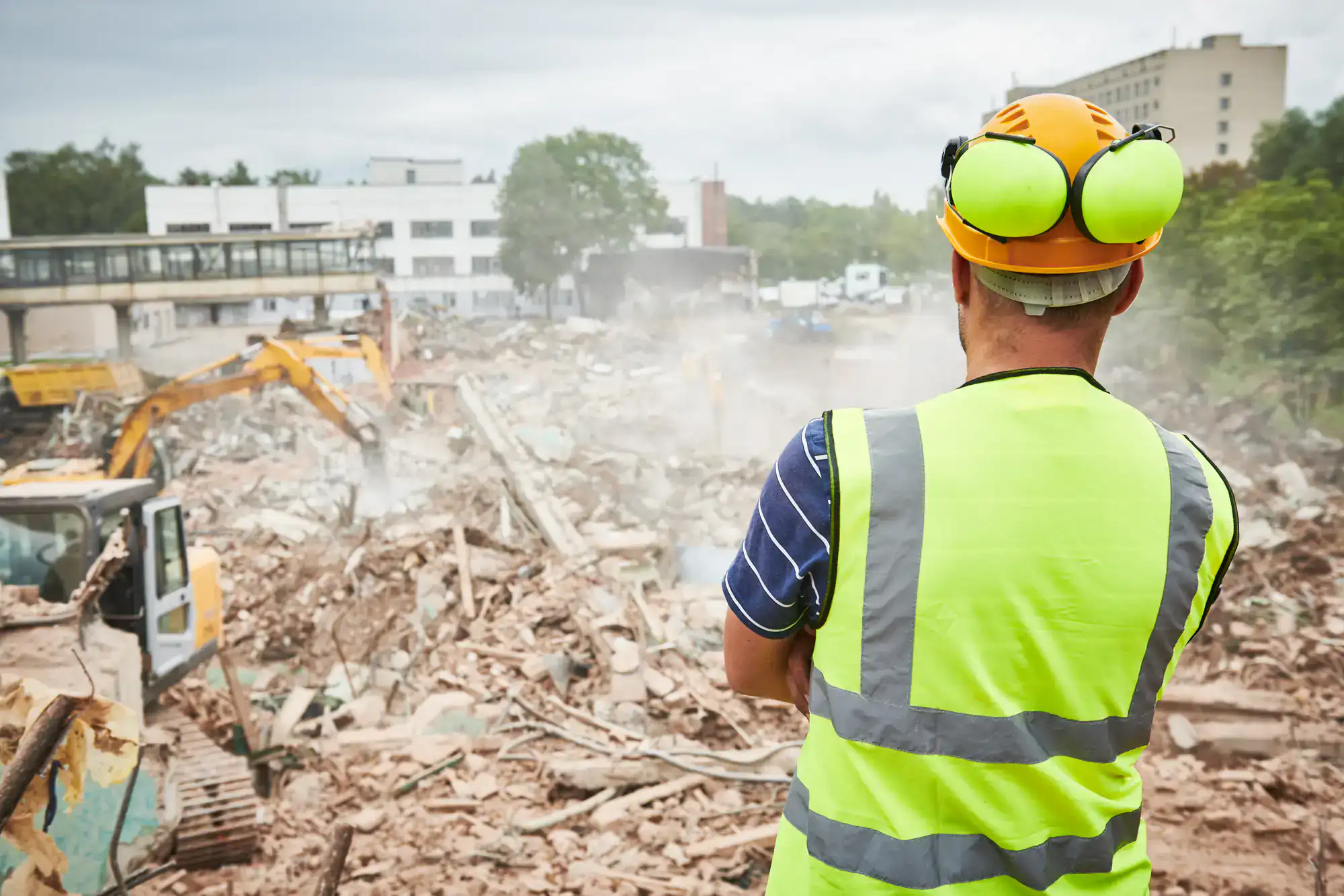
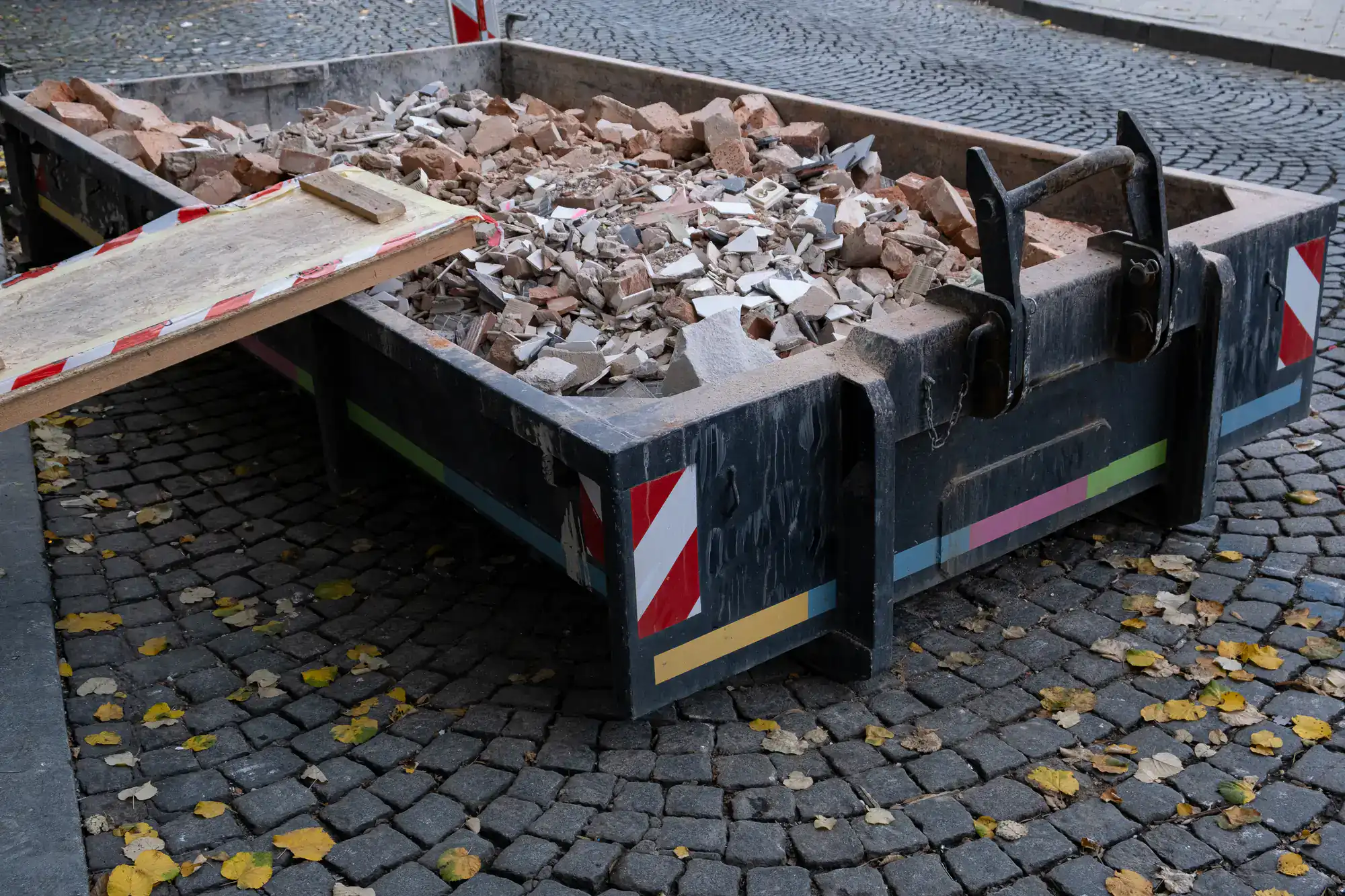
Demolition itself is done with HEPA filtration and negative air pressure containment on any project involving hazmat materials. In an attached Chesterbrook townhouse, that’s not optional — it’s how you keep asbestos fibers and mold spores from migrating through shared walls and HVAC systems into adjacent units. When the work is done, we handle debris removal and site cleanup. You get a finished, documented project — not a pile of drywall and a verbal promise.
Ready to get started?
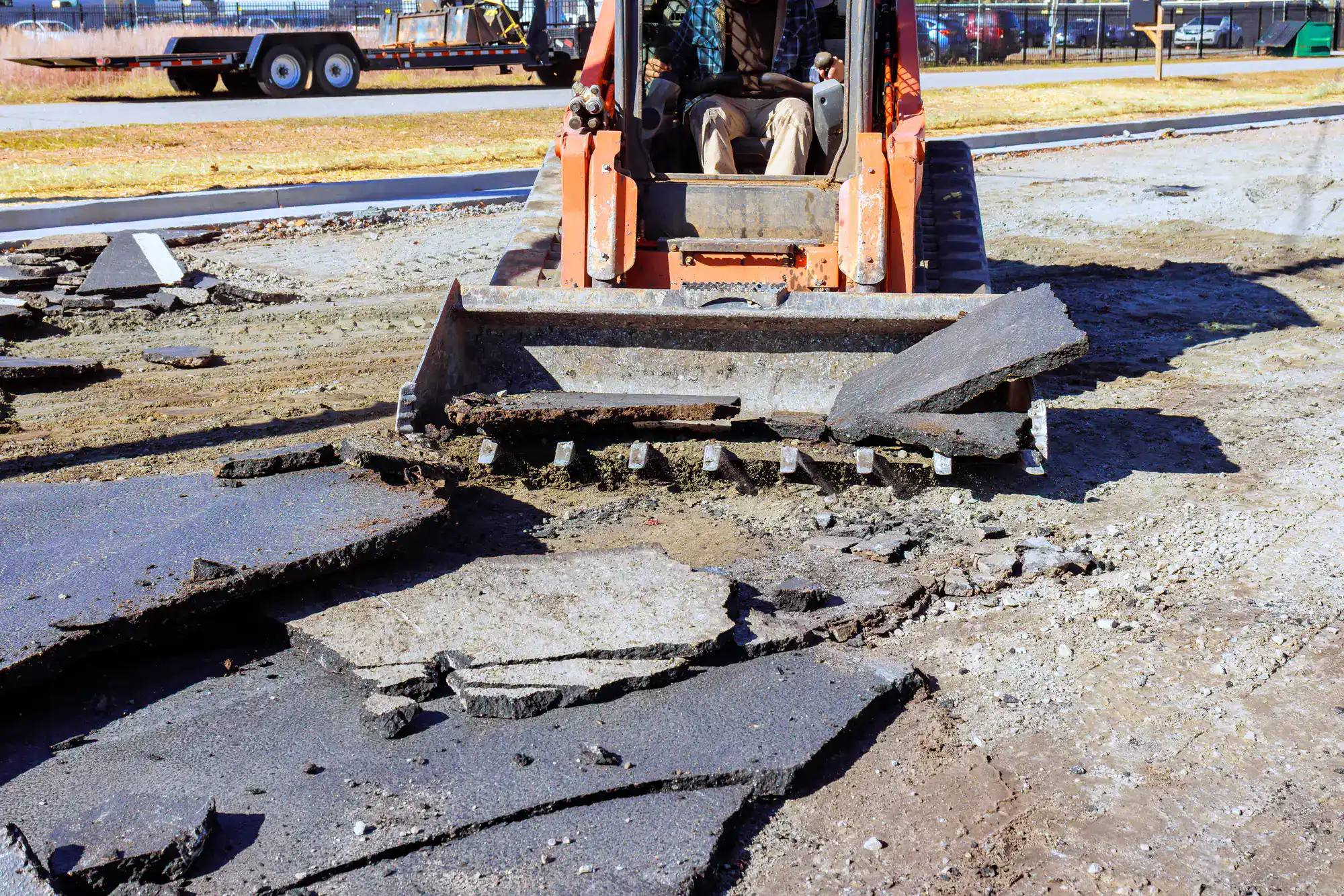
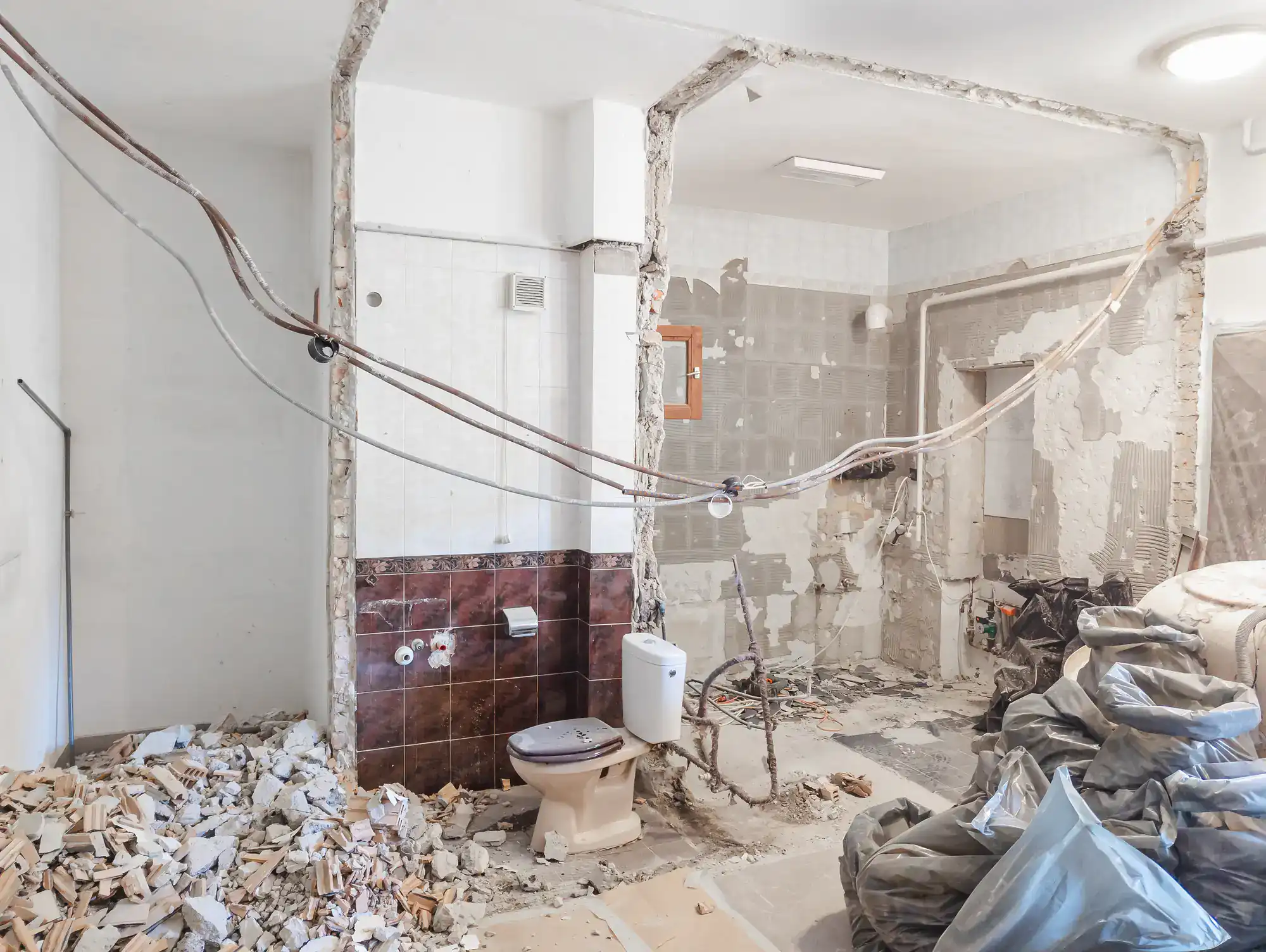
Most of what we handle in Chesterbrook falls into interior selective demolition — kitchen gutting, bathroom teardowns, basement clearing, and water-damage-driven removal of drywall, insulation, and flooring. Full structural demolition is less common in an attached townhouse community, but the regulatory requirements for interior work are just as real. You still need permits. You still need hazmat testing. And you still need a contractor whose insurance satisfies your HOA.
What makes us different in this market is the one-stop scope. Testing, abatement, demolition, waterproofing, and cleanup — all under one contractor. For a Chesterbrook homeowner navigating HOA approval, Tredyffrin Township permits, and a PA DEP notification at the same time, that matters. You’re not coordinating three separate vendors and hoping they all show up in the right order. You make one call, and the project moves forward.
We also offer 24/7 emergency response for water damage situations. When a pipe bursts in a Chesterbrook townhouse in February — which happens more than people expect in units with exterior plumbing walls and 40-year-old insulation — the clock starts immediately. We respond, assess, and begin the gutting process before mold has a chance to establish. Free estimates are available on all projects, cash discounts apply, and every job is handled by a crew that’s fully licensed, bonded, and insured. If your village association needs a certificate of insurance before work starts, we have it ready.
Yes, and this is one of the most common things people underestimate before starting a renovation in Chesterbrook. The community is made up of 28 to 29 individually managed villages, each governed by its own HOA or condo association. Those associations have their own contractor requirements — typically proof of general liability insurance, workers’ compensation coverage, and sometimes a written scope of work before they’ll approve the project. Some associations require the contractor to name the HOA as an additional insured on the policy.
This layer exists on top of the Tredyffrin Township permit requirements, not instead of them. So before work begins, you’re typically navigating both the township permit process and your village association’s approval process simultaneously. We handle the documentation side of this — providing certificates of insurance, permit filings, and whatever written scope your HOA needs to sign off. If you’re not sure what your specific Chesterbrook village requires, call us before you start anything. Getting the paperwork right upfront saves a lot of headaches once the project is underway.
Many of them do, yes. Asbestos-containing materials were widely used in residential construction through the early 1980s, and Chesterbrook’s housing stock — built between 1980 and 1987 — falls squarely in that window. The most common locations are acoustic (popcorn) ceilings, vinyl floor tiles and their adhesive backing, pipe and HVAC duct insulation, and joint compound used in wall and ceiling finishing. These materials aren’t dangerous when left undisturbed, but the moment you start demolition or renovation work, they can become an airborne hazard.
The only way to know for certain is to test. We hold EPA Certified Lead Inspector and Risk Assessor credentials, which means we can test your Chesterbrook home, document the results, and certify the hazard status before any work begins. That documentation matters — both for your own peace of mind and for the PA DEP notification process that Chester County projects require. Don’t let a contractor skip the testing step. If asbestos is found after demolition has already started, the project stops and the cost goes up significantly.
Tredyffrin Township requires building permits for demolition and renovation work, and the township has adopted the 2018 International Building Code as its governing standard. For interior selective demolition — gutting a kitchen, tearing out a bathroom, clearing a basement — you’ll typically need a building permit for the associated renovation work rather than a standalone demolition permit, which is generally reserved for full structural demolitions. That said, the permit application process still requires documentation, and utility disconnection confirmation and Township Sewer Authority sign-off may be required depending on the scope.
On top of that, Pennsylvania DEP requires advance notification before any demolition or renovation project in Chester County that could disturb asbestos-containing materials. Starting January 2026, that notification carries a $400 filing fee for Chester County projects. Skipping this step isn’t just a regulatory problem — it leaves you personally liable if asbestos is discovered or disturbed during the work. We manage the permit filing and PA DEP notification process as part of every applicable project, so you’re not left trying to navigate two separate regulatory systems at once.
We offer 24/7 emergency response, and in a Chesterbrook townhouse, speed genuinely matters. Mold begins forming within 24 to 48 hours of water intrusion — and in an attached unit, water doesn’t stay contained to the source. A burst pipe or appliance overflow can migrate through shared walls and flooring into adjacent units before the damage is even fully visible. The longer you wait, the more of the structure is affected, and the more likely your HOA is to get involved with an escalating complaint from a neighbor.
When you call us for an emergency, we assess the situation, identify the full scope of affected materials, and begin the gutting process — removing saturated drywall, insulation, and flooring — before mold has a chance to establish. If the gutting process disturbs any asbestos-containing materials (which is a real possibility in 1980s Chesterbrook construction), we handle the abatement on the spot rather than stopping the project and bringing in a separate crew. That’s the advantage of having one contractor who handles the full scope. Fast response, no hand-offs, and a documented cleanup that your HOA can verify.
The cost depends heavily on scope — a single bathroom teardown is a very different project from a full kitchen gut with hazmat testing and PA DEP filing. For interior selective demolition in a Chesterbrook townhouse, the main cost variables are the size of the space, whether hazmat testing reveals asbestos or lead that requires certified abatement, permit fees, and debris disposal. The PA DEP asbestos notification fee alone is $400 for Chester County projects starting January 2026, and that’s before any abatement work.
What we offer is a free, written estimate that accounts for all of it upfront — testing, abatement if needed, demolition, debris removal, and permit costs. There are no vague verbal quotes that change once your HOA has already approved the work. Cash discounts are also available, which is a genuine pricing advantage on projects where the total cost can add up across multiple line items. The best way to get an accurate number for your specific project is to call for a free estimate — the scope of a 1,300-square-foot Chesterbrook condo is different from a 1,800-square-foot townhouse, and the estimate will reflect that.
Yes, and in Chesterbrook’s regulatory environment, having one contractor who handles the full chain is a meaningful advantage. The typical alternative — hiring a separate environmental tester, a separate abatement firm, and a separate demolition crew — creates coordination gaps that slow projects down and create liability questions when something goes wrong. Who’s responsible if the abatement crew misses a section and the demo crew disturbs it? In an HOA-governed community like Chesterbrook where the documentation trail matters, that ambiguity is a real problem.
We hold EPA Certified Lead Inspector and Risk Assessor credentials, which legally qualifies us to test and certify your home’s hazard status — not just remove materials under someone else’s certification. We handle the PA DEP notification, pull the Tredyffrin Township permits, perform the abatement with HEPA filtration and proper containment, and carry the demolition through to final debris removal. Everything is documented under one contractor, one insurance policy, and one point of accountability. For a Chesterbrook homeowner who needs to satisfy both a village HOA and a township permit office before work begins, that single-contractor paper trail is a lot cleaner than managing three separate vendors and hoping their schedules align.
Other Services we provide in Chesterbrook