Hear from Our Customers
Most Ardmore homes were built before 1940. That means layers of old plaster, pipe insulation from another era, vinyl floor tiles that predate the Clean Air Act, and lead paint under every coat of whatever color the previous owners thought was charming. None of that is a dealbreaker — but it does mean your demolition project needs someone who knows what they’re looking at before the first wall comes down.
When you hire a contractor who handles testing and abatement alongside the physical demolition work, the whole project moves faster and cleaner. There’s no waiting for a separate environmental firm to clear the space before the demo crew can start. No miscommunication between three different companies about who’s responsible for what. The scope gets confirmed upfront, the hazardous materials get handled correctly, and the debris gets removed properly — because in a pre-1978 Ardmore home, you can’t just toss everything in a standard dumpster and call it a day.
Ardmore’s density adds another layer to this. If your home shares a wall with your neighbor — and a lot of them do here — asbestos abatement without proper HEPA containment isn’t just a risk to your family. It’s a risk to the unit next door. The work has to be done right, not just done fast. That’s the difference between a contractor who understands this market and one who’s just filling a slot on the schedule.
We’re based in Glenside — about twenty minutes up the road from Ardmore — and have been working in Montgomery County and Delaware County homes for over two decades. That’s not a number we throw around to sound impressive. It means we’ve gutted Victorian-era homes near Merion Golf Manor, handled asbestos abatement in Ardmore row houses, and navigated Lower Merion Township’s permitting process enough times that we’re not figuring it out on your project’s timeline.
Eric runs this operation personally. Fully licensed, bonded, and insured. EPA Certified Lead Inspector and Risk Assessor. HUD compliant. Those aren’t just credentials on a website — they’re the legal qualifications required to do this work correctly on a pre-1978 property. A lot of contractors in this area can swing a sledgehammer. Far fewer can legally inspect, certify, and document what’s in your walls before they do.
Free estimates. Cash discounts. And yes, we answer the phone at 2 AM — because a burst pipe in an attached Ardmore home doesn’t wait for business hours.
It starts with a free estimate. We come out, walk the space, and tell you exactly what we’re looking at — including whether we need to test for asbestos, lead, or mold before any demolition begins. On a pre-1978 Ardmore home, that testing step isn’t optional. It’s required under EPA regulations, and skipping it puts you on the wrong side of federal law. We handle all of it, so you don’t have to figure out what applies to your address.
From there, we pull the permits. If your home is in the Lower Merion Township portion of Ardmore, that goes through the Building and Planning Department. If you’re in the Haverford Township section — the Delaware County side — it’s a different process entirely. We know the difference, and we handle the notifications to adjoining property owners that Lower Merion requires before demolition can proceed. That’s a step a lot of homeowners don’t know about until a stop-work order shows up.
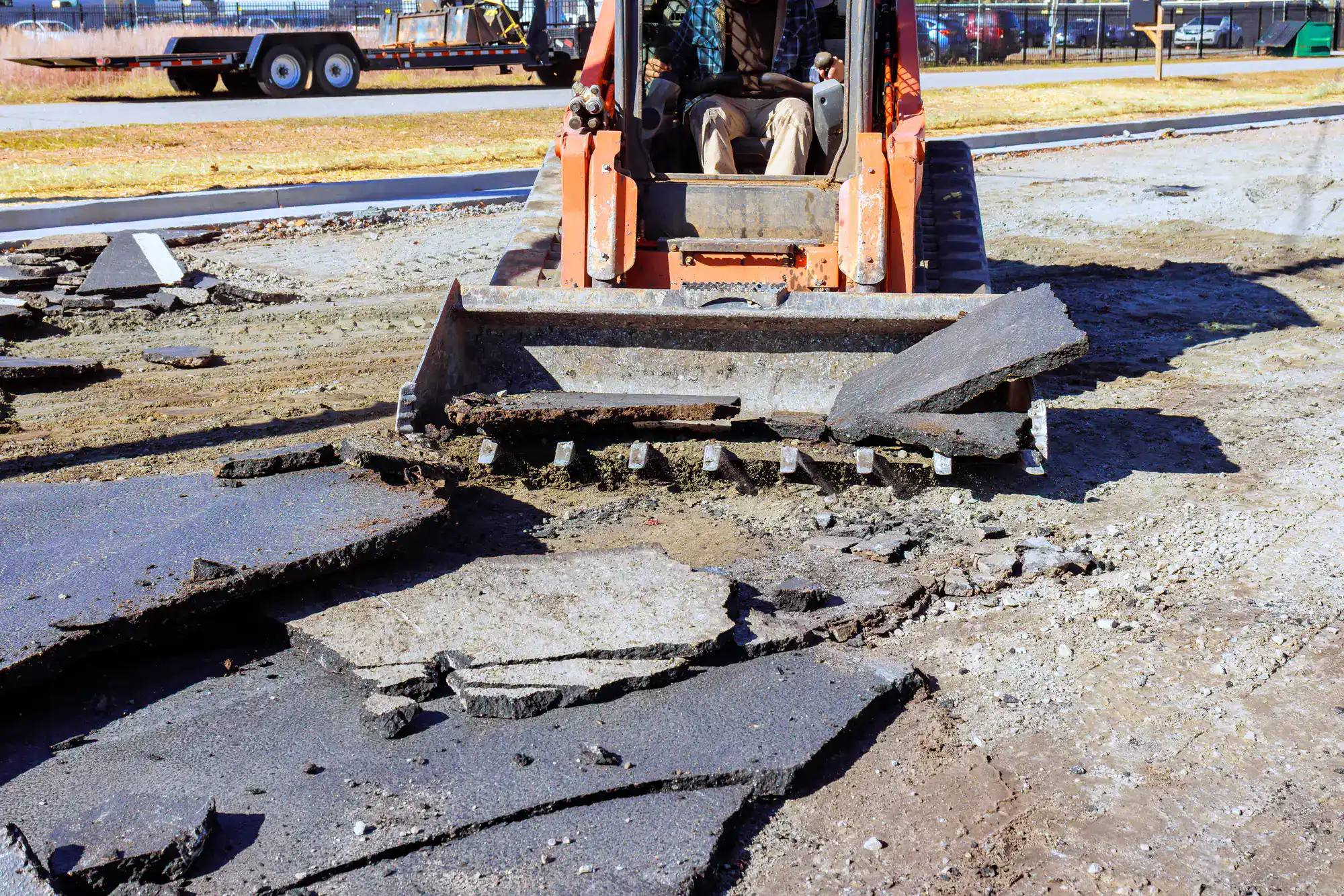
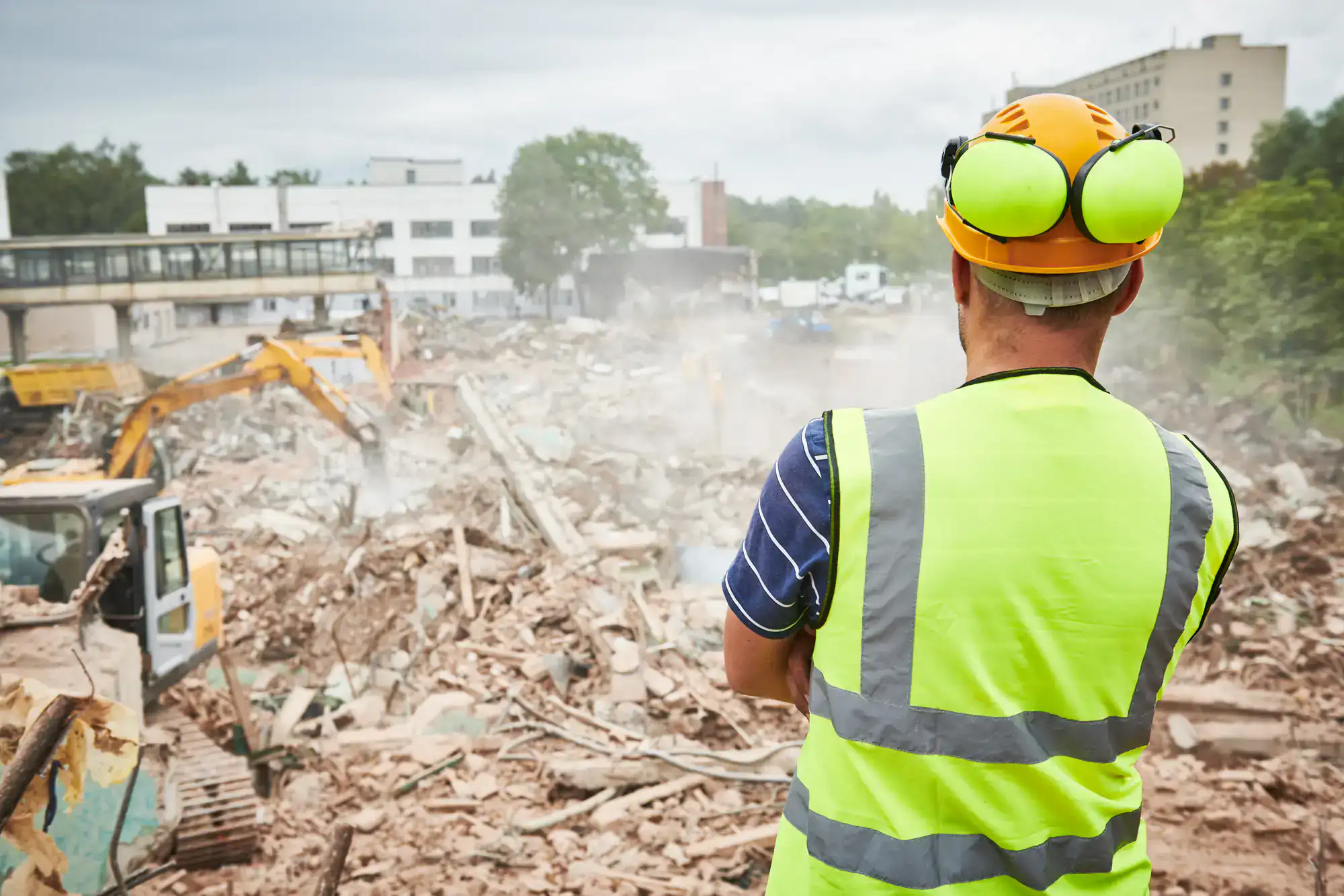
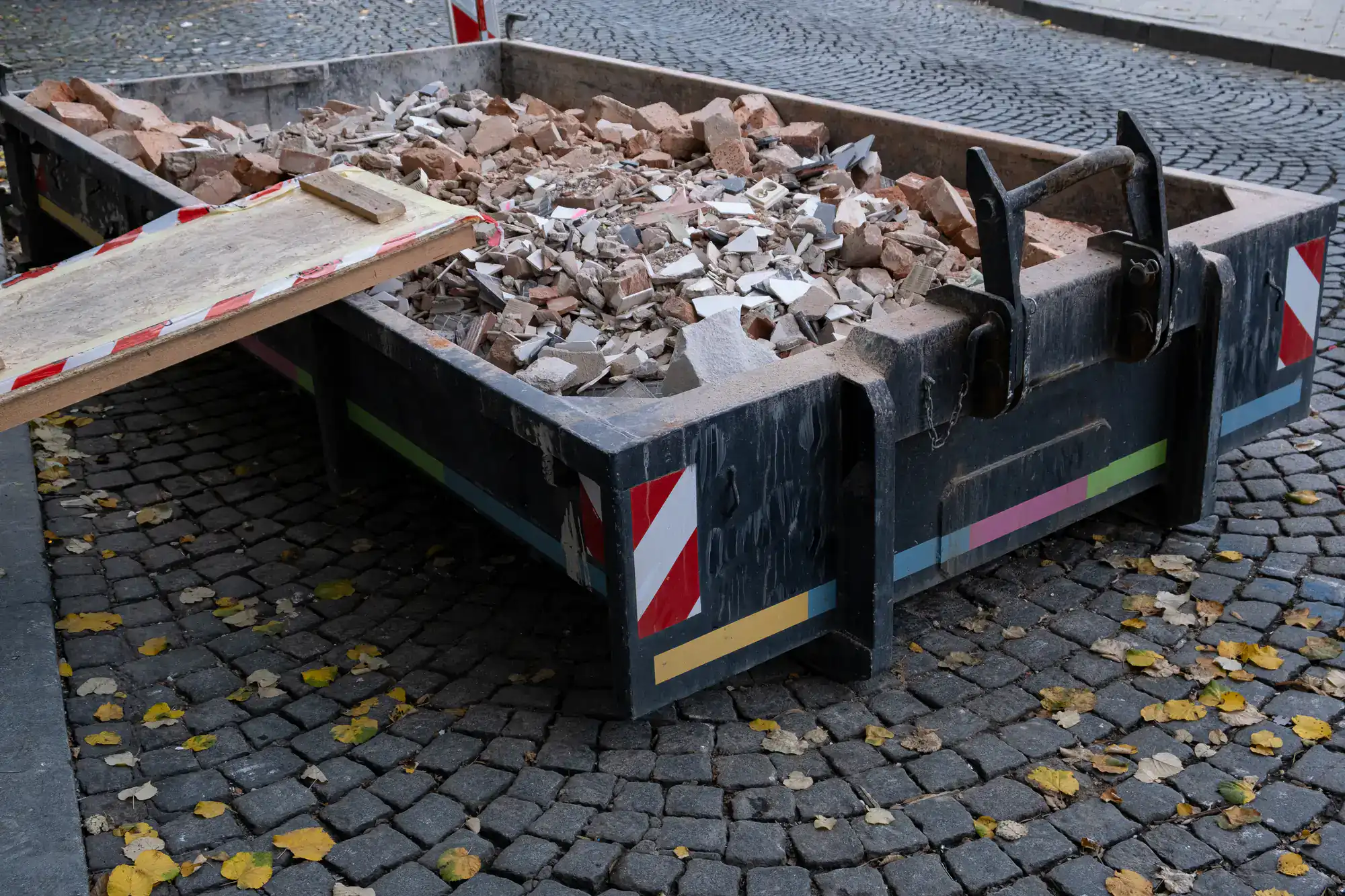
Once permits are in hand and any hazardous materials are properly abated and documented, the physical work begins. Gutting, selective demolition, structural teardown — whatever the scope calls for. HEPA filtration stays running throughout any abatement phase. When the work is done, we handle debris removal and leave the space clean and ready for whatever comes next.
Ready to get started?
We handle the full range of what an Ardmore demolition project typically requires. Interior demolition and gutting. Asbestos inspection, testing, removal, and encapsulation. Lead inspection, testing, encapsulation, and removal. Mold sampling, testing, and remediation. Water damage restoration and waterproofing. Above-ground oil tank removal — relevant in a lot of Ardmore homes that still have legacy heating systems from the oil era. Construction debris removal. Appliance and furnace disposal. Duct cleaning. Radon and water testing. Full environmental clean-outs.
That list matters because a typical renovation project in an older Ardmore home rarely involves just one of those things. Pull back the drywall in a 1920s house near Lancaster Avenue and you might find water damage, mold, and asbestos pipe insulation all in the same wall cavity. Coordinating three separate contractors to handle each piece independently adds weeks to your timeline and introduces real risk of things falling through the cracks. One company that handles all of it means one point of contact, one mobilization, and one clear scope from day one.
If you’re dealing with a water damage emergency, we run 24/7. Mold begins forming within 24 to 48 hours of water exposure, and in a dense community like Ardmore — where water in your basement can find its way into a shared foundation quickly — the response time matters more than most people realize until it’s too late.

Yes — and the answer depends on exactly where in Ardmore your property is located. Ardmore spans two townships: Lower Merion Township in Montgomery County and Haverford Township in Delaware County. If your home falls in the Lower Merion portion, your demolition permit goes through the Lower Merion Township Building and Planning Department. If you’re in the Haverford Township section, it’s a separate permitting process with different requirements.
For Lower Merion specifically, demolition permit applications also require written notification to all adjoining property owners — including properties directly across the street. That’s a step many homeowners don’t know about, and missing it can delay or invalidate your permit. If your project touches the exterior of a structure in a historic district, you may also need a Certificate of Appropriateness from the Historic Architectural Review Board before a permit is issued. We handle all of this as part of the project — pulling permits, navigating the right jurisdiction for your address, and making sure the paperwork is done before anyone touches a wall.
Not definitely, but the probability is high enough that you should test before any demolition or renovation work begins. Homes built before 1978 — and especially those built before 1940 — commonly contain asbestos-containing materials in places that aren’t always obvious: vinyl floor tiles, pipe and duct insulation, textured plaster coatings, roofing materials, and window glazing compounds. The material itself isn’t dangerous when it’s intact and undisturbed. The problem starts when it gets cut, broken, or disturbed during renovation work.
Under EPA NESHAP regulations, any demolition of a structure containing asbestos requires notification and certified abatement before the physical work begins. That’s not a guideline — it’s a federal requirement. We hold the certifications to inspect, test, and document the asbestos condition of your property before any work starts. We’ll tell you exactly what’s there, where it is, and what needs to be done about it. No guessing, no mid-project surprises, and no handing you an unexpected bill after the walls are already open.
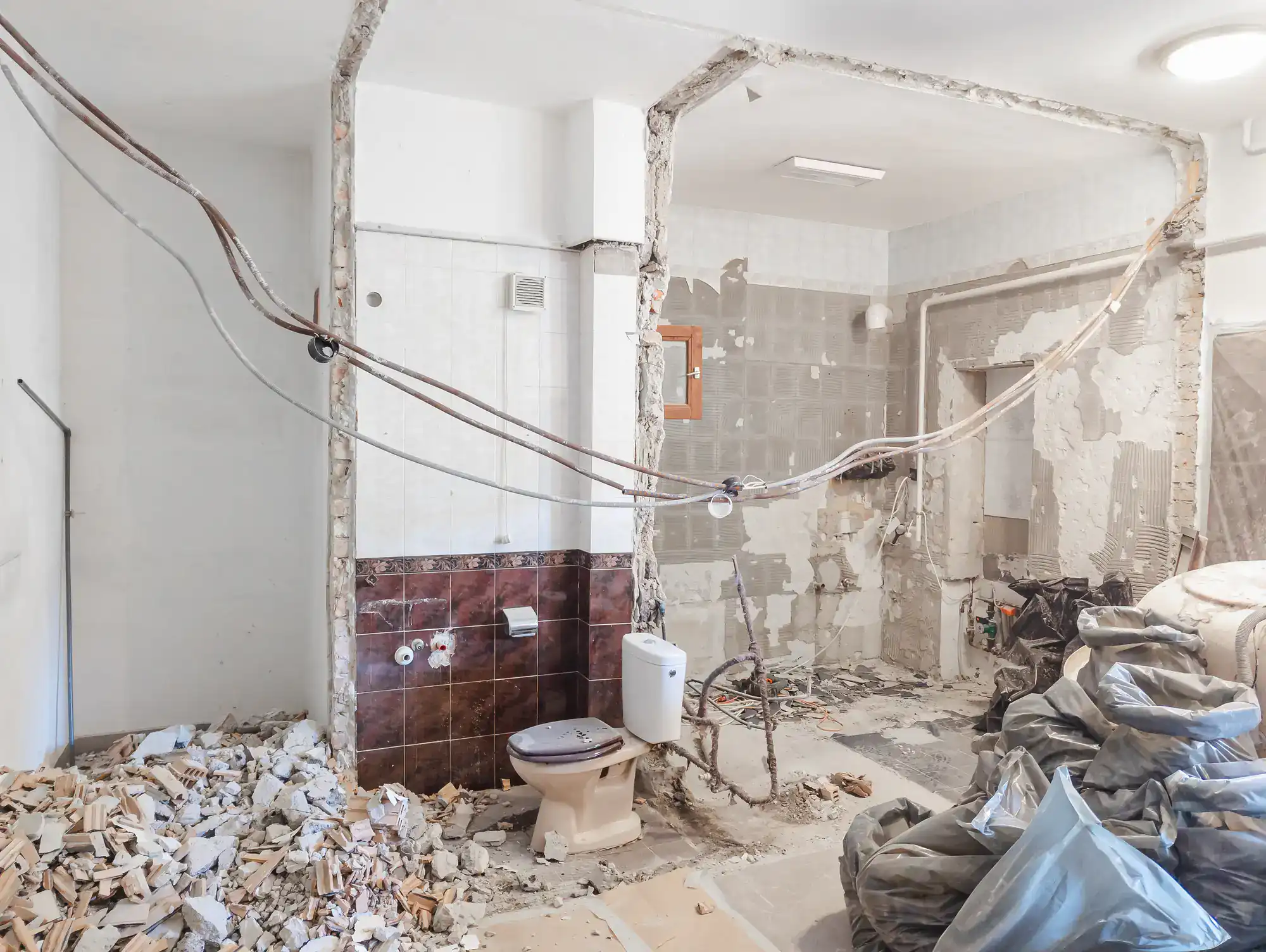
Interior demolition typically refers to removing specific structural or non-structural elements inside a home — taking out a wall, removing a ceiling, tearing out a bathroom or kitchen down to the studs. Gutting a house means stripping the interior down to the bare framing: removing all drywall, flooring, insulation, mechanical systems, and finishes throughout the space. It’s essentially starting from scratch on the inside.
In Ardmore’s older housing stock, gutting is often the right call when a home has been through multiple renovation eras and the layers of materials have accumulated to the point where selective demolition would take longer than just clearing everything out. It’s also the standard approach after significant water damage, where saturated materials need to come out completely before remediation and rebuilding can begin. Either way, the process starts the same: testing for hazardous materials, pulling the right permits for your specific township, and containing the work area properly — especially in attached homes where a shared wall is also your neighbor’s wall.
Once testing confirms the presence of asbestos-containing materials, the abatement process follows a specific sequence. The work area gets sealed off using plastic sheeting and negative air pressure — meaning air is continuously drawn out of the space through HEPA filtration units, preventing any fibers from migrating into the rest of the home or, in Ardmore’s case, into an adjacent unit through shared walls or mechanical systems. Workers wear appropriate respirators and protective suits throughout the process.
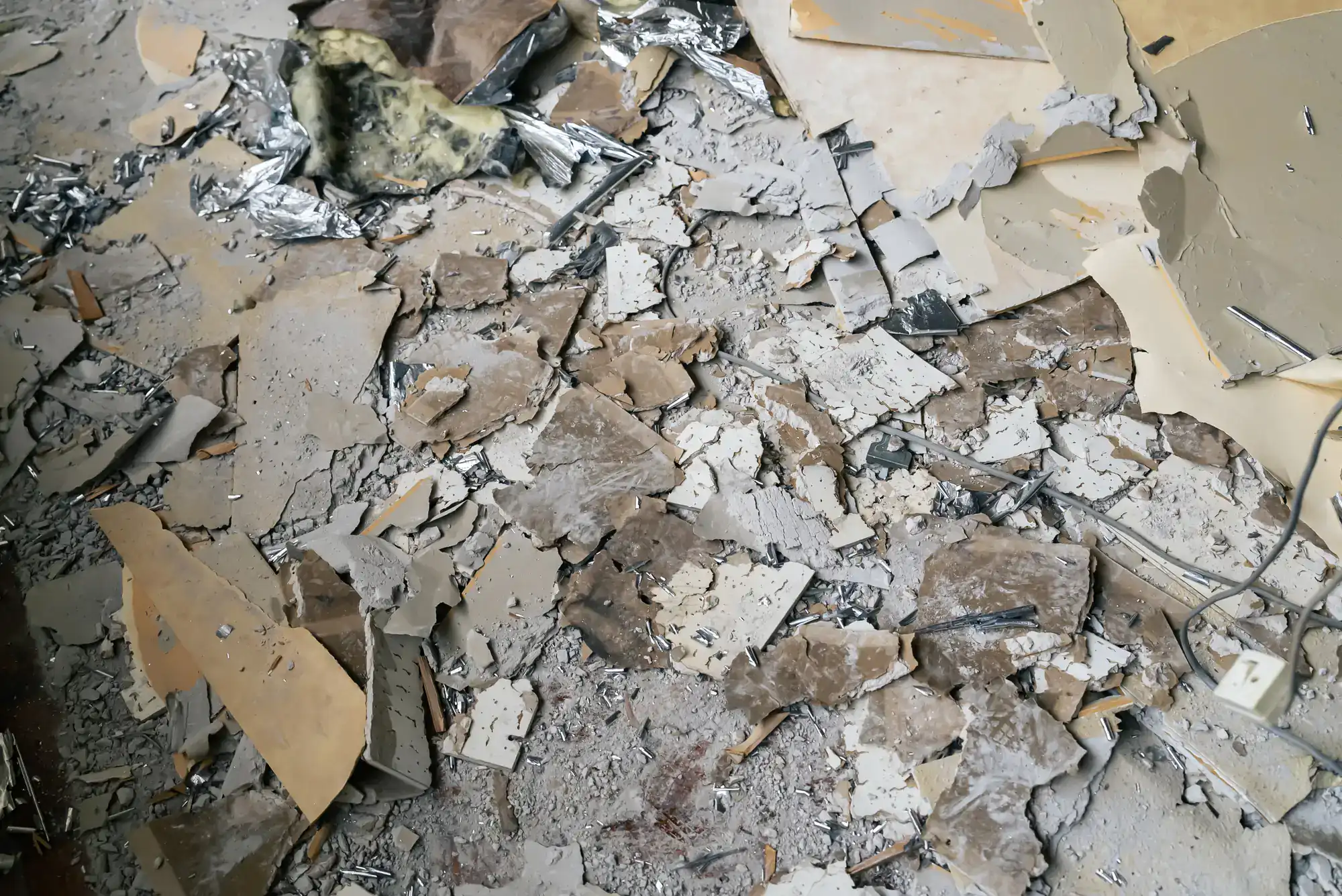
The asbestos-containing materials are then carefully removed — not broken up or dry-scraped, which would release fibers — and sealed in labeled, leak-tight containers for disposal at a licensed facility. After removal, the area is cleaned using HEPA vacuums and wet-wiping methods. Air clearance testing is typically performed before containment is removed to confirm the space is safe. All of this gets documented, which matters if you ever sell the property or need to demonstrate compliance with EPA regulations. The physical demolition work proceeds only after abatement is complete and the space has cleared.
It depends on the scope, but a realistic timeline for most residential interior demolition projects in Ardmore runs anywhere from a few days to a couple of weeks — and that range accounts for the steps that often get overlooked in the planning phase. Testing for hazardous materials takes time. Permit processing through Lower Merion Township or Haverford Township adds time. If asbestos or lead abatement is required, that phase needs to be completed and documented before physical demolition begins.
For a straightforward gut of a single-story home with no significant hazmat findings, the physical demolition work itself might take two to three days. Add in the pre-work — inspection, testing, permitting, and any required abatement — and you’re more realistically looking at one to two weeks from start to finish. Projects involving water damage remediation alongside demolition can run longer depending on the extent of the damage and how long the moisture has been present. We give you a realistic timeline during the free estimate — not the optimistic version that falls apart when something unexpected turns up behind the walls.
Yes — we offer cash discounts on qualifying projects. For homeowners in Ardmore who are managing a significant renovation budget on a high-value property, that discount can represent real savings on a project that might already be running $15,000 to $30,000 or more depending on scope. It’s straightforward: paying in cash reduces administrative overhead on our end, and we pass that back to you directly.
We also offer free estimates with no obligation. That means you can get a clear, itemized picture of what your project actually involves — testing, permitting, abatement, demolition, debris removal — before you commit to anything. In a market where older homes regularly surprise their owners with what’s behind the plaster, knowing the full scope upfront is worth more than a lowball number that doubles once the walls are open. The estimate is honest, the pricing is transparent, and if cash works for you, it works for us too.
Other Services we provide in Ardmore