Hear from Our Customers
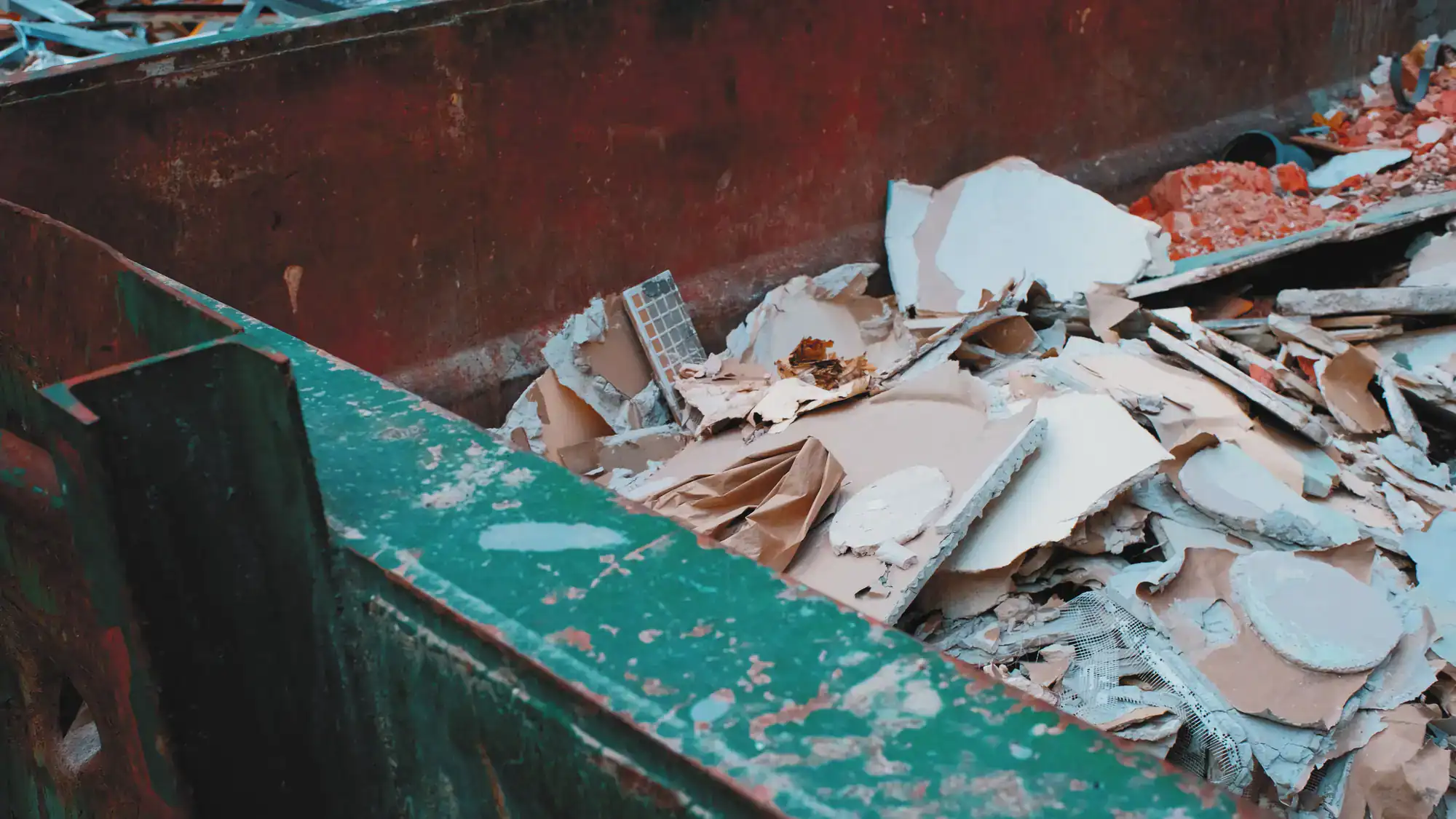
Most of the homes in North Wales borough were built before World War II. That’s not a fun fact — it’s a warning about what’s likely sitting inside your walls right now. Asbestos pipe wrap, lead-painted plaster, aging floor tile with ACM backing. When you gut a kitchen or strip a bathroom in a North Wales home like that, you’re not just doing demo. You’re opening a chapter that requires someone who’s actually licensed to read it.
When we show up, the job doesn’t stop because something unexpected turns up. That’s the difference between hiring a crew that only swings hammers and hiring one that can test, remediate, and keep moving without calling in a second contractor. In a borough where the housing stock is what it is, that capability isn’t a bonus — it’s the whole point.
The other thing worth knowing: North Wales homes have real value. With typical home values sitting above $518,000 in this area, you’re not just renovating a house — you’re protecting an investment. A demo job done right, by a licensed crew that handles whatever they find, keeps that project on track and your budget from blowing up mid-gut.
We’ve been working in Montgomery County for over twenty years. That means we’ve been inside the pre-war homes along Main Street in North Wales, the mid-century colonials in Upper Gwynedd, and the older twins and rowhouses that make up the North Wales borough core. We’re not a Philadelphia crew that occasionally drives out to the North Penn Valley — this is our territory.
What makes EJS Environmental Services different from the demo-only operators that show up in a North Wales search is simple: we’re licensed for everything that older homes throw at a project. PA state-certified for asbestos abatement. Certified Lead Inspector and Risk Assessor. EPA and HUD compliant. Fully licensed, bonded, and insured. That’s not a list of marketing claims — those are credentials you can verify through the Pennsylvania Department of Labor and Industry.
We handle testing, remediation, demolition, and waterproofing under one roof. One call, one crew, start to finish. That’s our model, and it’s why contractors across the North Penn Valley call us before they call anyone else.
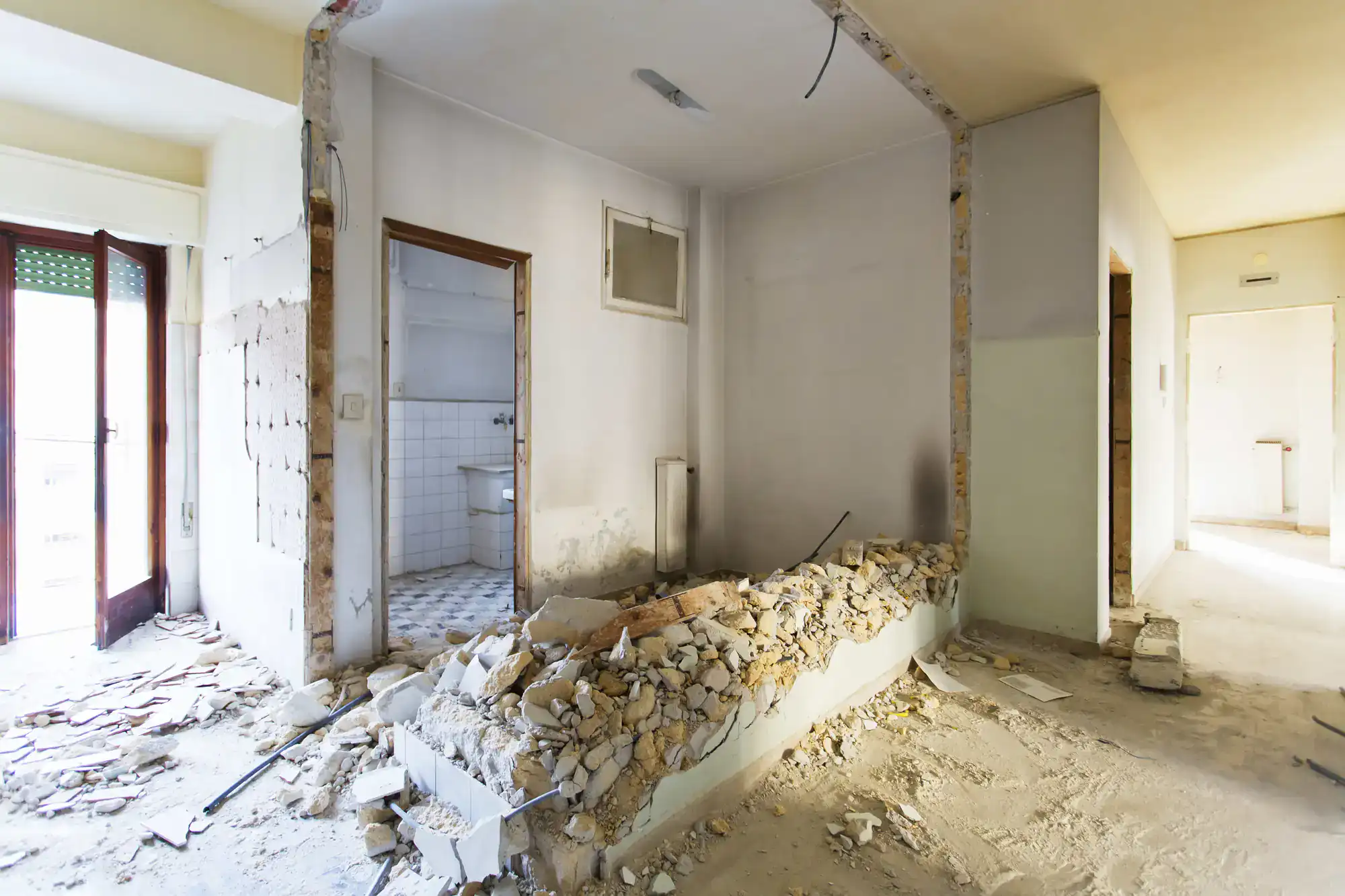
It starts with a free estimate. We come out, walk the space, and give you a clear picture of what the job involves — including whether there’s anything in the materials that needs to be tested before demo begins. In North Wales, where the housing stock is predominantly pre-1940, we treat that evaluation seriously. Asbestos and lead aren’t hypothetical in these homes. They’re the working assumption until testing says otherwise.
If testing turns up regulated materials — asbestos-containing insulation, lead paint, or anything else that Pennsylvania DEP requires to be handled by a licensed contractor — we handle it in-house. No stopping the job to source a separate abatement company. No waiting on someone else’s schedule. We are certified to remove it, document it, and dispose of it properly before the demo continues. The state requires an Asbestos Abatement and Demolition/Renovation Notification Form before any project disturbing regulated materials — we know that process and we manage it.
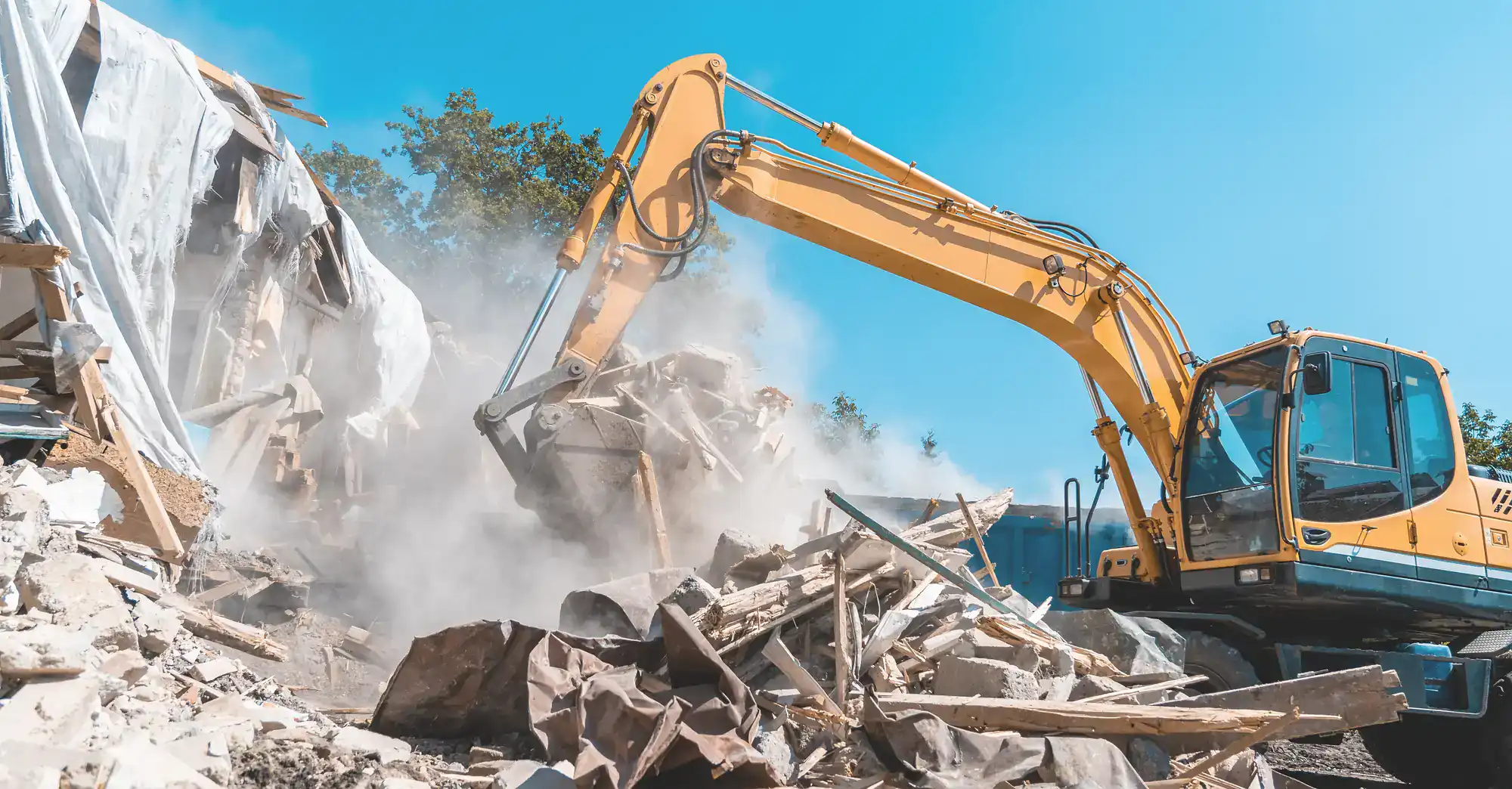
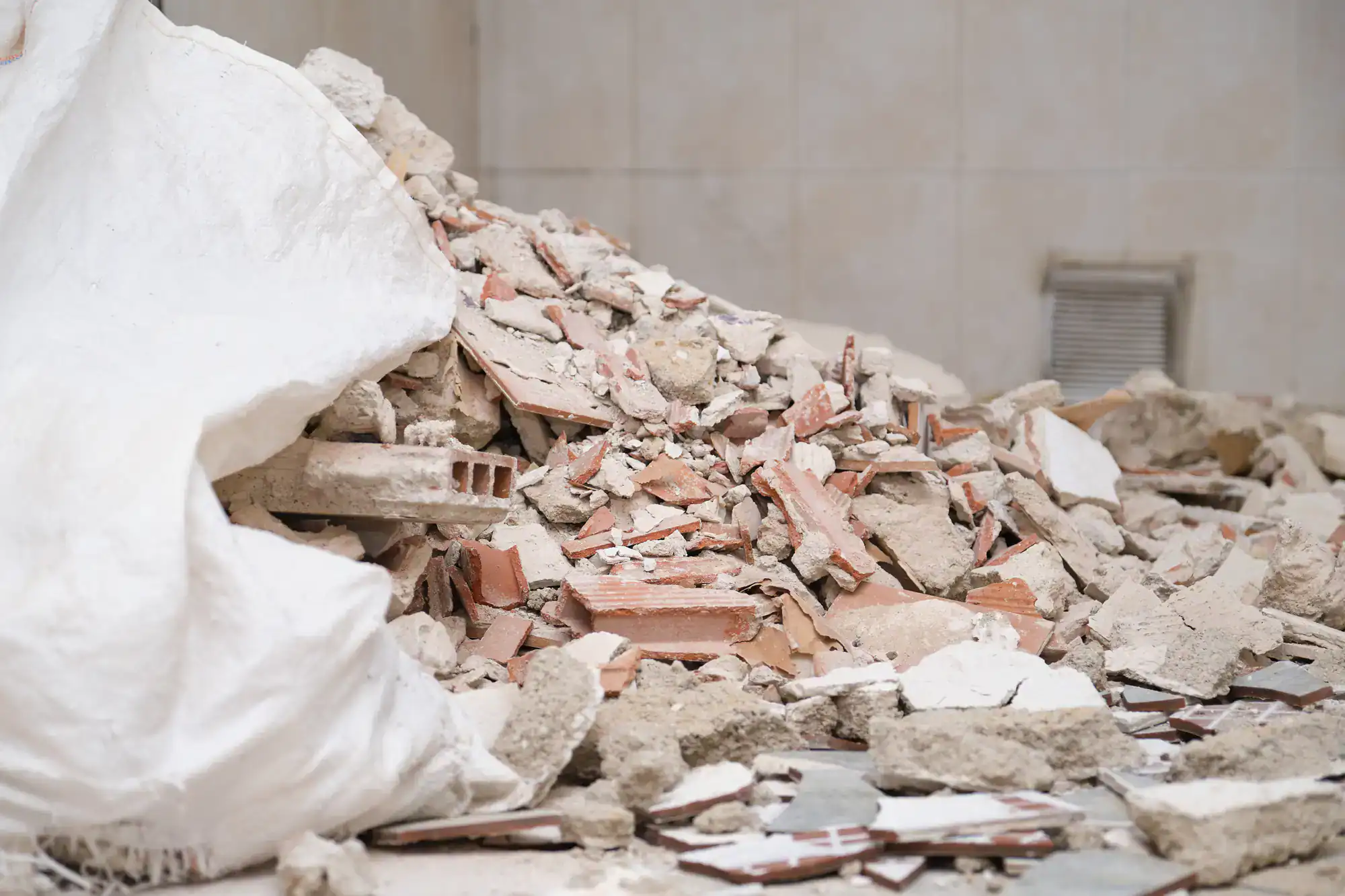
Once the site is clear, demolition moves. We use HEPA filtration systems throughout to keep the work area contained, and every step runs under licensed, on-site supervision. When we’re done, the space is clean, documented, and ready for whatever comes next — whether that’s your GC, your builder, or your own renovation timeline.
Ready to get started?
The gap in the North Wales demolition market is obvious once you look at it. The contractors showing up in local search results are demo-only or light junk-removal operations. None of them hold PA state asbestos certification. None of them carry a Certified Lead Inspector and Risk Assessor credential. In a borough where Montgomery County’s own website explicitly states that asbestos must be removed only by a licensed contractor — and where the housing stock predates the 1980s almost across the board — that gap matters.
We cover the full scope: interior demolition and gut-outs, selective demolition for targeted renovation work, asbestos testing and abatement, lead paint inspection and removal, mold remediation, and waterproofing. If you’re a homeowner on Walnut Street planning a kitchen gut, or a GC prepping a job site off Sumneytown Pike before your crew builds back, we handle the part of the project that requires actual credentials — not just a willing crew and a dumpster.
We also offer 24/7 phone availability and emergency response. North Wales winters are hard on older homes. Burst pipes, foundation water intrusion, freeze-thaw damage — when something goes wrong and you need a licensed crew fast, we pick up. Cash discounts are available, and we’ll beat any legitimate estimate from a licensed, insured competitor. Free estimates, always.
If your home was built before 1980 — and in North Wales borough, most were — the honest answer is: probably yes, somewhere. Asbestos was used in residential construction from the 1920s through the early 1980s in insulation, pipe wrap, floor tiles, ceiling tiles, roof shingles, joint compound, and plaster. Montgomery County’s own official guidance acknowledges this directly and states that asbestos must be removed only by a licensed contractor.
The right move before any gut renovation in a North Wales home is to have the materials tested by someone who is actually certified to evaluate them. We hold the PA state asbestos certification and can test and assess your home before a single wall comes down. If regulated materials are present, we handle the abatement in-house — no separate contractor, no schedule gap, no project stoppage. You find out what’s there, it gets handled, and the job keeps moving.
For most interior demolition and gut renovation work in North Wales Borough, you’ll need a building permit issued through the borough’s own permit process. North Wales handles its own permitting — you can find the permits, forms, and fees information through the borough directly at northwalesborough.org. Montgomery County enforces the applicable building code for properties in the area, and the borough administers permits at the local level.
Beyond the standard building permit, any project that disturbs regulated asbestos-containing materials triggers a separate state requirement: Pennsylvania DEP requires that an Asbestos Abatement and Demolition/Renovation Notification Form be submitted before work begins. This is a state-level obligation, not optional, and it applies regardless of project size if ACMs are present. We manage this notification process as part of every job where it applies — you don’t have to figure out the paperwork on your own.
If asbestos-containing materials are discovered during demolition, work in that area has to stop until the materials are properly abated by a PA-licensed contractor. For homeowners who hired a demo-only crew, that means the job halts, they have to source a certified abatement company, wait for availability, and then restart the demo — a process that can add weeks and thousands of dollars to the project.
With us, that scenario doesn’t play out the same way. Because we’re licensed for both abatement and demolition, discovery doesn’t mean stoppage. We pivot, handle the abatement in-house under our state certification, document everything the way Pennsylvania DEP requires, and continue the demolition once the site is clear. In a borough like North Wales, where the age of the housing stock makes ACM discovery a realistic expectation on most gut projects, having that capability under one roof isn’t a luxury — it’s what keeps your project on schedule.
Interior demolition typically runs $2 to $8 per square foot for standard gut work, with full gut-outs averaging somewhere between $2,500 and $9,800 depending on the size of the space, what’s in the walls, and what needs to happen before the demo crew can work. In North Wales, where the housing stock is older and hazmat discovery is common, the scope of a project can shift once testing is complete — which is exactly why a free estimate from a licensed contractor is worth getting before you commit to any number.
The more useful framing for a North Wales homeowner is total project cost versus demo-only cost. Hiring a demo-only contractor who hits asbestos mid-job and has to stop, source a licensed abatement sub, and restart will almost certainly cost more in total than hiring us to handle everything from the start. We offer free estimates, cash discounts, and a guarantee to beat any legitimate competing estimate from a licensed and insured contractor. Call us before you book anyone else.
Yes — but only if they hold the right credentials. Pennsylvania is one of the few states that legally requires a specific state-issued license for asbestos abatement work, administered through the PA Department of Labor and Industry under the Asbestos Accreditation and Certification Act. A contractor who performs asbestos removal without that license is operating illegally, regardless of how they market themselves.
We hold the PA state asbestos certification and the Certified Lead Inspector and Risk Assessor credential — both verifiable through state records. That means we can legally and safely perform testing, abatement, and demolition on the same project without handing the job off to anyone else. For a homeowner in North Wales renovating a pre-war home, this is the credential question worth asking before you hire anyone. Not every contractor advertising demolition and hazmat services in the North Penn Valley actually holds these licenses. We do.
North Wales is home to the first Historic Preservation District established among all the North Penn boroughs, created in 2000 to protect the architectural character of the borough core. For most interior demolition and gut renovation work — kitchens, bathrooms, basement finishing, interior walls — the historic district designation primarily affects exterior changes that alter the visible character of a historically significant structure. Interior work generally falls under standard borough permitting rather than historic review.
That said, if your project involves any exterior-facing elements, structural changes visible from the street, or work on a property specifically listed within the district’s boundaries, it’s worth confirming with the North Wales Borough Historic Commission before work begins. We’re familiar with the borough’s permitting landscape and the general scope of the historic district. We can help you understand what the job involves from a regulatory standpoint before the first estimate is written — so there are no surprises once the project is underway.
Other Services we provide in North Wales